


I still remember standing at a street market in Budapest, holding a bowl of something thick, paprika-red, and steaming hot. One spoonful and I was completely sold.
Hungarian food is one of Europe’s most underrated food cultures. We’re talking smoky paprika, slow-cooked meats, hearty soups, and pastries that are dangerously good.
I’ve eaten my way through a lot of traditional Hungarian food, and every dish has a story.
If you’re a food lover, or just searching for Hungarian food near you, this guide has everything you need. All 89 dishes.
Let’s get started.
What Is Hungarian Food?
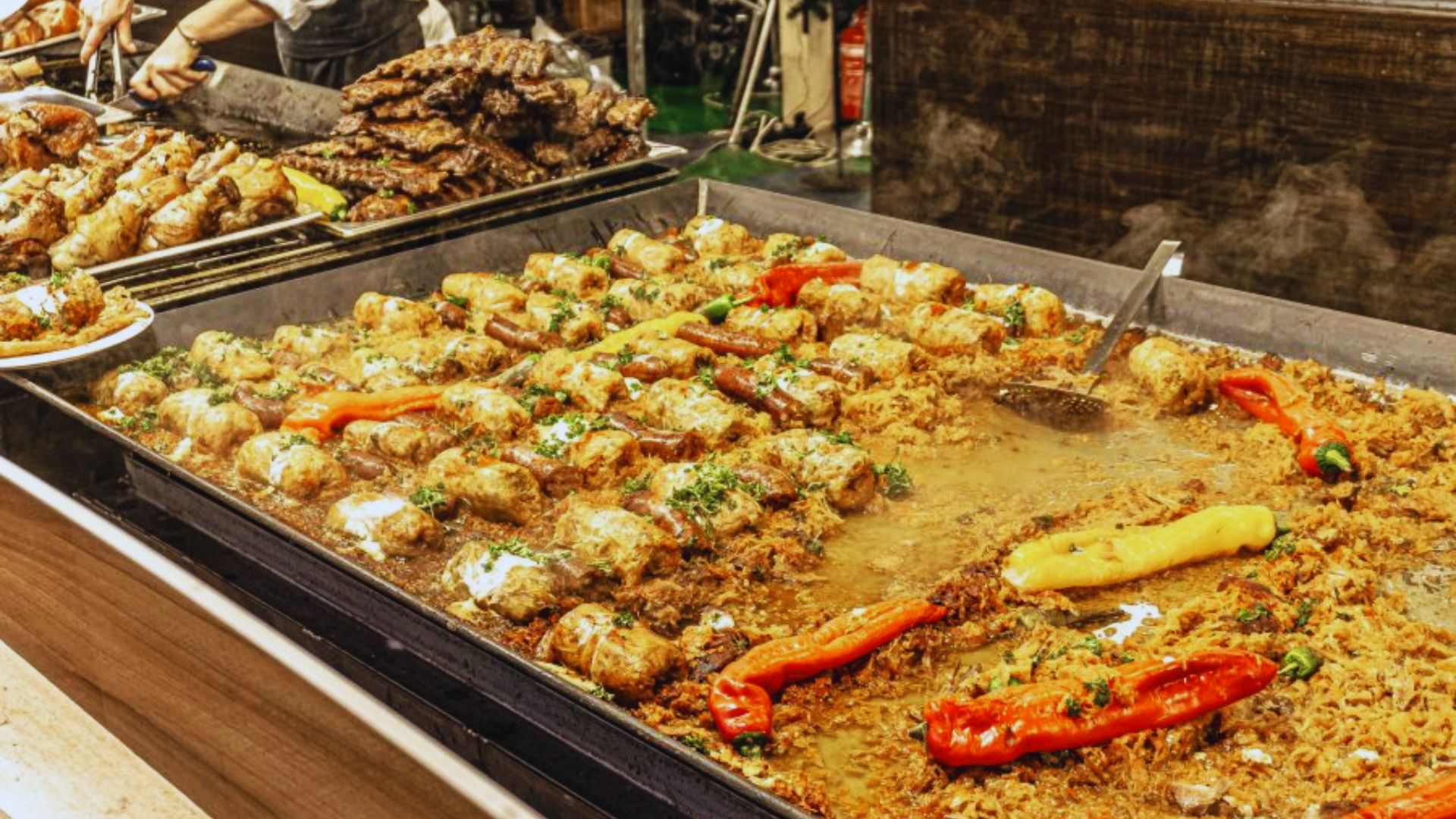
Hungarian food is bold, filling, and deeply rooted in history. It comes from the Magyar people, who brought a meat-and-grain based cooking style to Central Europe over a thousand years ago.
The food has always been made for hard work and cold winters.
Over the centuries, it picked up Ottoman influences like stuffed peppers and paprika. The Austro-Hungarian era added refined baking traditions and rich desserts.
The result is a cuisine that feels both rustic and layered at the same time.
Paprika is the heart of Hungarian food. You’ll also find sour cream, pork, fresh peppers, and onions in almost every dish. A small list of ingredients that does a huge amount of work.
What makes Hungarian food stand out globally is how honest it is. No fussy presentation, no complicated tricks. Just real, filling, properly cooked food.
89 Traditional Hungarian Food Dishes to Try
These 89 dishes are grouped by type so it’s easy to follow. I’ve given the soups and mains more detail because those are where Hungarian food really shines.
Start with whatever sounds most interesting to you.
1. Gulyás (Goulash)
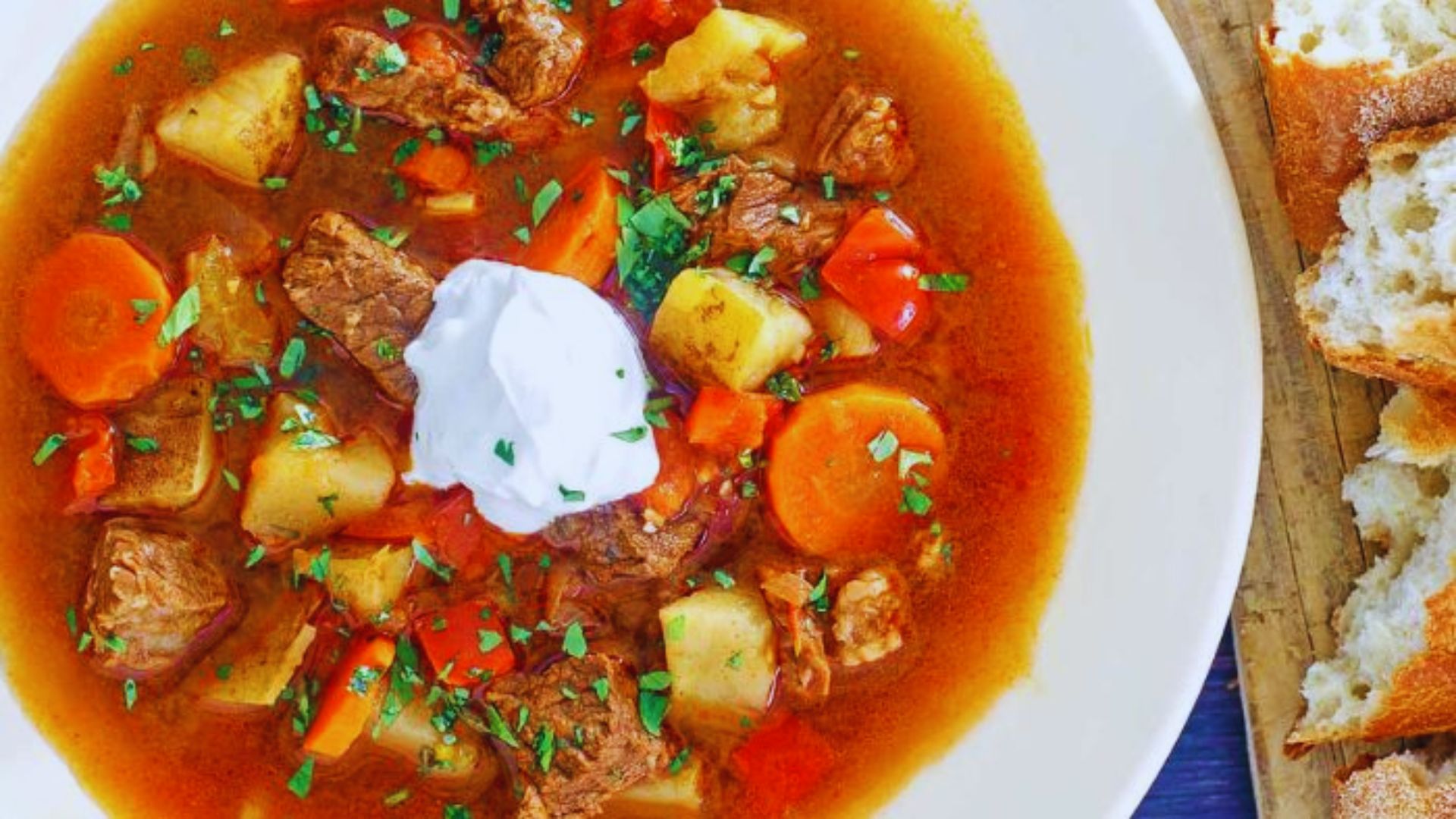
Gulyás is the most famous Hungarian food dish in the world. It’s a slow-cooked beef soup made with paprika, onions, potatoes, and sometimes carrots. The broth is deep red, slightly smoky, and very filling.
This is the dish most people think of first when they hear “Hungarian food,” and honestly, it deserves that reputation.
2. Pörkölt
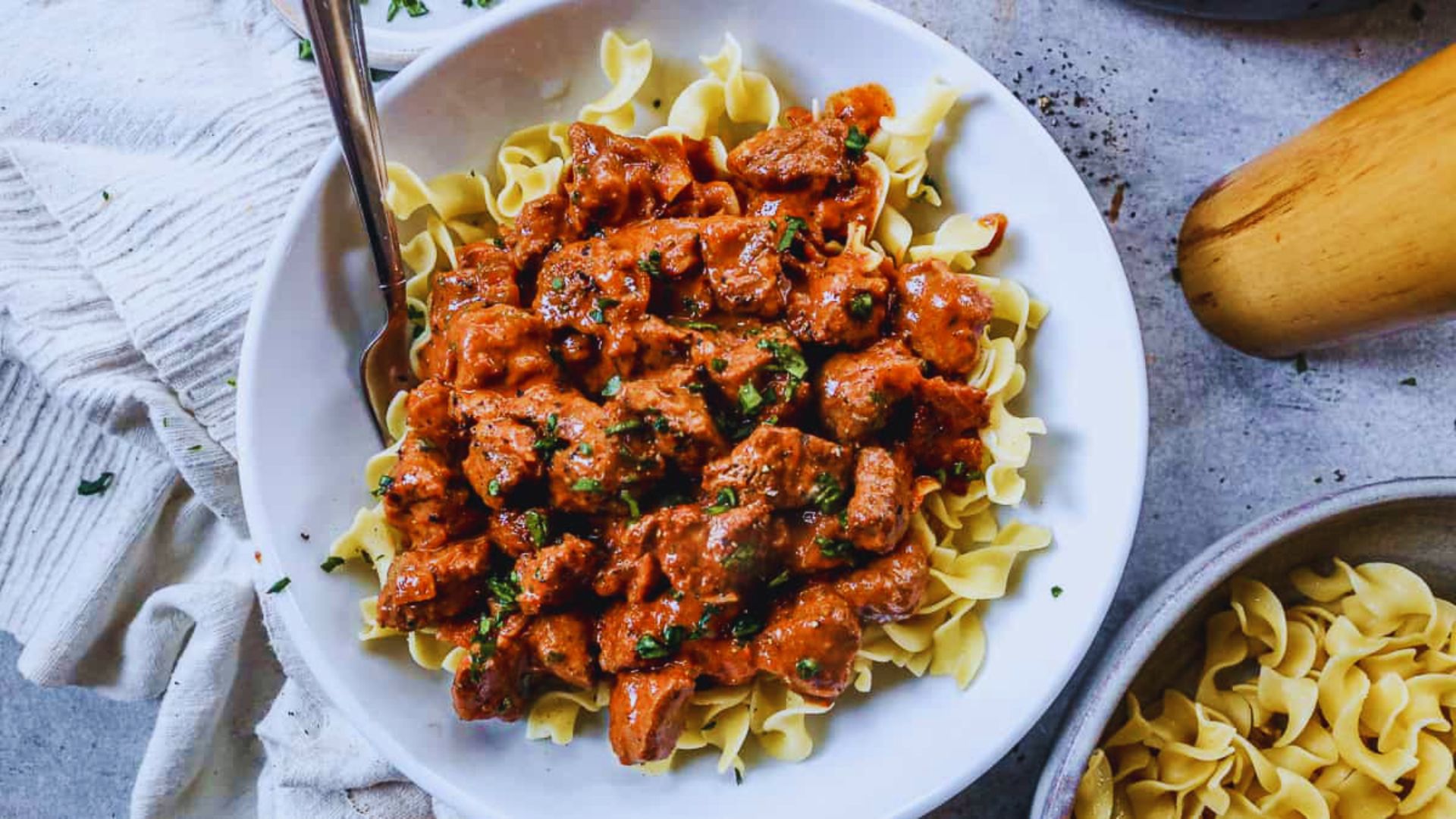
Pörkölt looks similar to goulash but it’s a stew, not a soup. It has much less liquid and a much thicker, richer sauce.
It’s usually made with pork or beef, slow-cooked low and slow with onions and generous amounts of paprika. Serve it over egg noodles and you’ve got yourself a proper Hungarian meal.
3. Halászlé (Fisherman’s Soup)
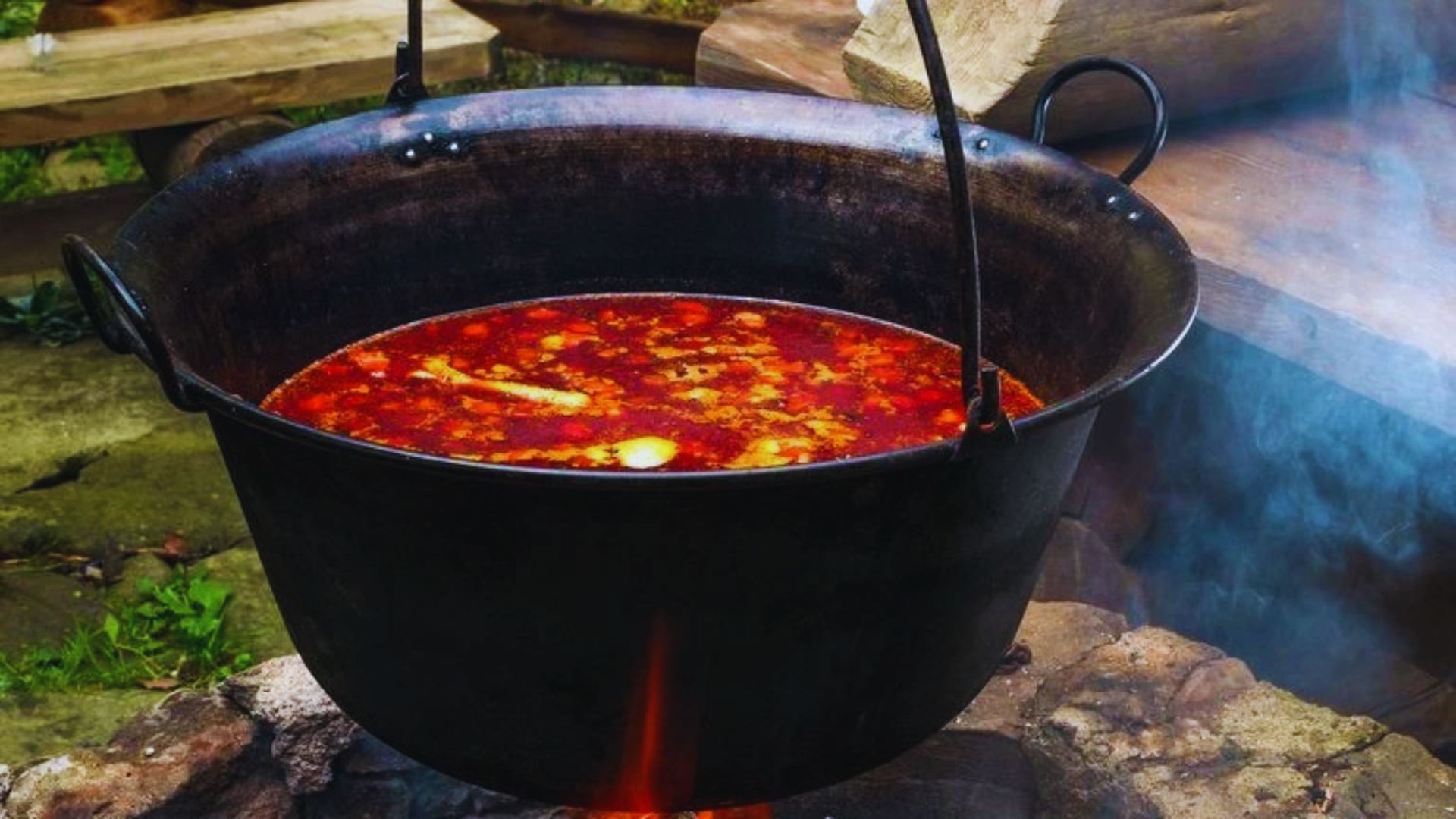
This is Hungary’s famous river fish soup. It’s made with freshwater fish like carp or catfish, cooked in a bold paprika broth that turns bright red.
The flavor is spicy, peppery, and deeply savory. It’s especially popular in southern Hungary near the Danube and Tisza rivers, where fresh fish is easy to come by.
4. Jókai Bean Soup
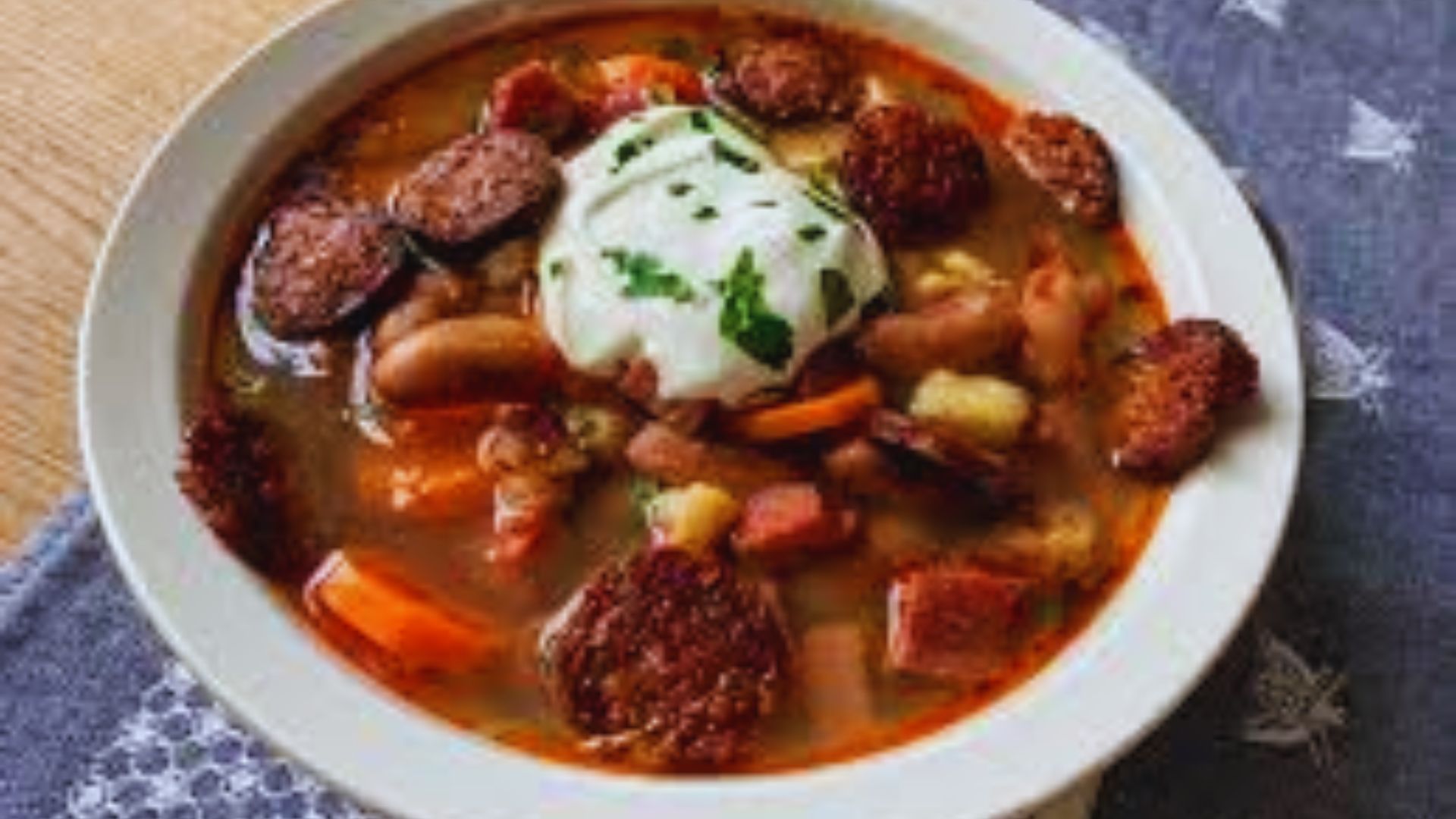
Named after Hungarian writer Mór Jókai, this soup is thick and incredibly filling. It has smoked pork knuckle, white beans, carrots, and a swirl of sour cream on top.
Every spoonful is smoky, creamy, and satisfying. If you want one soup that does it all, this is the one.
5. Csirkeleves (Chicken Soup)
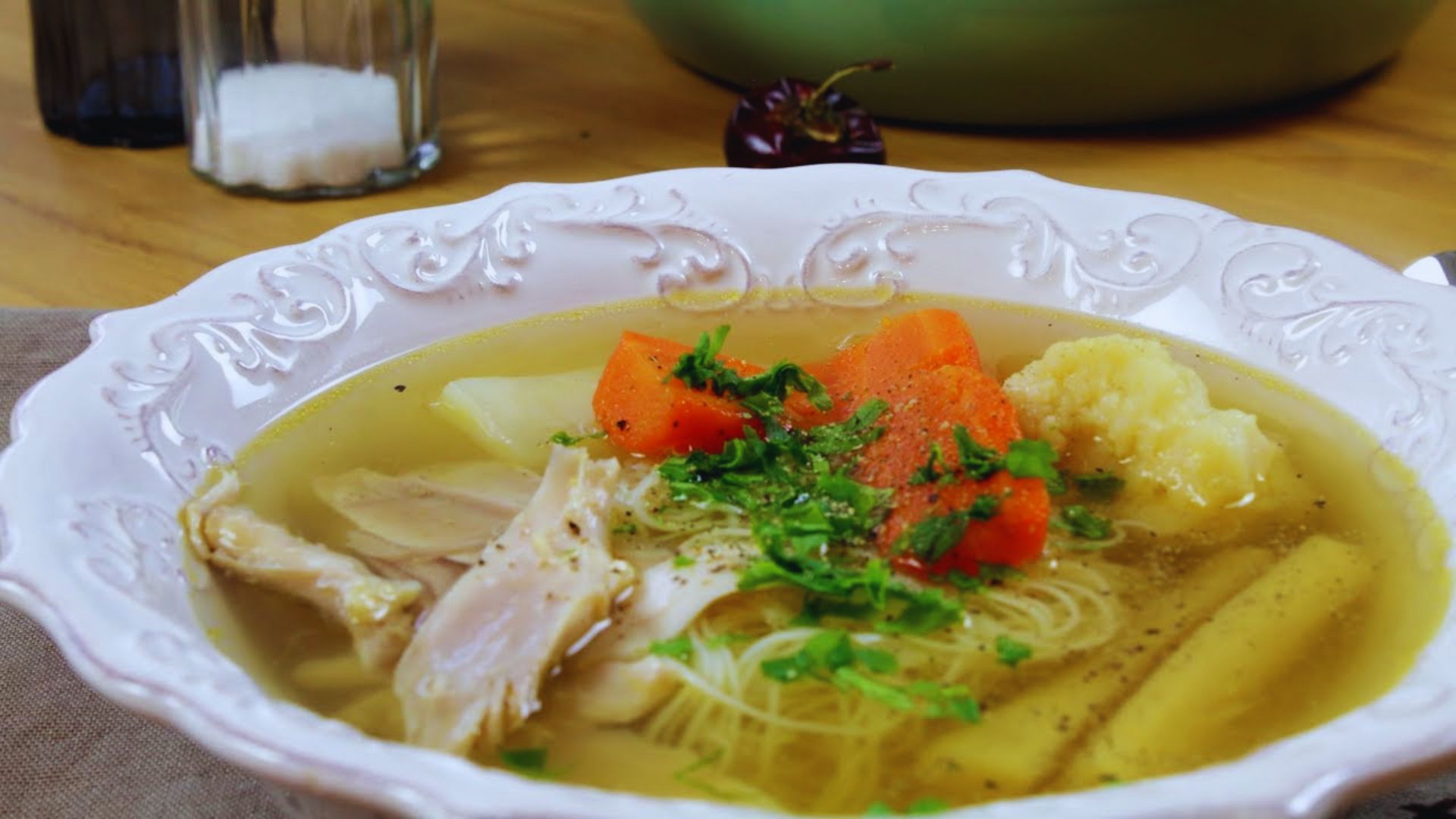
This is Hungary’s take on classic chicken soup. The broth is light and clear, cooked with root vegetables like carrots and parsnips.
Small pasta or dumplings are usually added toward the end. Hungarian grandmothers have been making this for generations, and it’s still the go-to comfort food when someone isn’t feeling well.
6. Palóc Soup
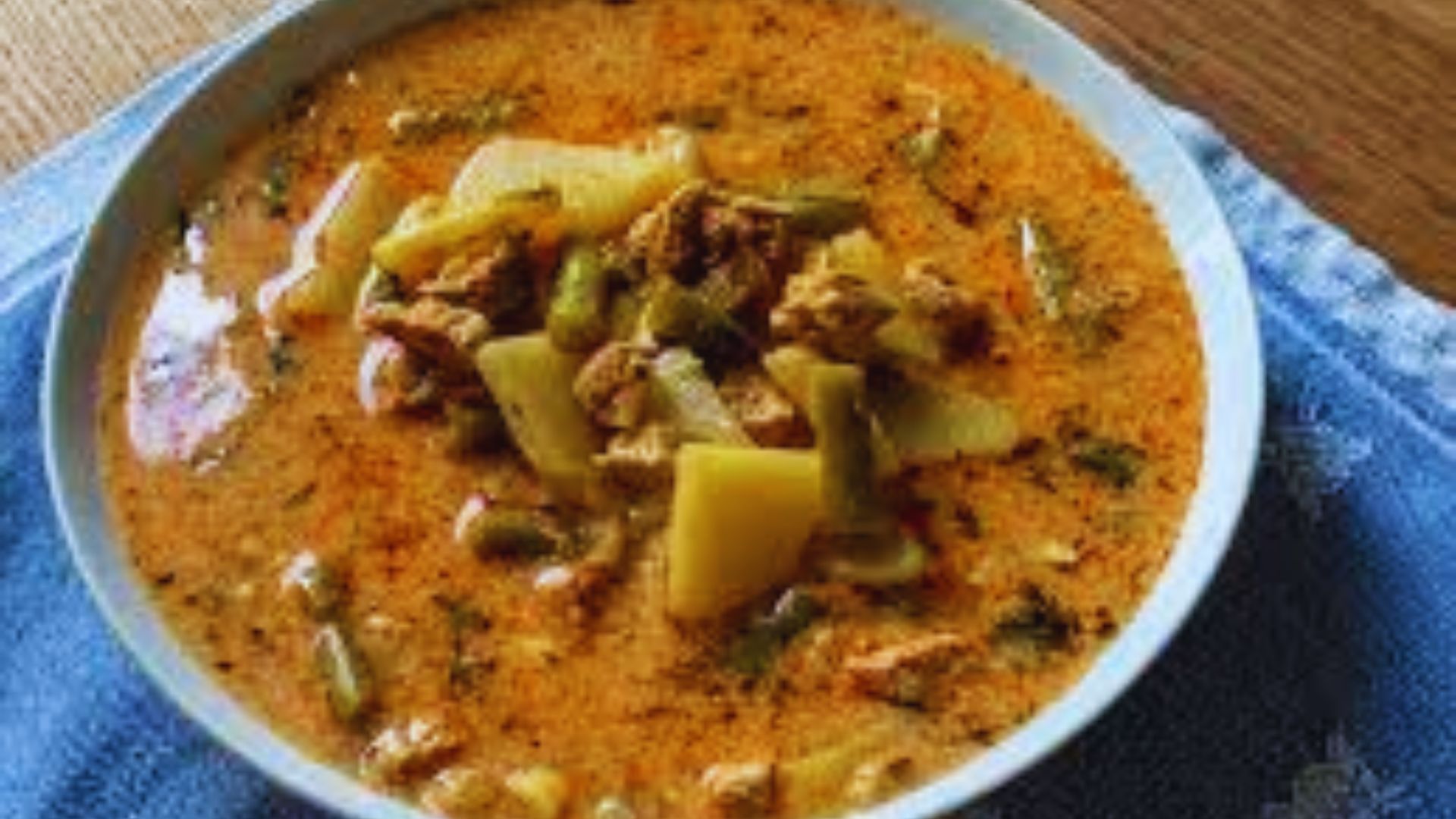
Palóc soup is a sour cream-based lamb soup with green beans and potatoes. It was created in the late 1800s and named after the Palóc people from northern Hungary.
The sour cream gives it a creamy, tangy flavor that sets it apart from other soups. It feels rustic but tastes really well put together.
7. Mushroom Soup
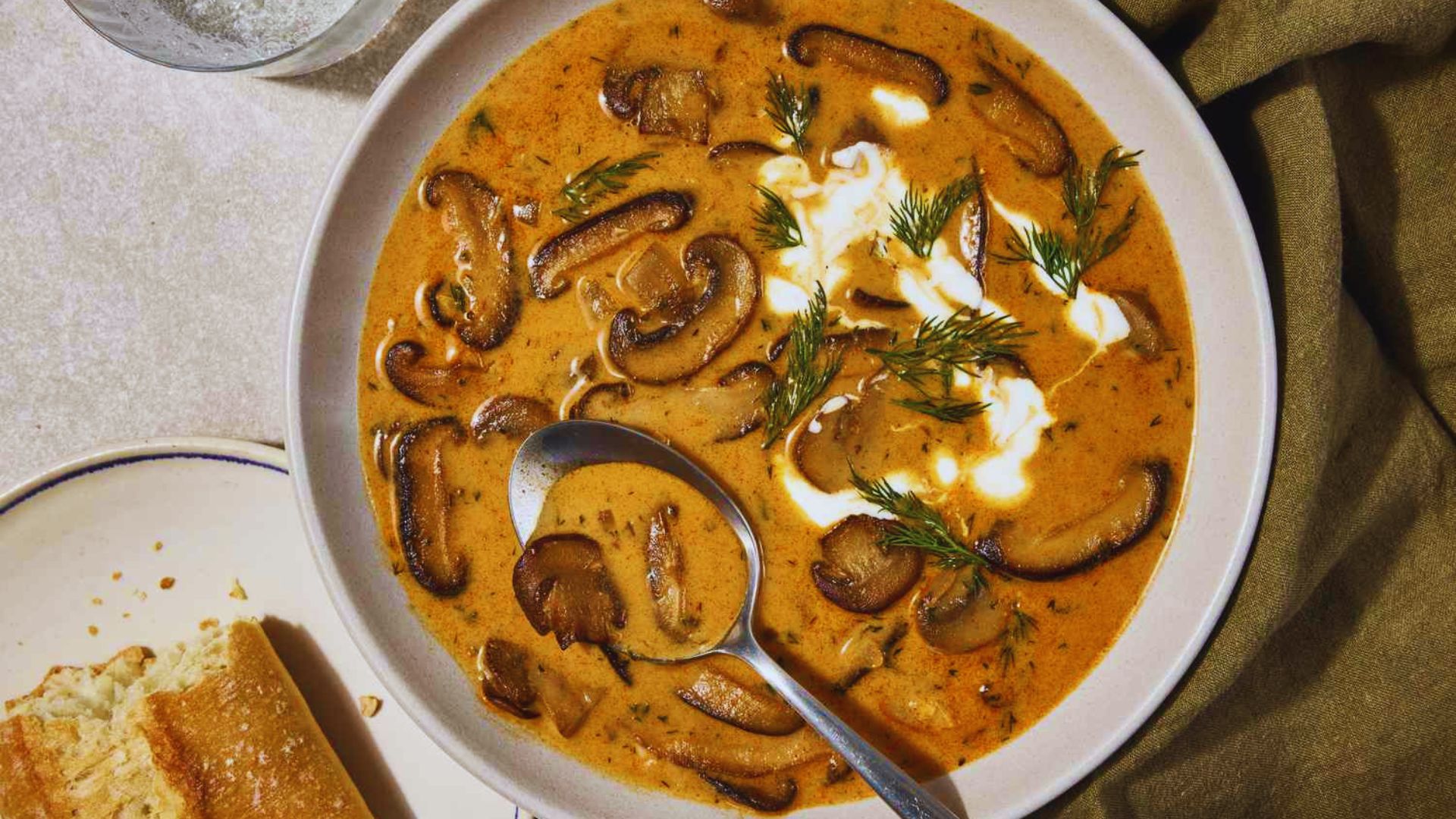
Hungarian mushroom soup is not your average version. It’s thick and creamy, made with paprika, sour cream, and fresh dill.
The paprika and dill combination gives it a very distinct Hungarian flavor profile. Earthy, comforting, and a little bit smoky.
8. Potato Paprika Soup
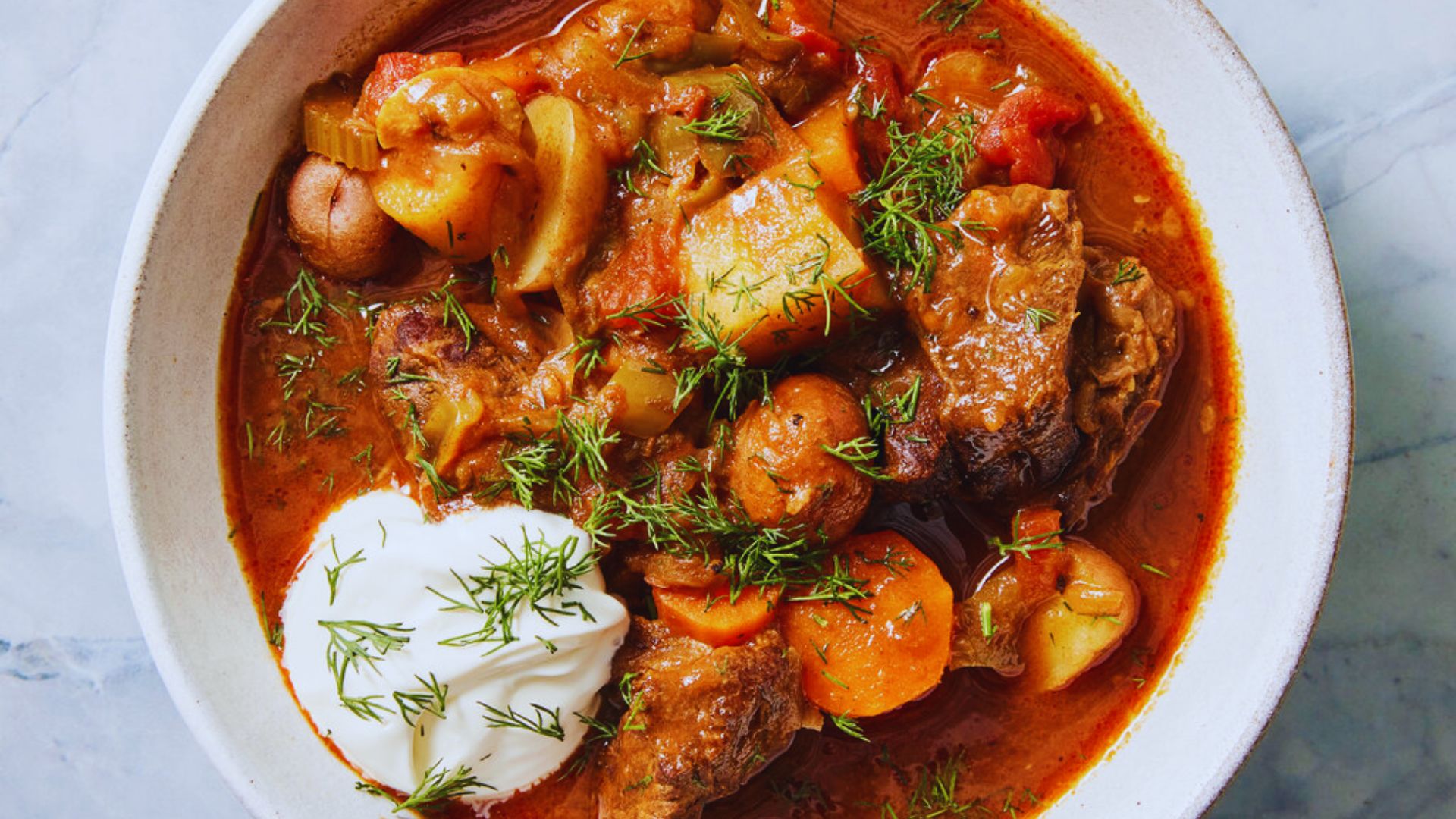
This is a simple, everyday soup in Hungarian homes. Diced potatoes cook in a paprika-spiced broth with onions and sometimes a piece of smoked sausage.
It’s cheap, filling, and tastes much better than it sounds. A bowl of this on a cold day is genuinely hard to beat.
9. Cabbage Soup
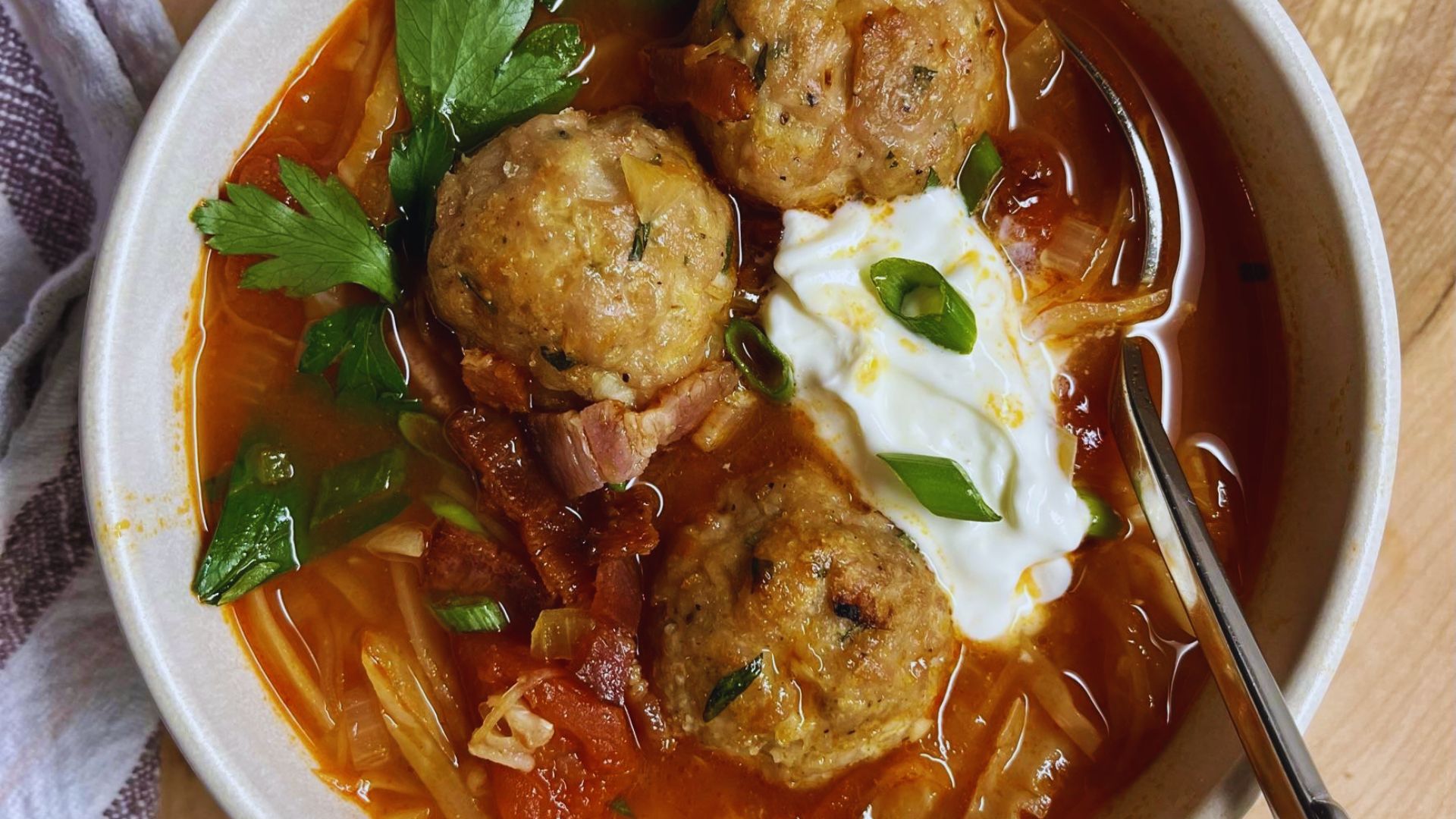
Hungarian cabbage soup is slow-cooked with pork, sour cream, and plenty of paprika. The cabbage gives it a slightly tangy, slightly sweet base.
In some regions it’s cooked closer to a stew consistency. Either way, it’s deeply savory and worth ordering if you see it on a menu.
10. Lamb Goulash
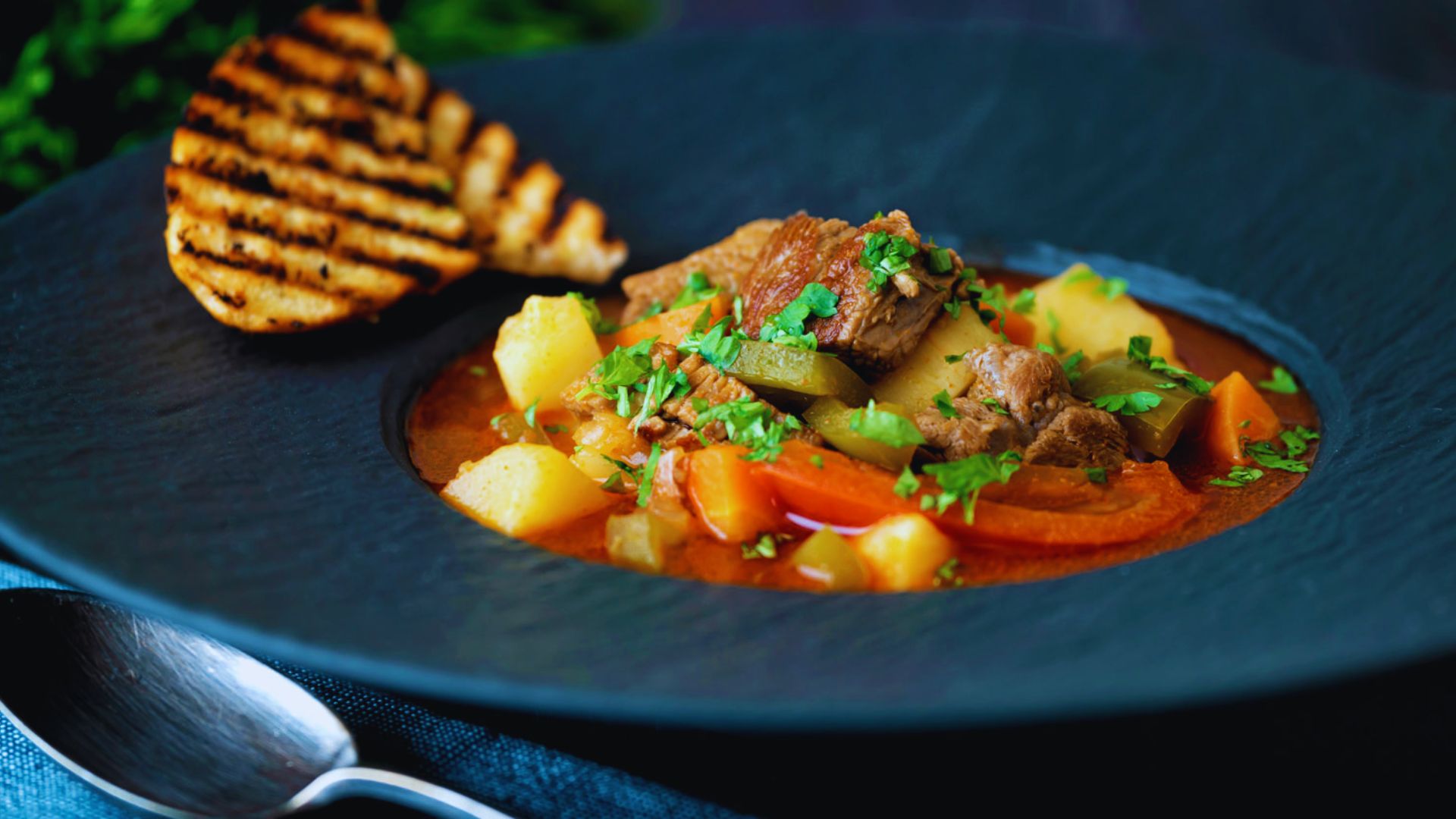
Lamb goulash swaps the traditional beef for lamb, which gives the dish a richer and more distinct flavor. The meat is slow-cooked until it completely falls apart in the paprika broth.
It’s less common than beef goulash but arguably more interesting. If you spot it on a menu, don’t pass it up.
11. Beef Broth Soup
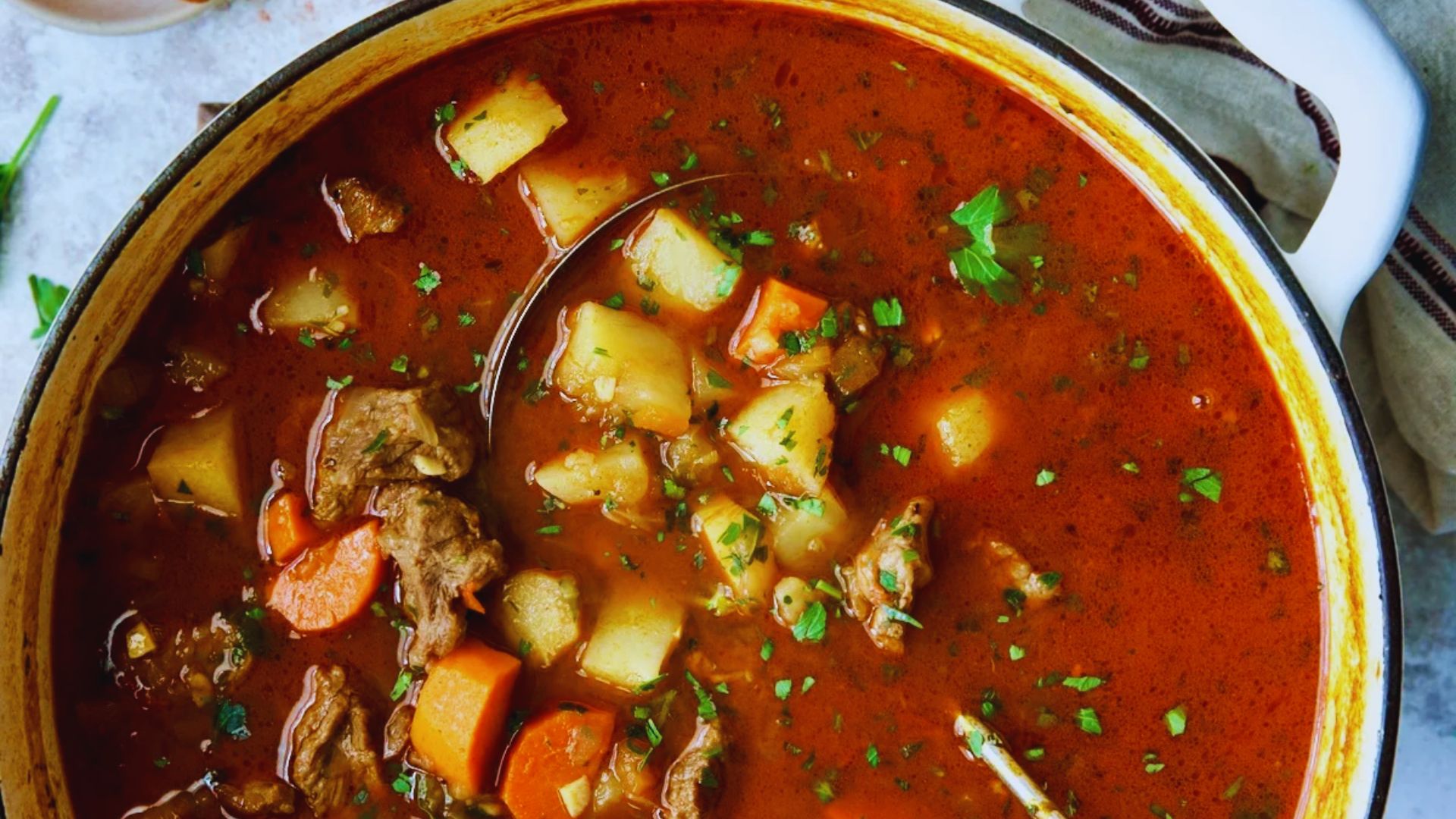
This is a classic Sunday dish in Hungarian households. A rich, clear beef broth is served with thin noodles or small dumplings and finished with fresh herbs.
It’s lighter than goulash but full of depth. Hungarians often serve this as a starter before the main course at family dinners.
12. Tarhonya Soup
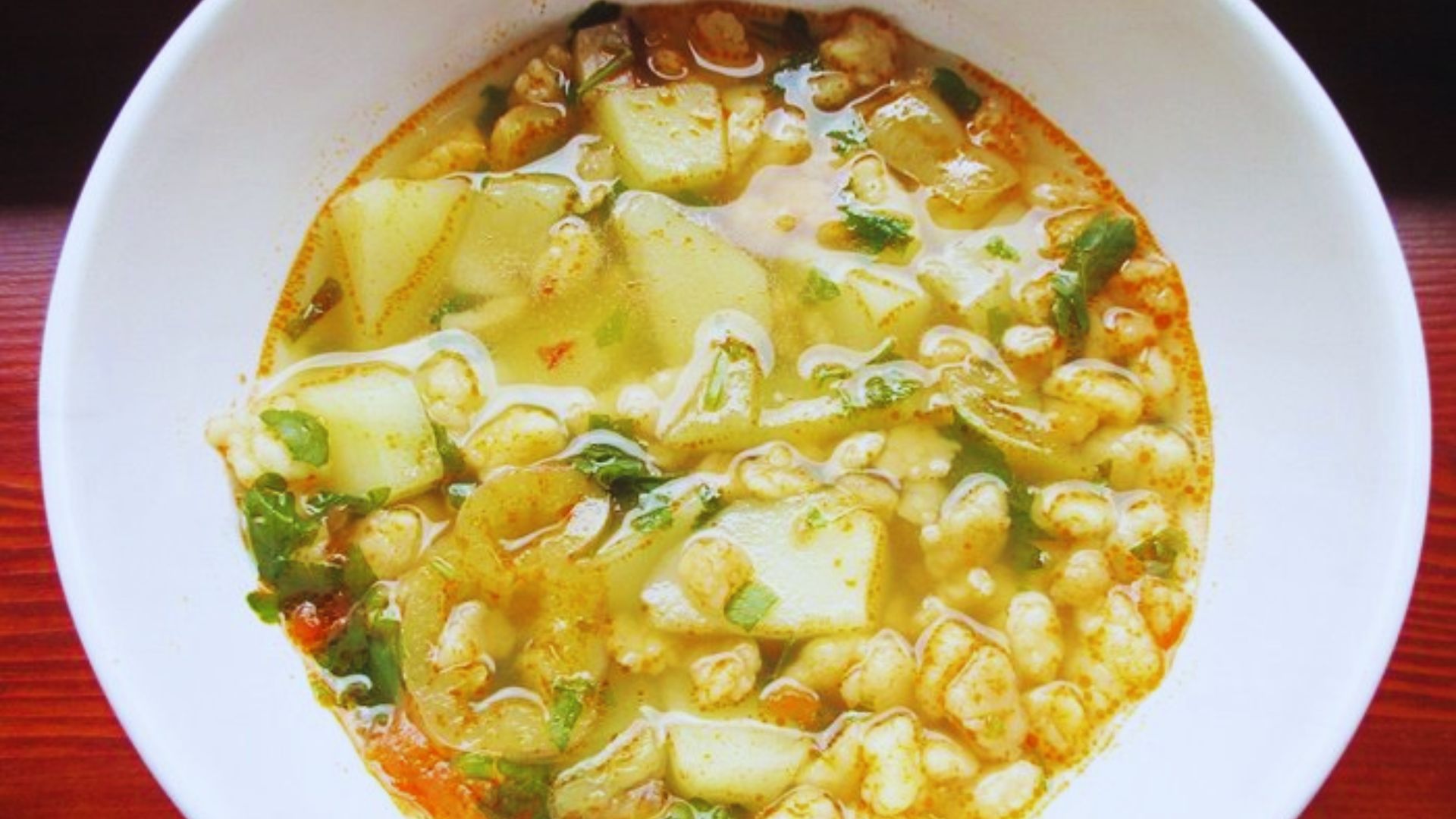
Tarhonya is a type of small, toasted egg pasta that looks almost like grains. In this soup, it cooks in a savory broth with vegetables and sometimes meat.
The toasting process gives it a slightly nutty flavor that regular pasta doesn’t have. It’s one of those lesser-known Hungarian food dishes that locals are really fond of.
13. Chicken Paprikash
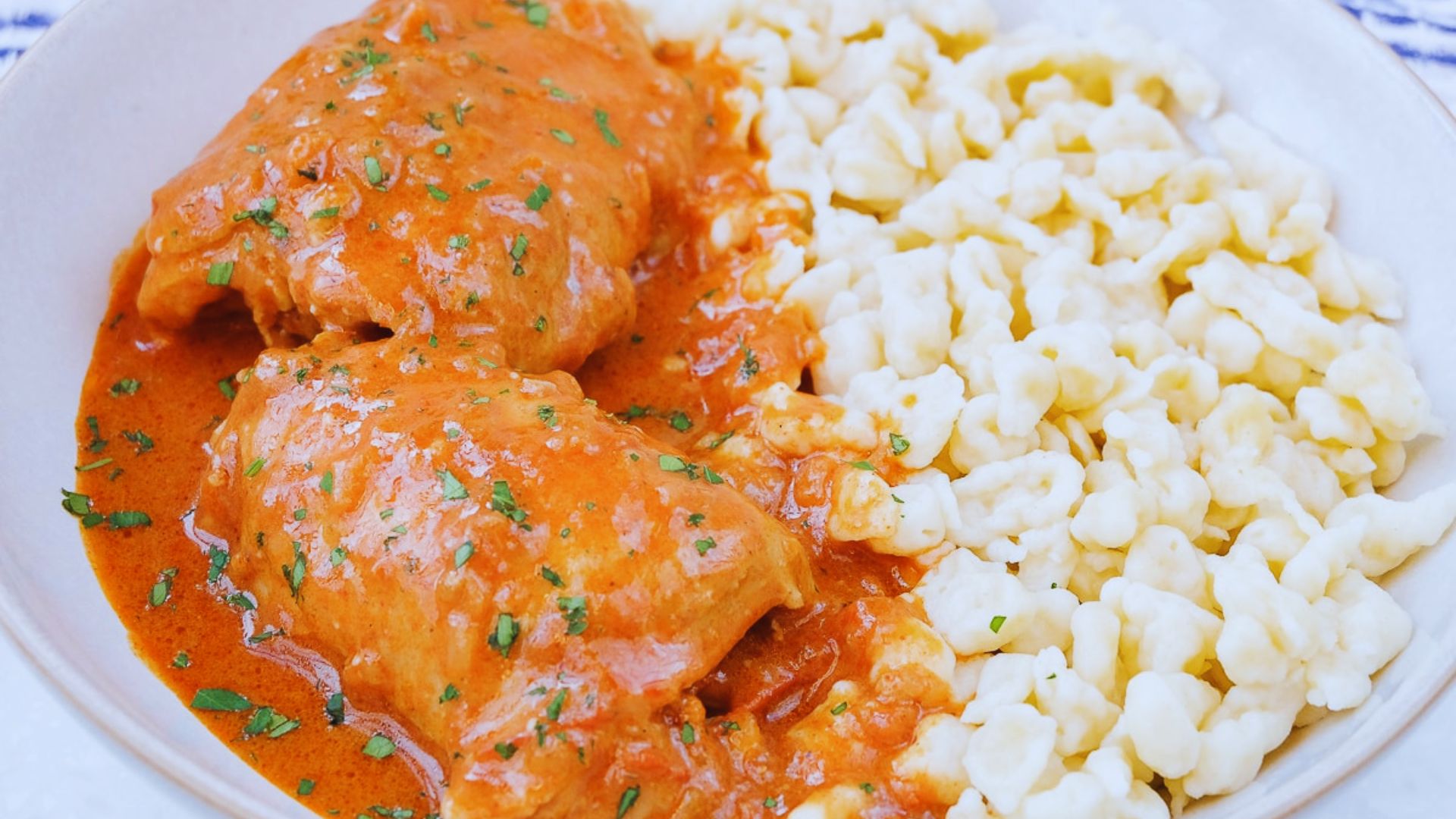
Chicken Paprikash is the most beloved main course in Hungarian food. Chicken pieces are cooked slowly in a rich sauce of paprika and sour cream until they’re incredibly tender.
The sauce is creamy, tangy, and packed with flavor. It’s almost always served with nokedli (egg dumplings) on the side, and that combination is hard to top.
14. Stuffed Cabbage (Töltött Káposzta)
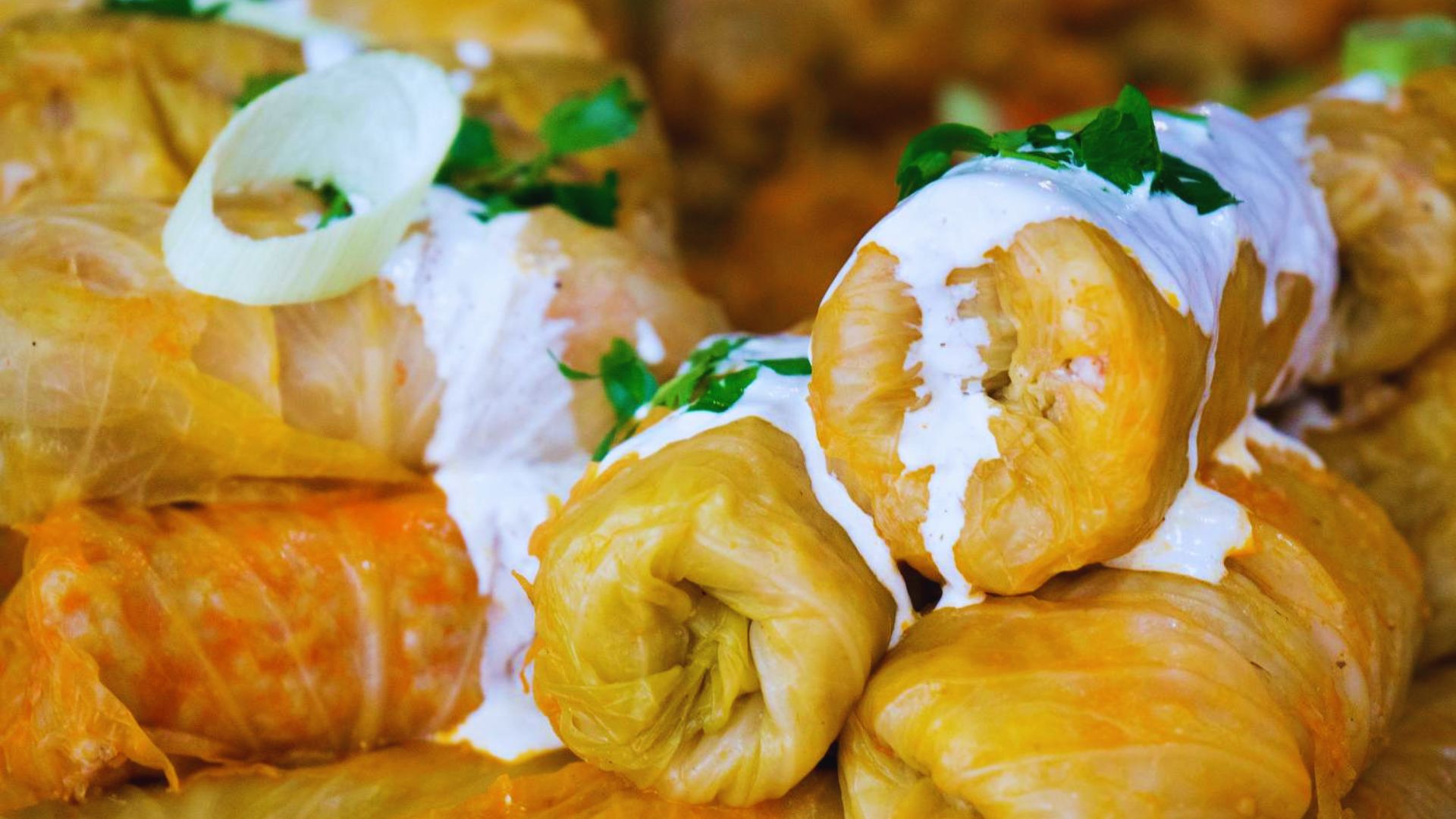
Cabbage leaves are stuffed with a mix of minced pork and rice, then slow-cooked in a tomato and sauerkraut sauce.
The sourness from the sauerkraut balances the rich meat filling in a really satisfying way. This is a dish that takes time to make but delivers every single time. Hungarian mothers and grandmothers make it for big family gatherings.
15. Roast Duck
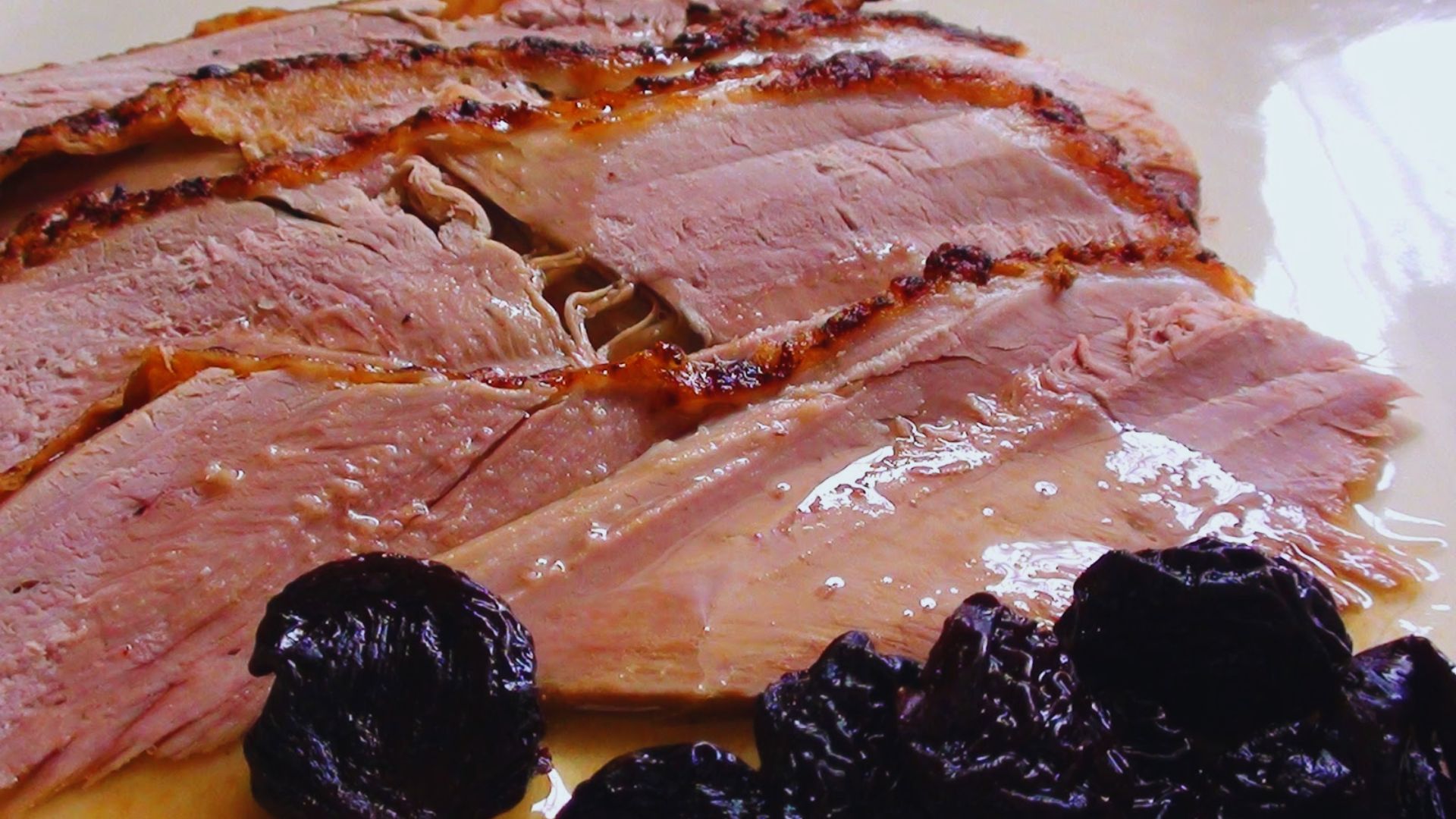
Roast duck is a traditional Sunday meal across Hungary. The duck is seasoned simply and roasted until the skin turns deep golden and crispy.
It’s usually served with braised red cabbage and potato dumplings. Simple preparation, big flavor, no overthinking.
16. Pörkölt with Noodles
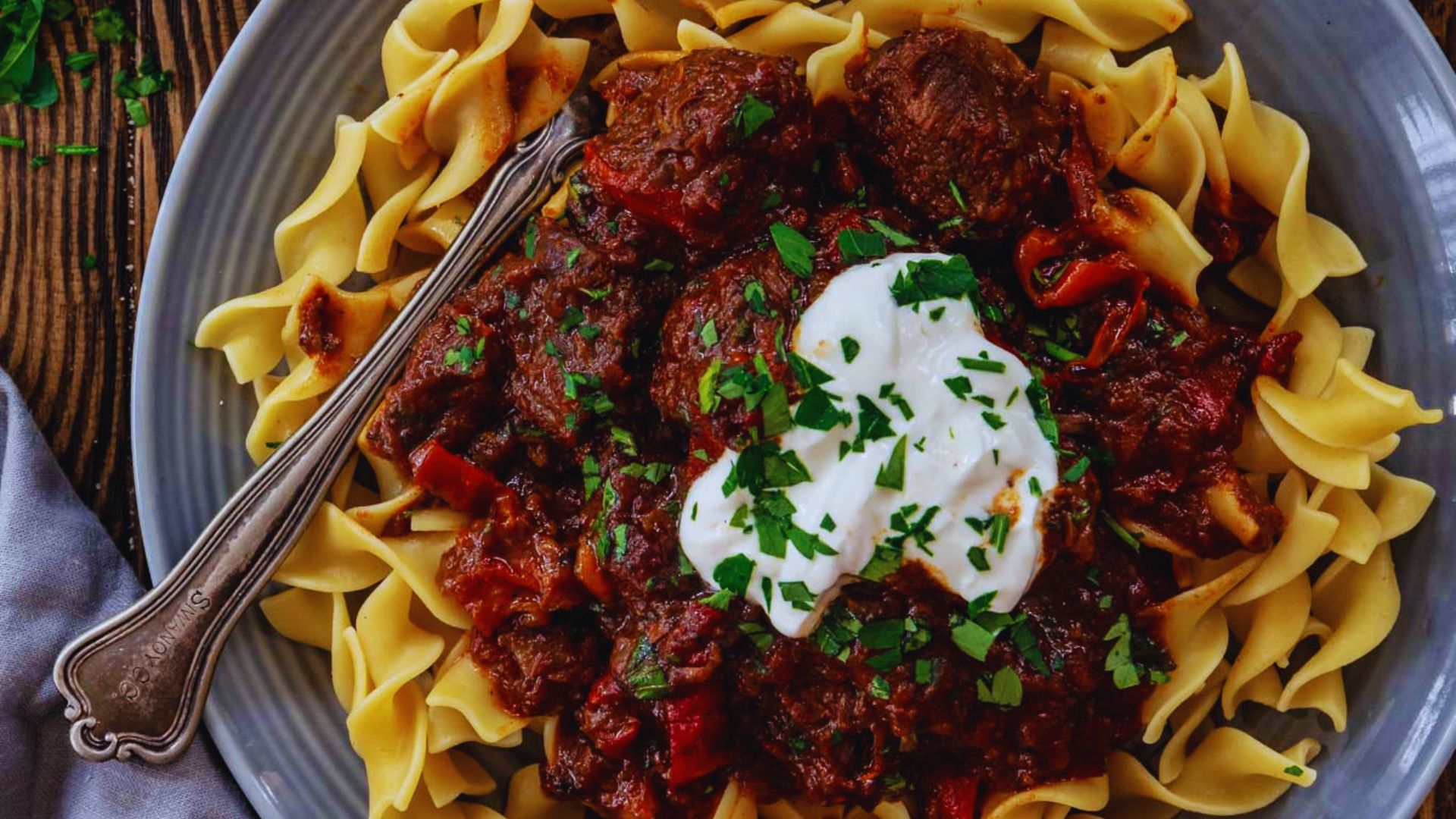
This is pörkölt served over egg noodles, making it a full and filling meal in one bowl. The thick paprika stew soaks right into the noodles and every bite is rich with flavor.
It’s one of those Hungarian food dishes that feels like proper home cooking. Very satisfying.
17. Hungarian Sausages (Kolbász)
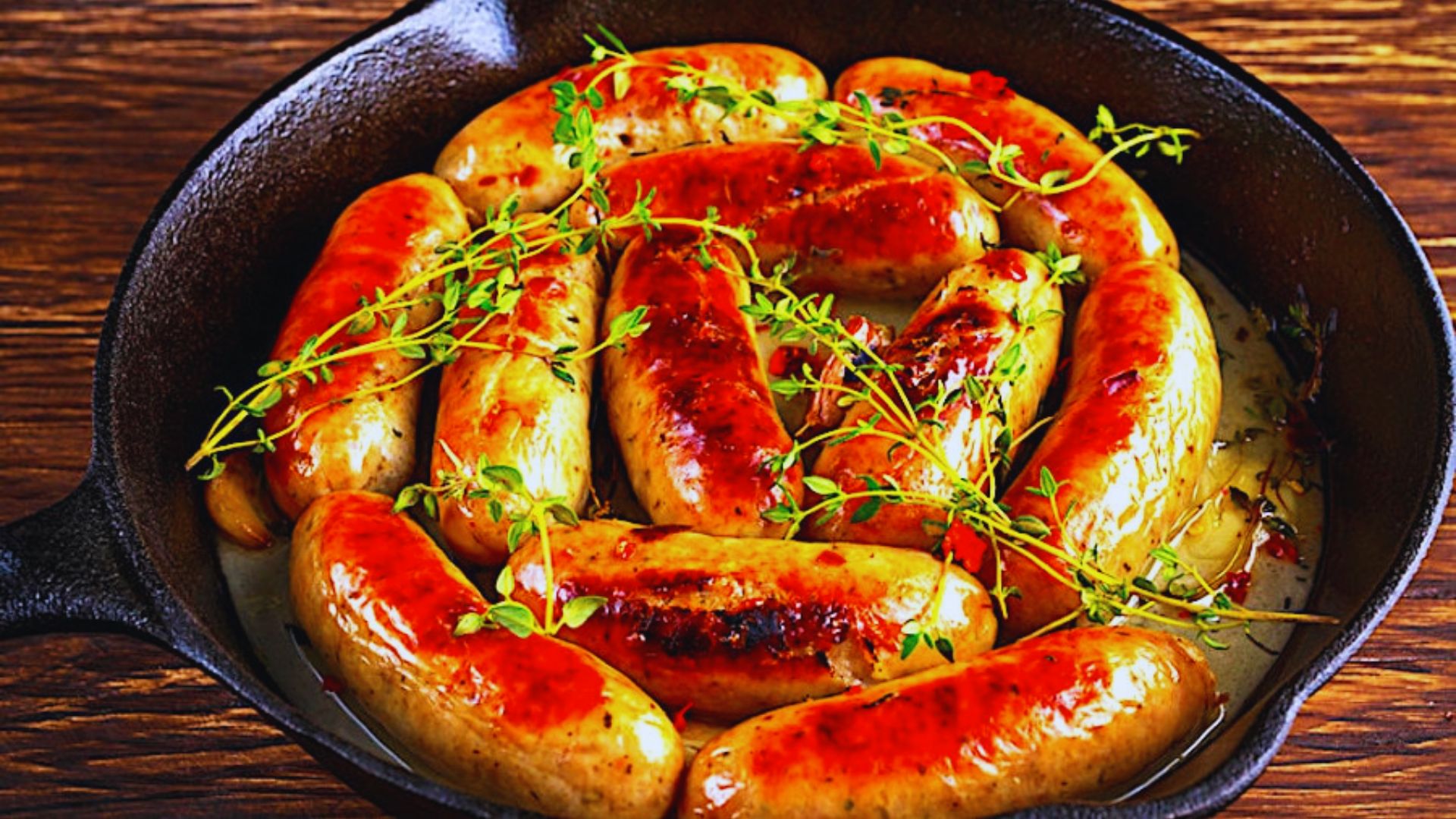
Kolbász is Hungary’s famous smoked pork sausage. It’s made with pork, garlic, and a heavy hand of paprika, then smoked slowly.
You can eat it grilled, sliced cold, or cooked into stews and soups. The smoky, slightly spicy flavor is very addictive.
18. Fried Pork Cutlet
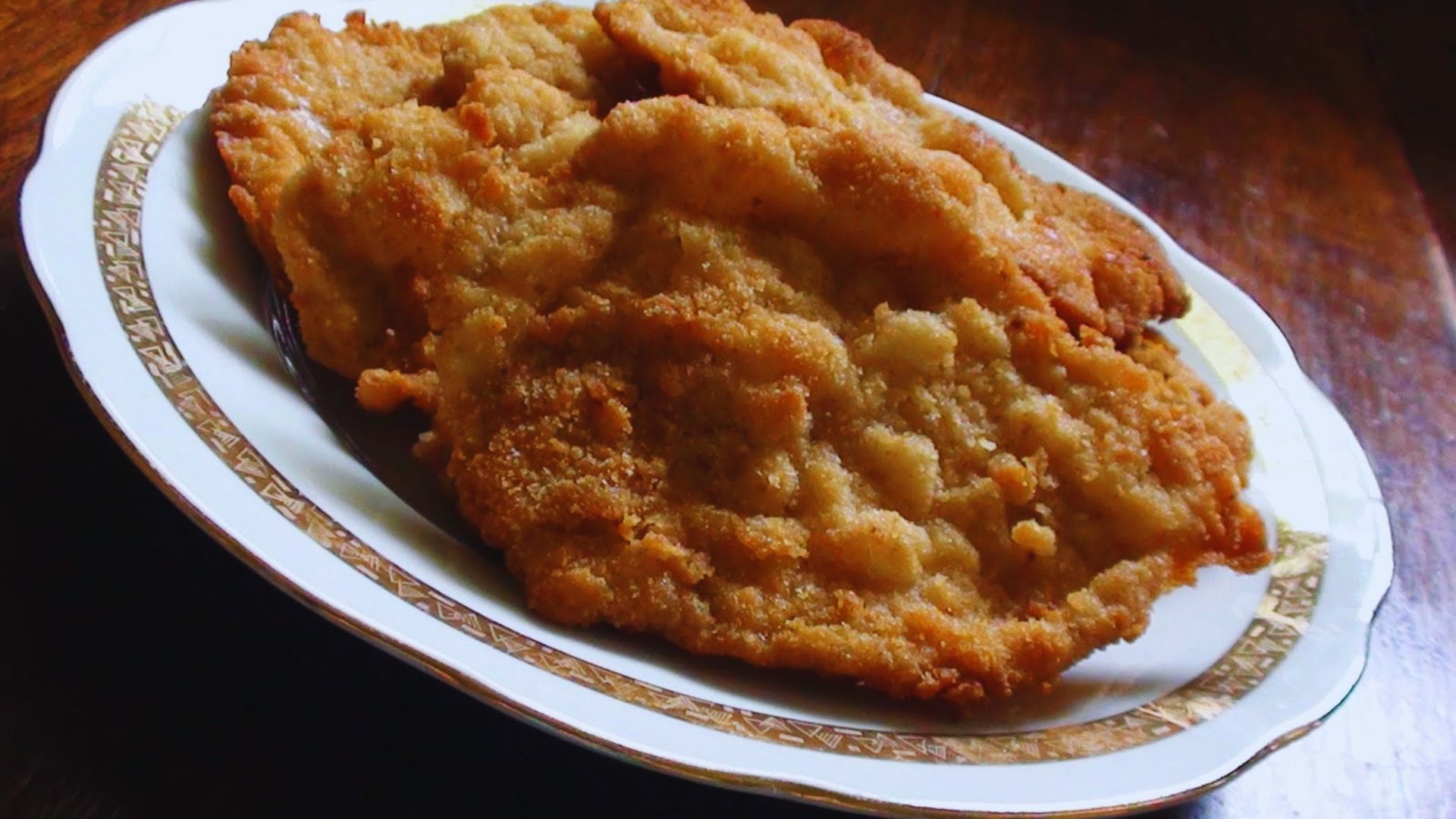
This is Hungary’s version of schnitzel. A thin pork cutlet is coated in breadcrumbs and fried until golden and crunchy on the outside.
It’s served with mashed potatoes or pickled vegetables. Simple, satisfying, and always reliable.
19. Goose Liver (Libamáj)
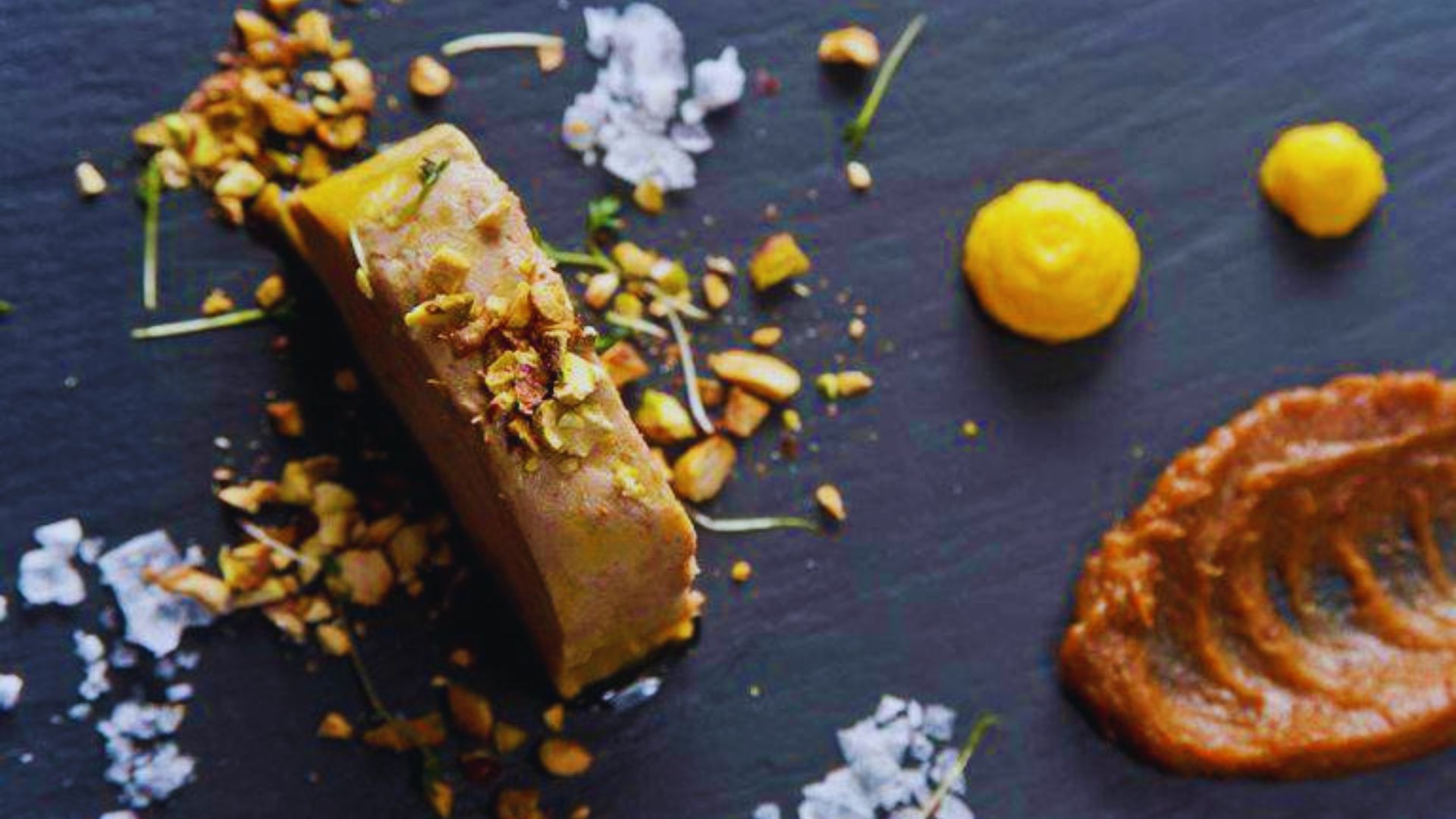
Goose liver is a true Hungarian delicacy. It’s pan-fried in goose fat and served with toasted bread and caramelized onions.
The texture is buttery and rich, and the flavor is intense in the best way possible. If you’re not usually a liver person, this dish might actually change your mind.
20. Braised Beef
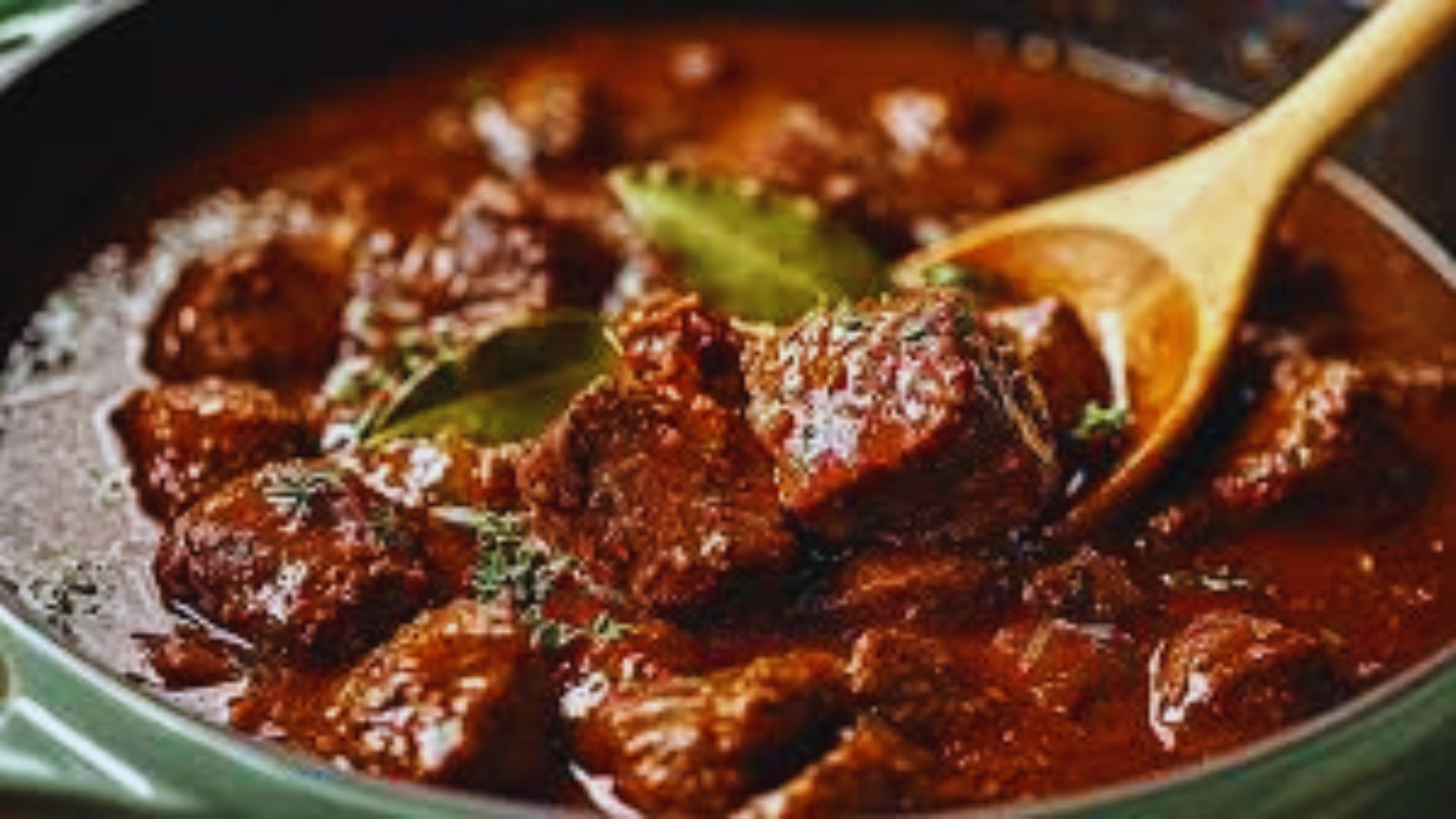
Slow-braised beef is cooked low and slow in paprika broth with vegetables until the meat completely falls apart. The cooking liquid reduces down into a thick, deeply flavored sauce.
It’s served with mashed potatoes or dumplings to soak everything up. The kind of dish you think about long after the meal is over.
21. Veal Paprikash
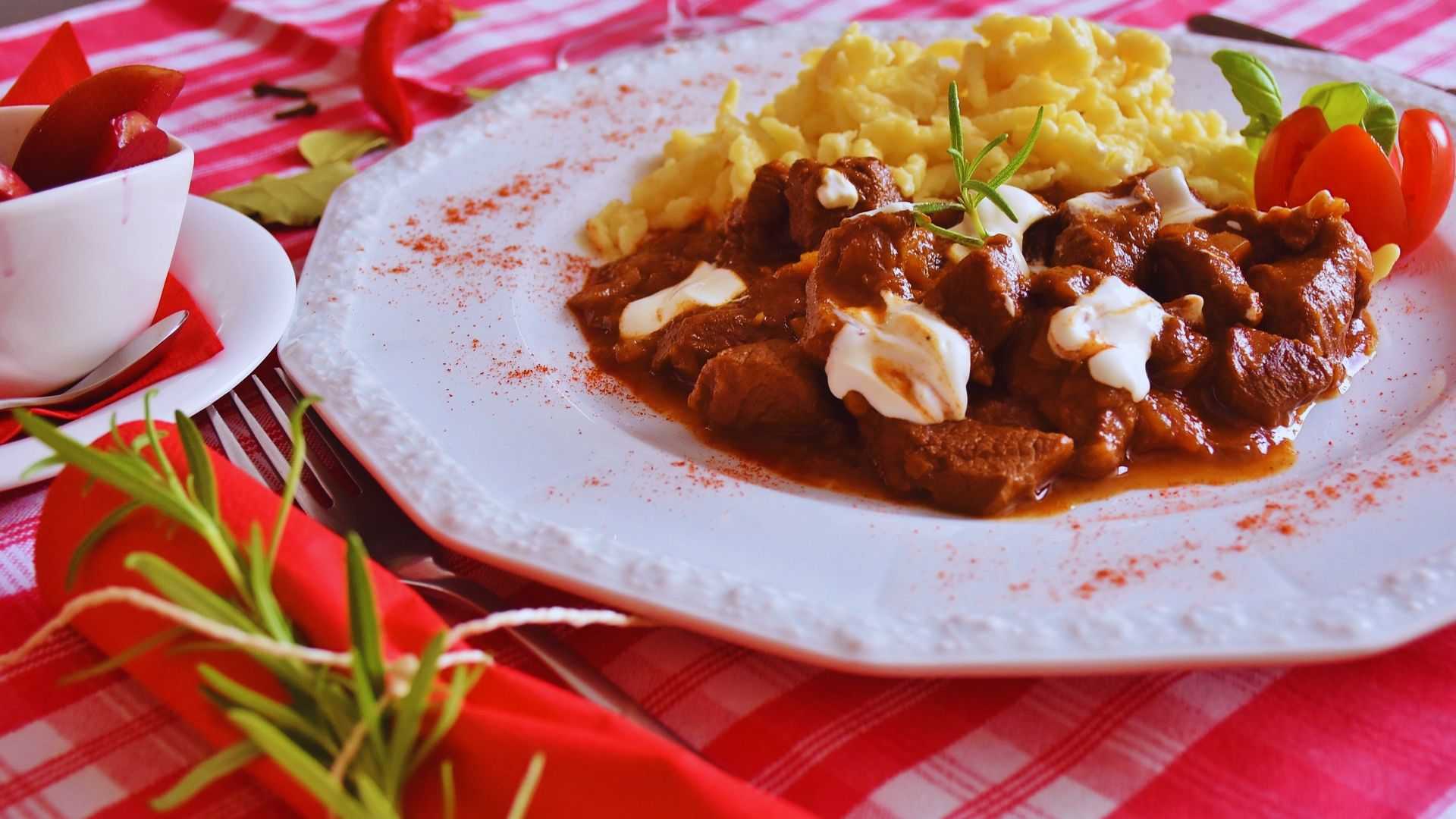
Veal paprikash is a lighter, more delicate version of the classic chicken paprikash. The veal is cooked in the same creamy paprika sauce but the flavor is milder and more subtle.
It’s a great option if you want something a little more refined. Still very much Hungarian food at heart.
22. Stuffed Peppers
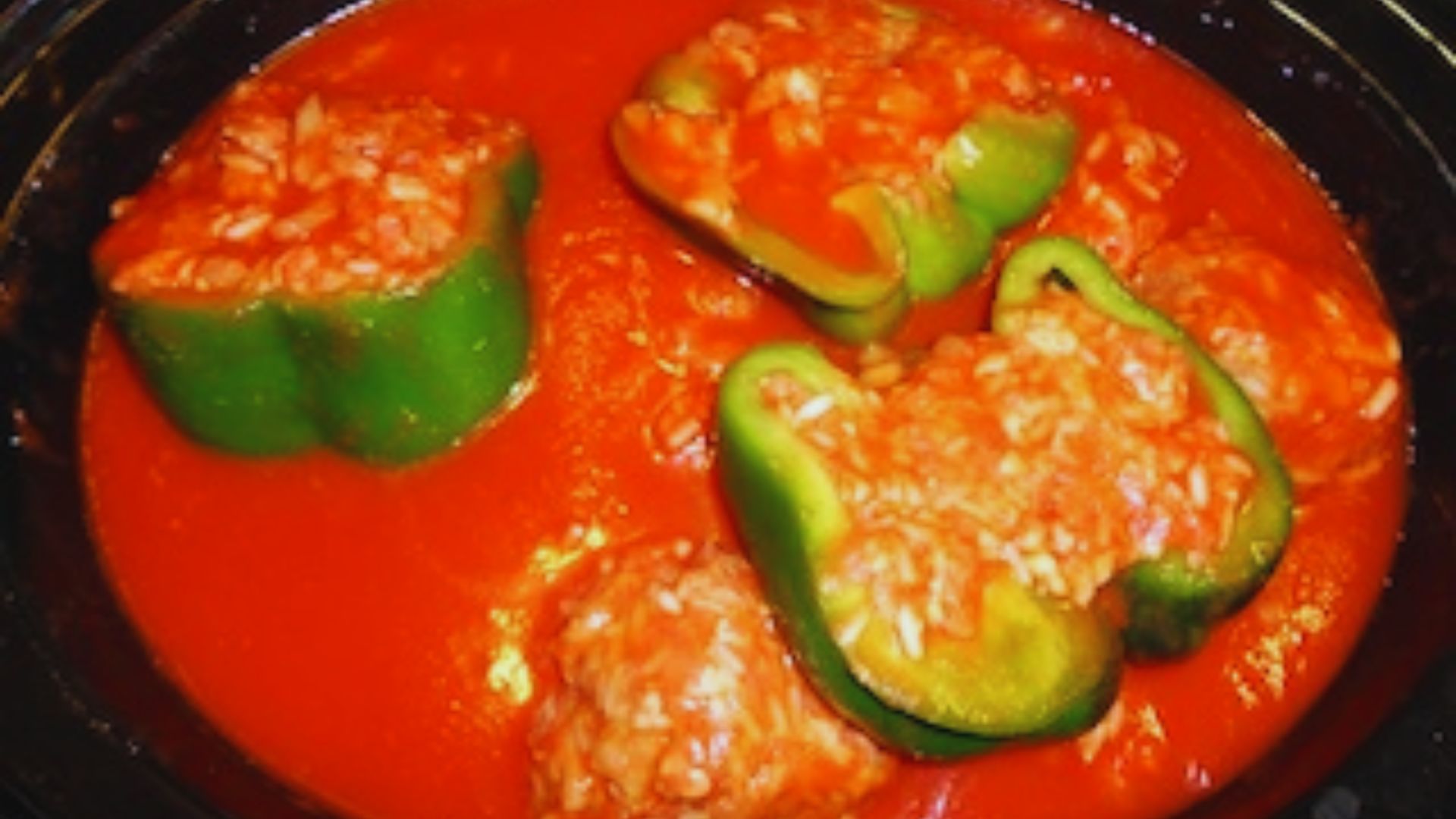
Bell peppers are stuffed with seasoned ground pork and rice, then cooked in a tomato-based sauce until everything is tender.
It’s a very popular everyday Hungarian food dish. The sweet pepper and savory meat filling work together in a way that just makes sense.
23. Pork Stew
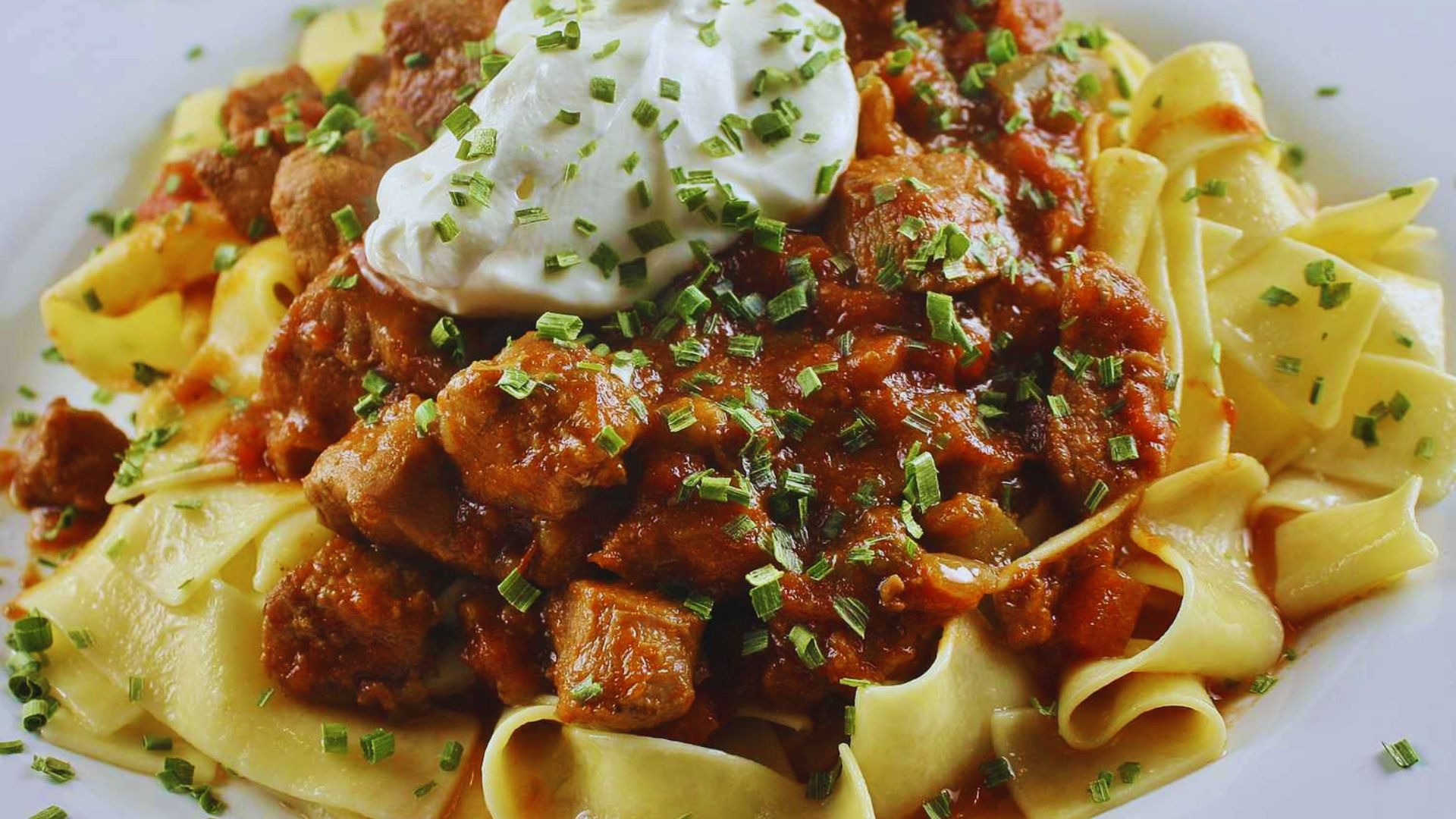
This is a straightforward pork stew with onions, paprika, and sour cream. Pork chunks cook low and slow until very tender and the sauce thickens up wonderfully.
It’s the kind of dish that tastes even better reheated the next day. Reliable, filling, and good every time.
24. Grilled Sausage Plate
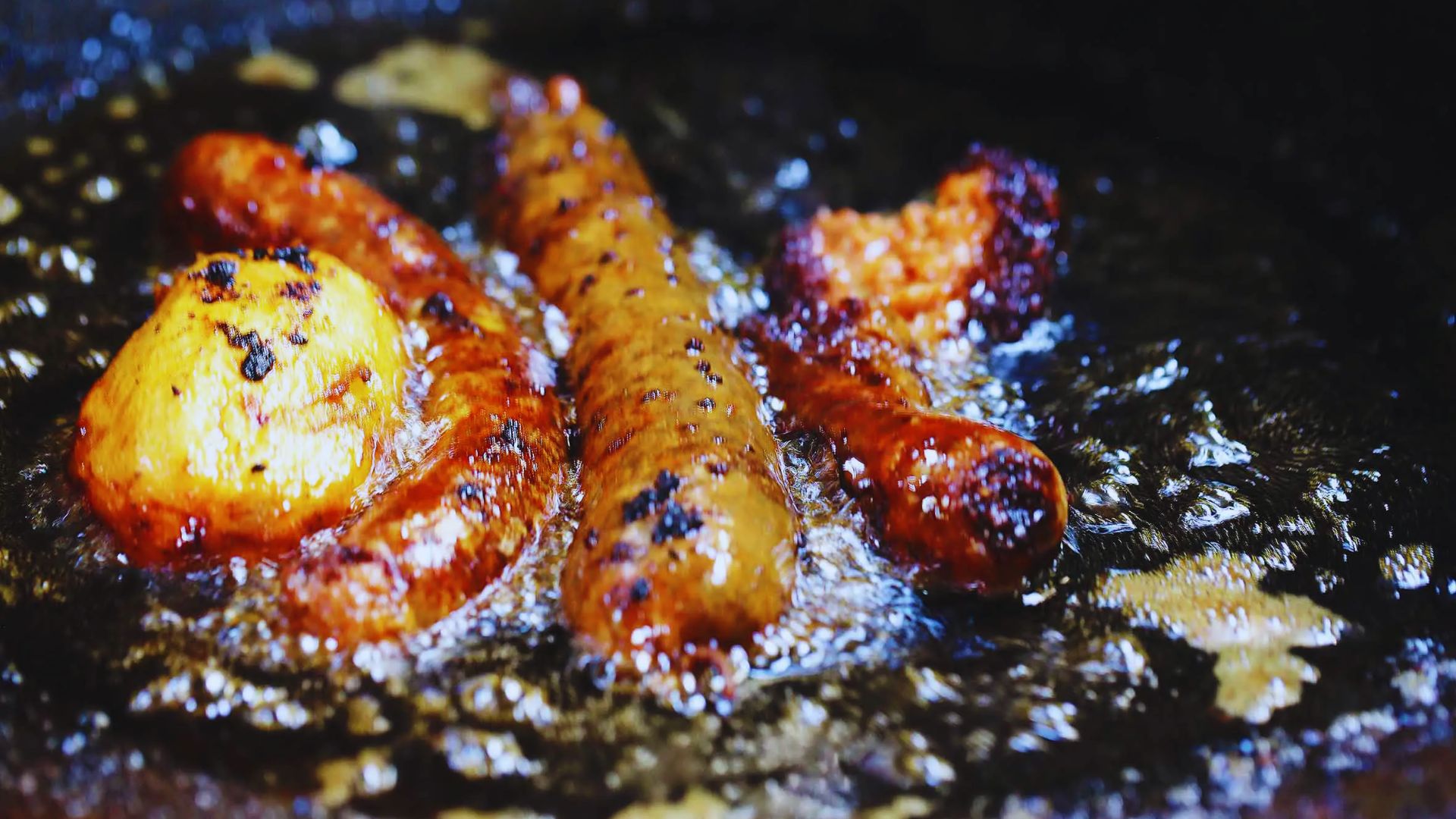
A grilled sausage plate is a staple at Hungarian outdoor festivals and markets. Thick pork sausages go over an open flame until charred and smoky, then get served with mustard, fresh bread, and pickles.
Every element on the plate works together. Simple food done exactly right.
25. Lecsó (Pepper & Tomato Stew)
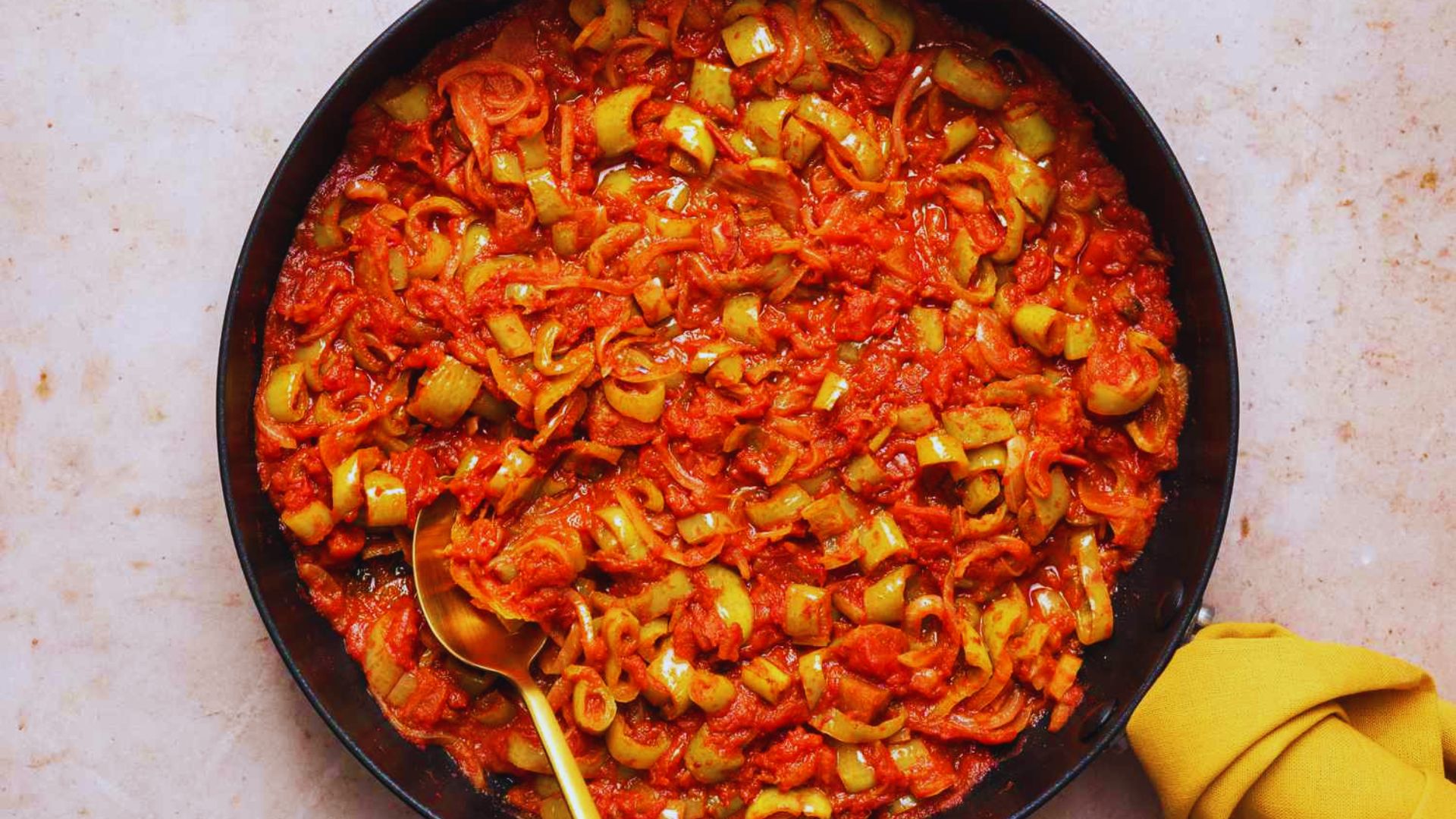
Lecsó is Hungary’s answer to ratatouille. It’s a thick stew made with yellow peppers, tomatoes, onions, and paprika cooked down together until everything is soft and saucy.
Eggs or sausage can be added, but the vegetable-only version holds its own. A great summer dish when peppers and tomatoes are at their best.
26. Potato Paprikash
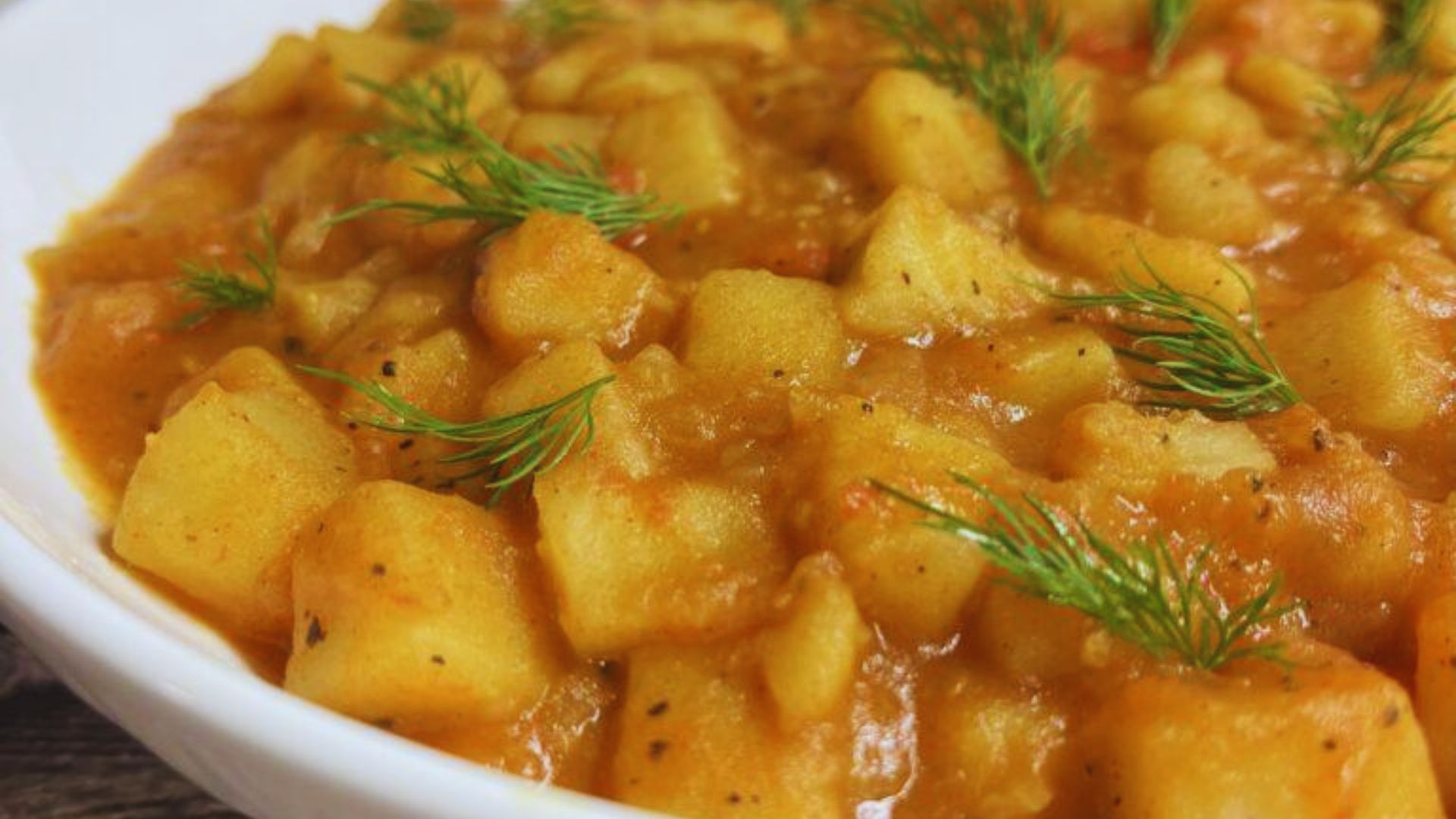
Potatoes cook in a paprika-spiced sauce with onions and sour cream. No meat needed.
The sour cream gives it a creamy, tangy finish that makes it far more interesting than plain potatoes. A lot of Hungarians eat this as a regular weekday main course.
27. Fried Cheese
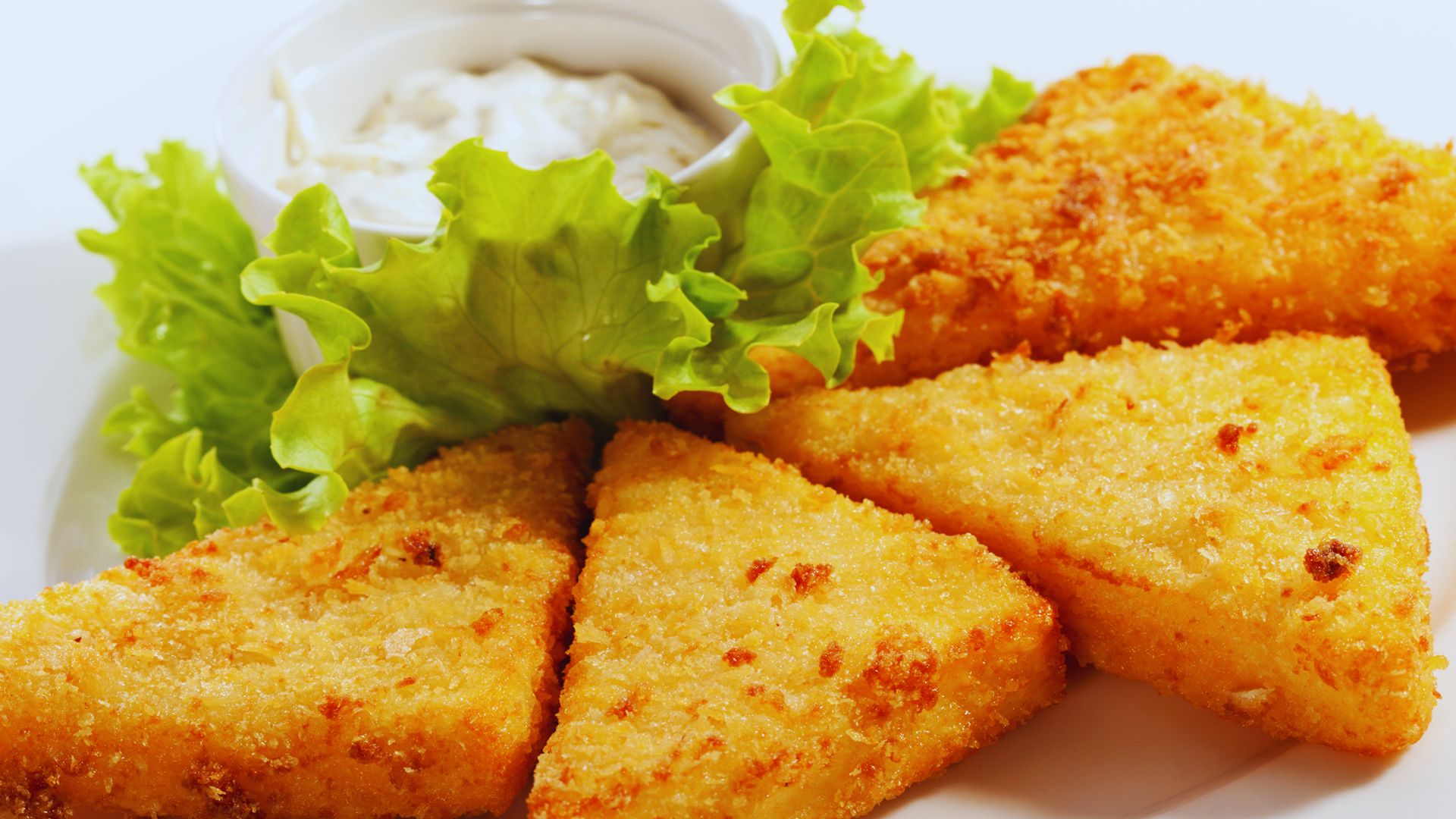
Thick slices of cheese are coated in egg and breadcrumbs, then deep-fried until golden. The outside is crunchy and the inside is completely melted.
It’s served with tartar sauce or a simple salad on the side. Comfort food that works for everyone.
28. Stuffed Mushrooms

Large mushroom caps are filled with a mix of cheese, garlic, herbs, and sometimes breadcrumbs.
They’re baked until golden and bubbling on top. A simple, satisfying vegetarian option that works as both a starter and a side dish.
29. Cabbage Noodles
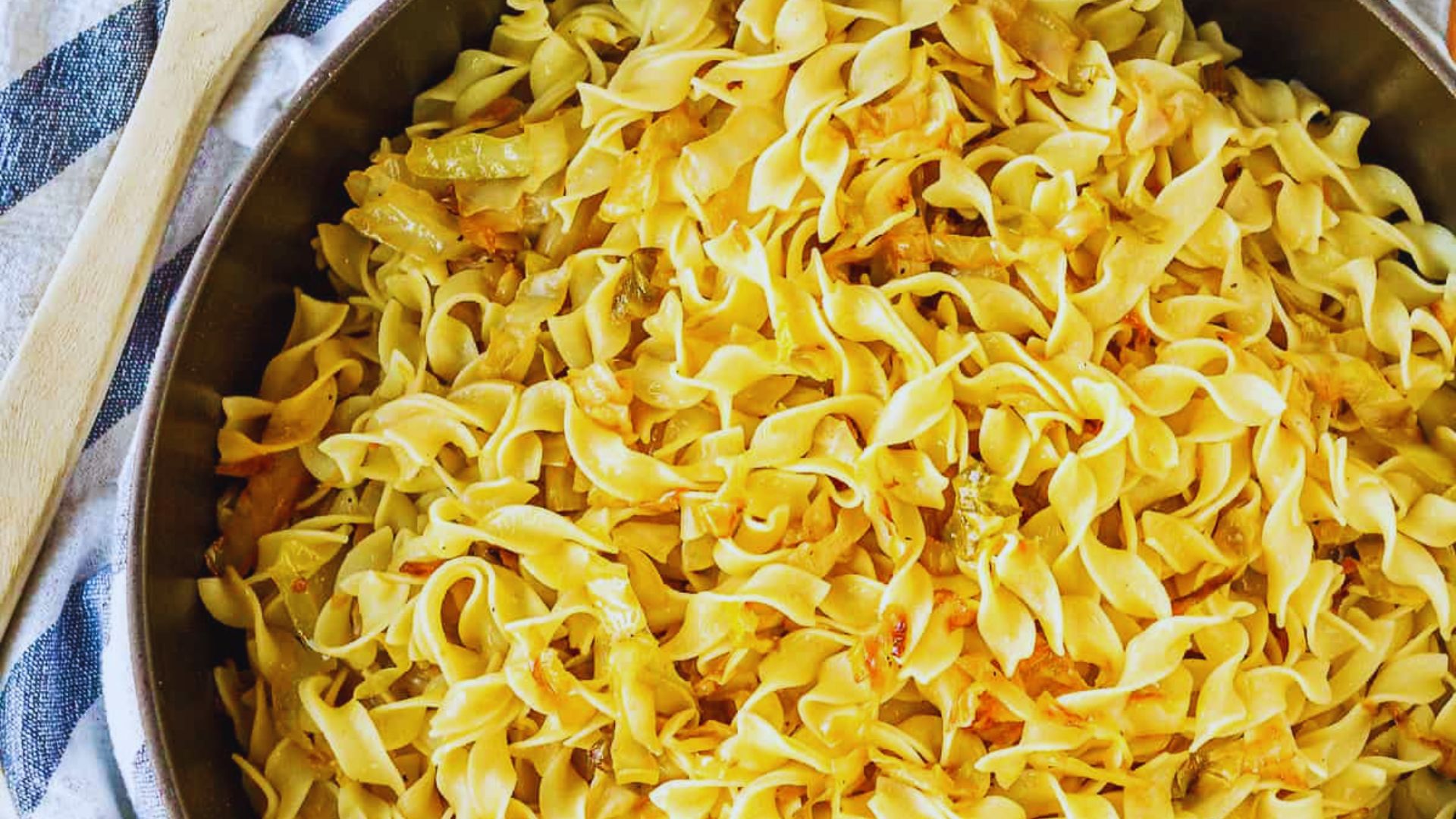
Wide egg noodles tossed with slow-cooked, caramelized cabbage and black pepper. It sounds basic. It’s not.
The sweet, slightly charred cabbage coats every noodle and the result is addictive. Hungarians are deeply attached to this dish for good reason.
30. Dumplings (Nokedli)
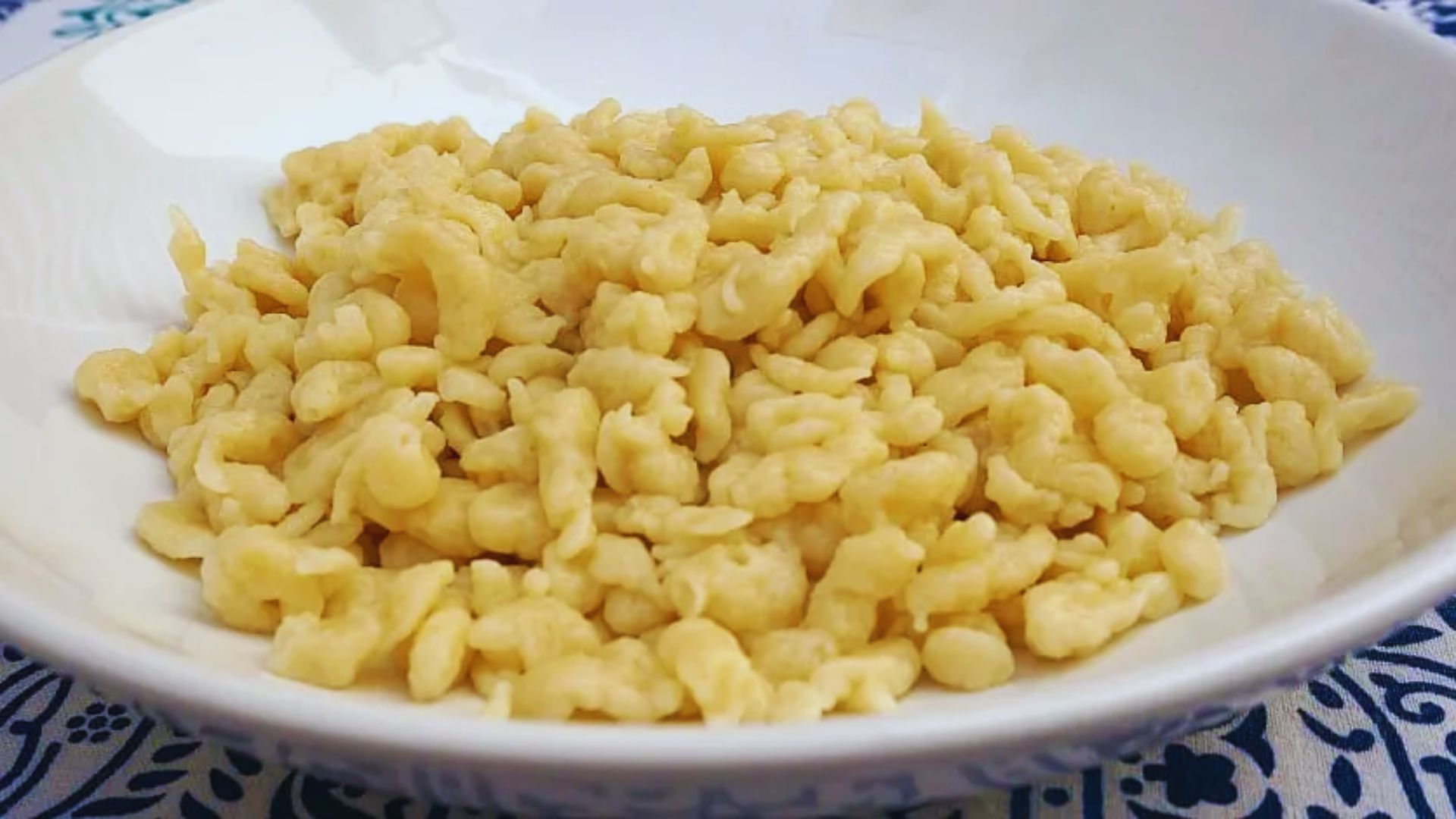
Nokedli are small, soft egg dumplings very similar to German spätzle. A soft batter is pressed through holes directly into boiling water.
They come out light, fluffy, and perfect at soaking up any paprika sauce. The default side dish for most saucy Hungarian food dishes.
31. Egg Barley (Tarhonya)
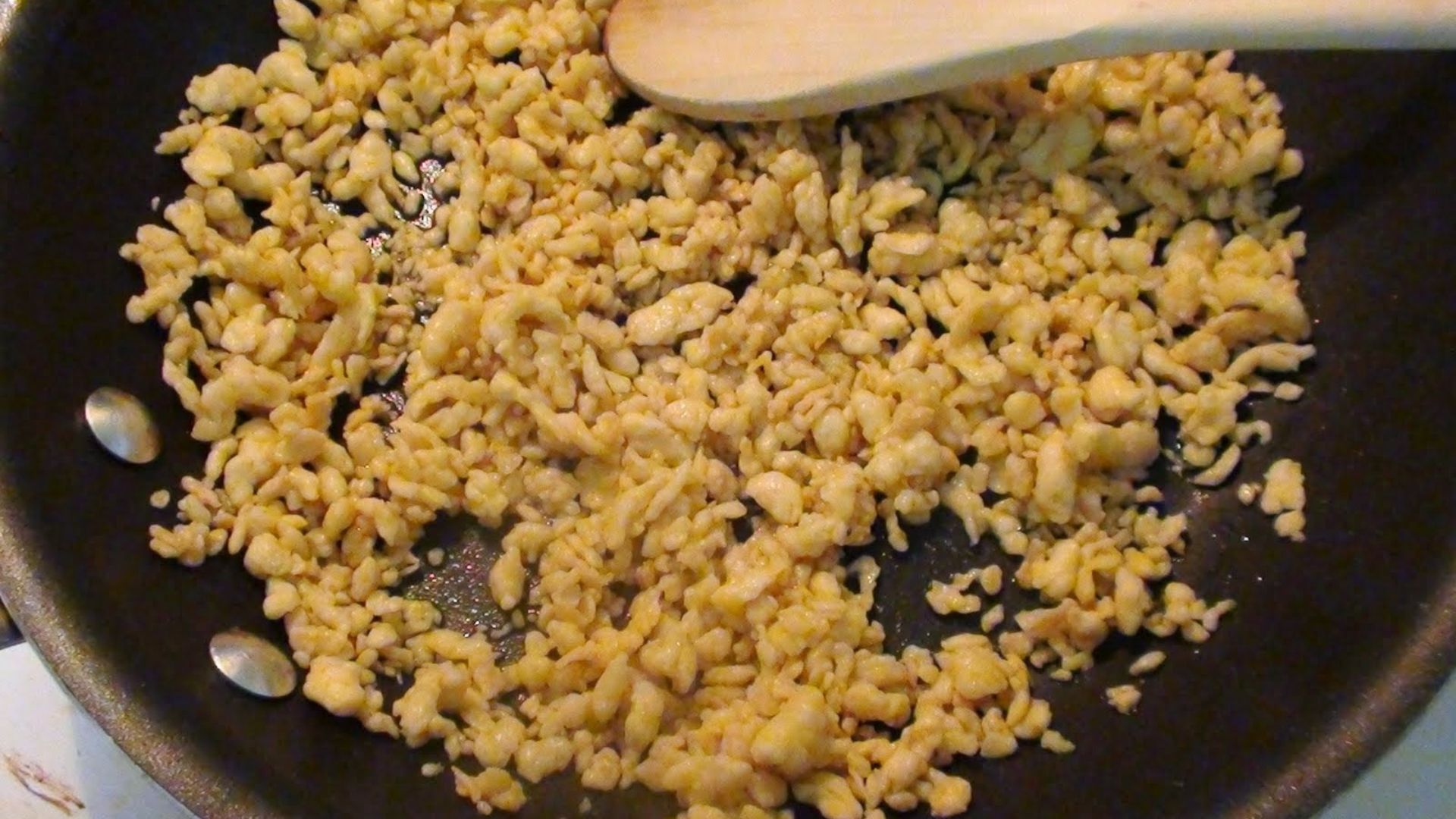
Tarhonya is a traditional egg pasta shaped like small grains. It gets toasted before cooking, which gives it a nutty, roasted flavor.
Used as a side dish in place of rice or regular pasta. A very old-school Hungarian food staple.
32. Spinach Stew
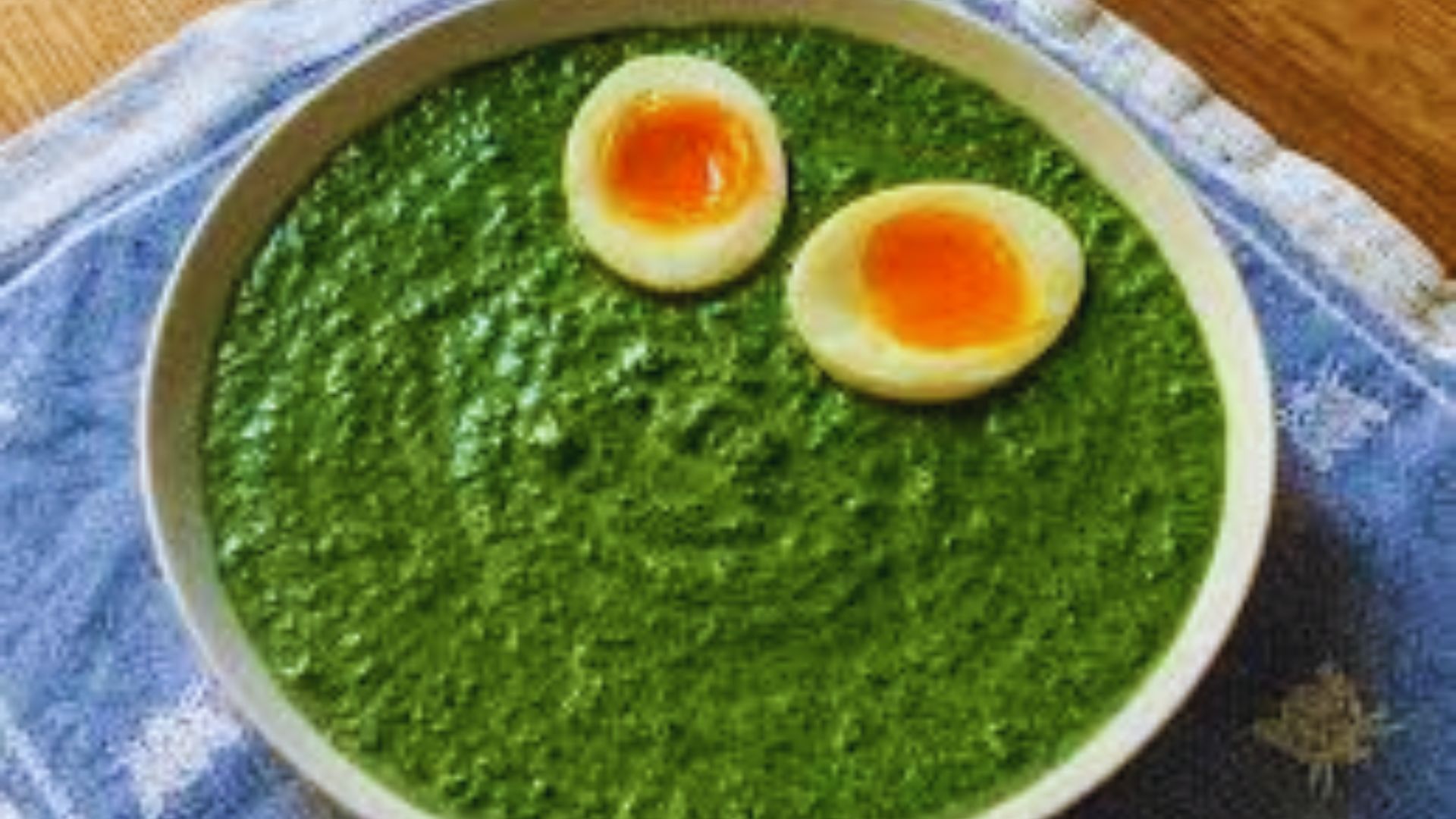
A creamy spinach dish made with a roux base, garlic, and a pinch of nutmeg. It’s often served with fried eggs placed right on top, or alongside meat dishes.
The texture is smooth and thick. A classic in Hungarian home cooking that never really goes out of style.
33. Vegetable Paprikash
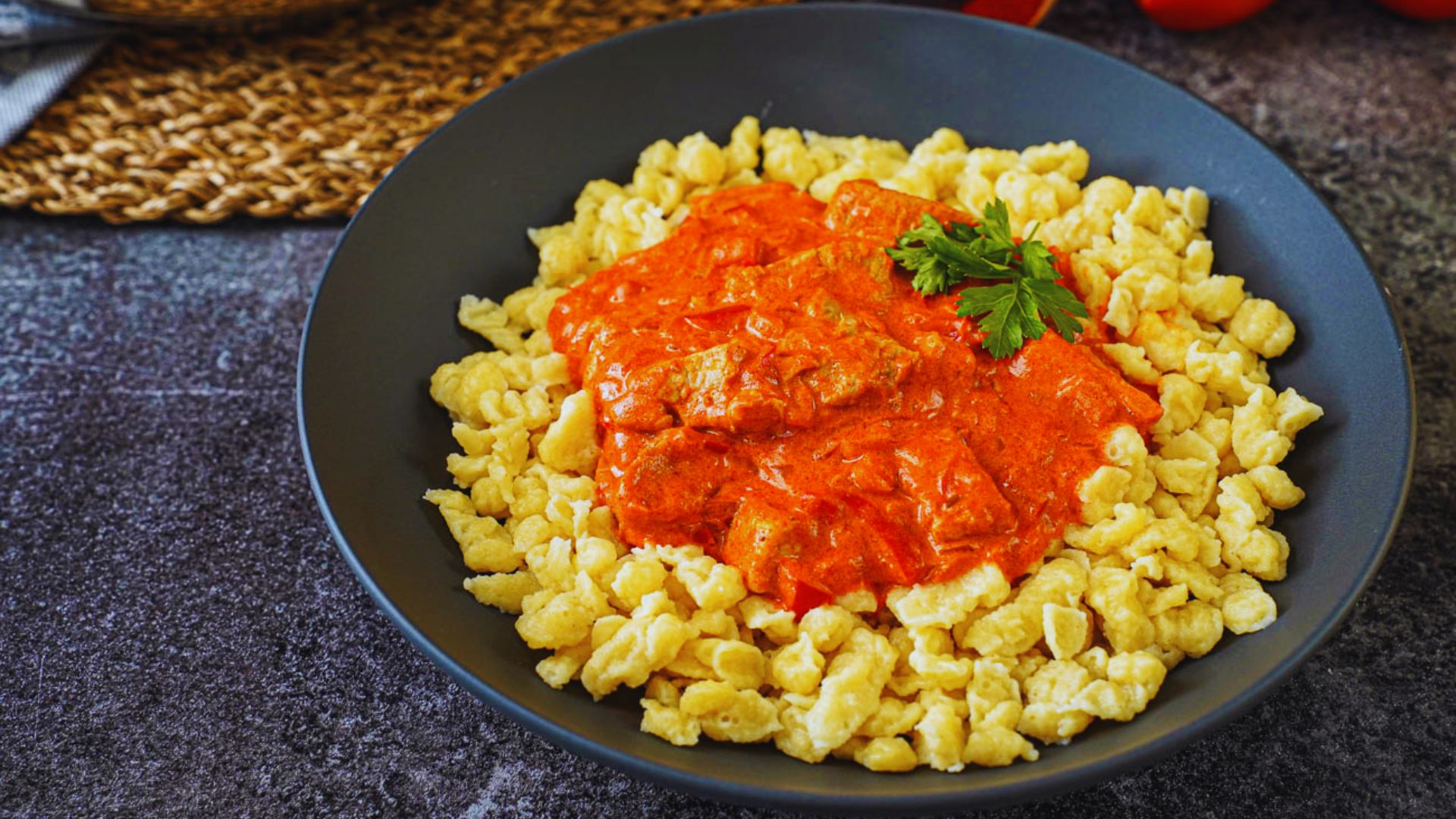
Mixed vegetables cooked in the same creamy paprika and sour cream sauce used for meat paprikash.
No meat, but still very flavorful and filling. A great way to get the real Hungarian food experience without the meat. The paprika does all the work.
34. Pickled Vegetables
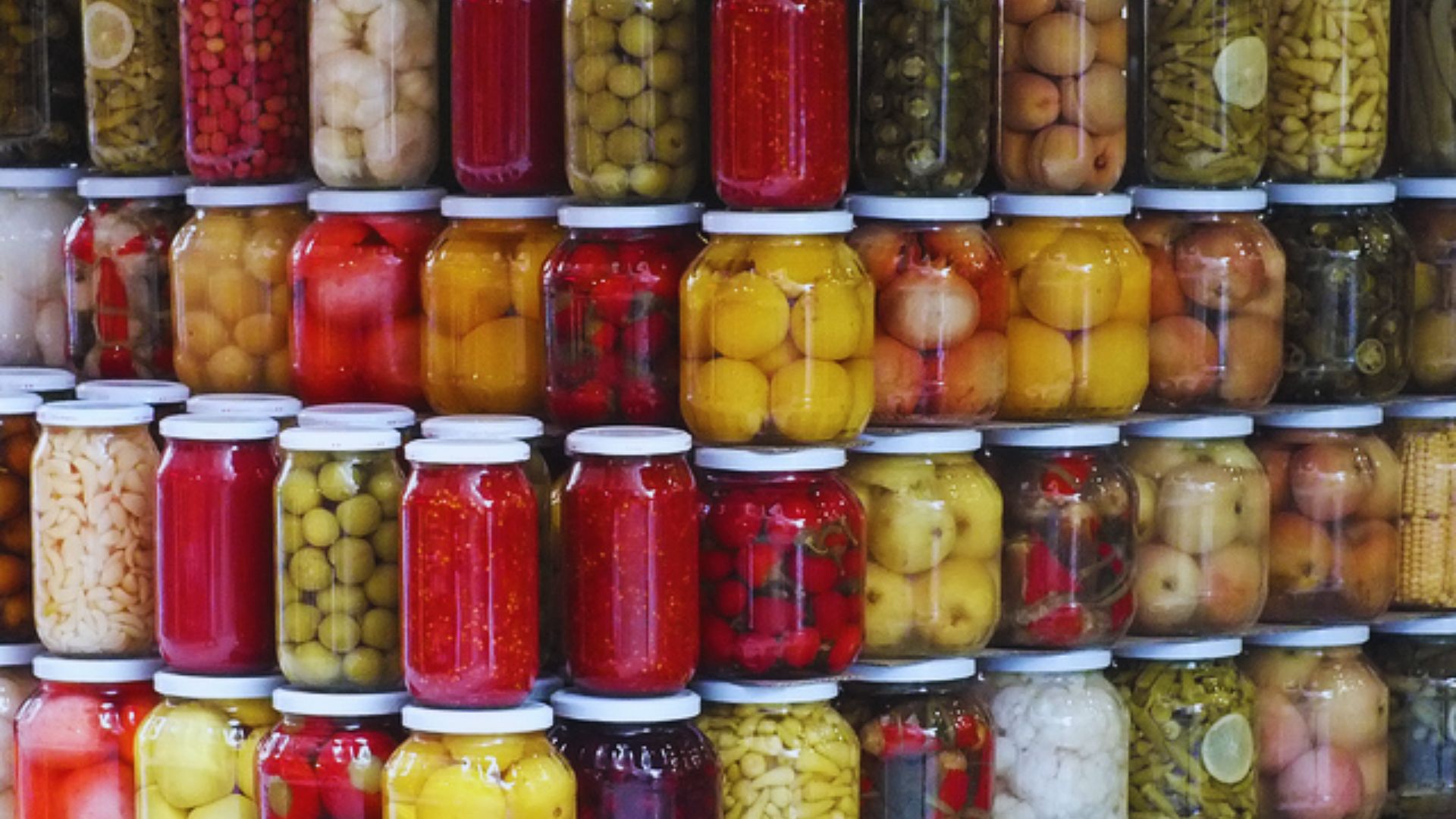
Pickled cucumbers, peppers, and cabbage show up alongside almost every Hungarian meal.
They add a tangy, crunchy contrast to rich and heavy dishes. No proper Hungarian plate feels complete without them on the side.
35. Fried Potatoes Hungarian Style
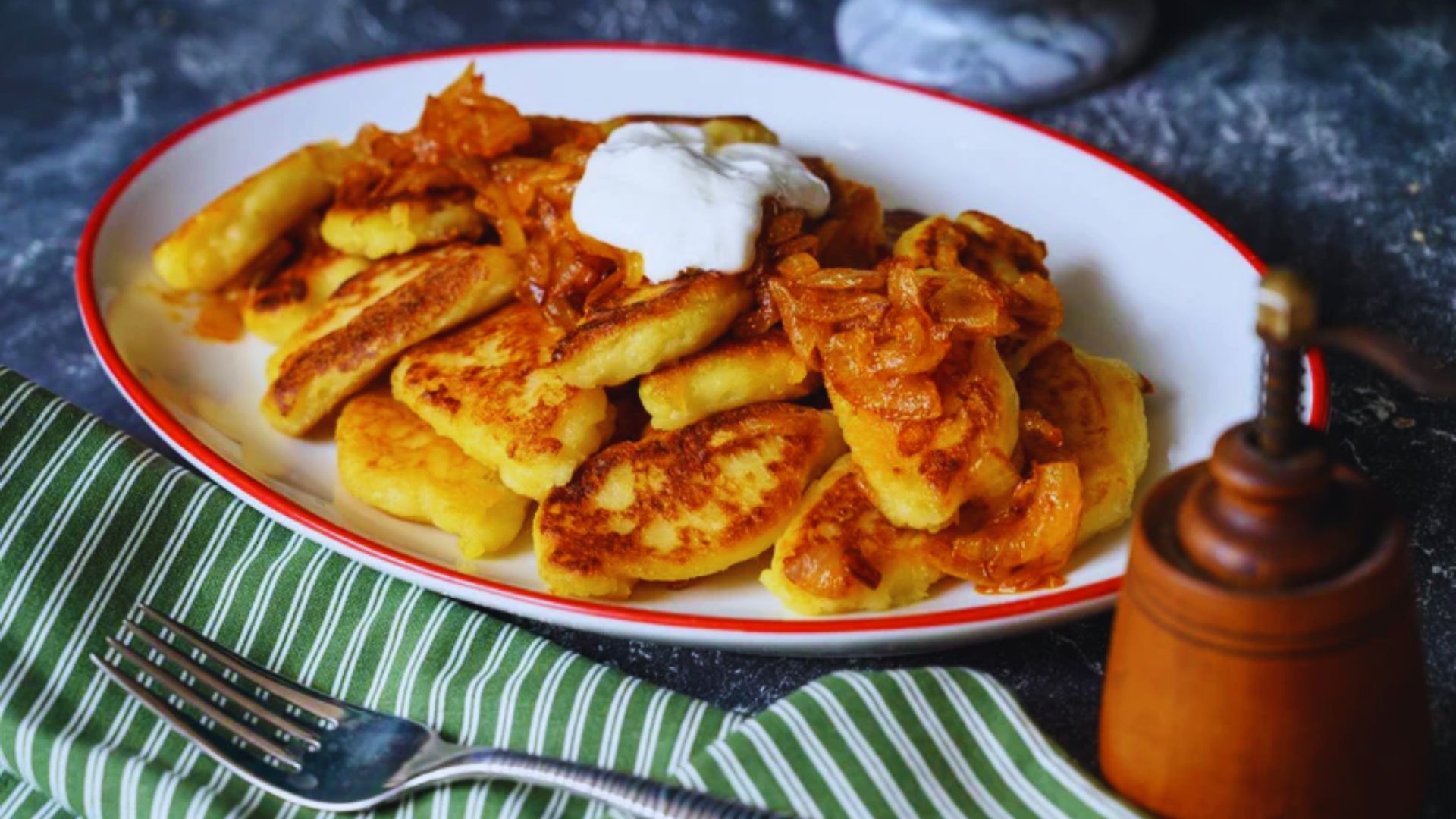
These are not ordinary fries. Hungarian fried potatoes are pan-cooked with onions and paprika, then finished with a spoonful of sour cream.
More of a pan-fried potato dish than anything you’d get at a fast food counter. Satisfying as a side or a light meal on their own.
36. Creamed Peas
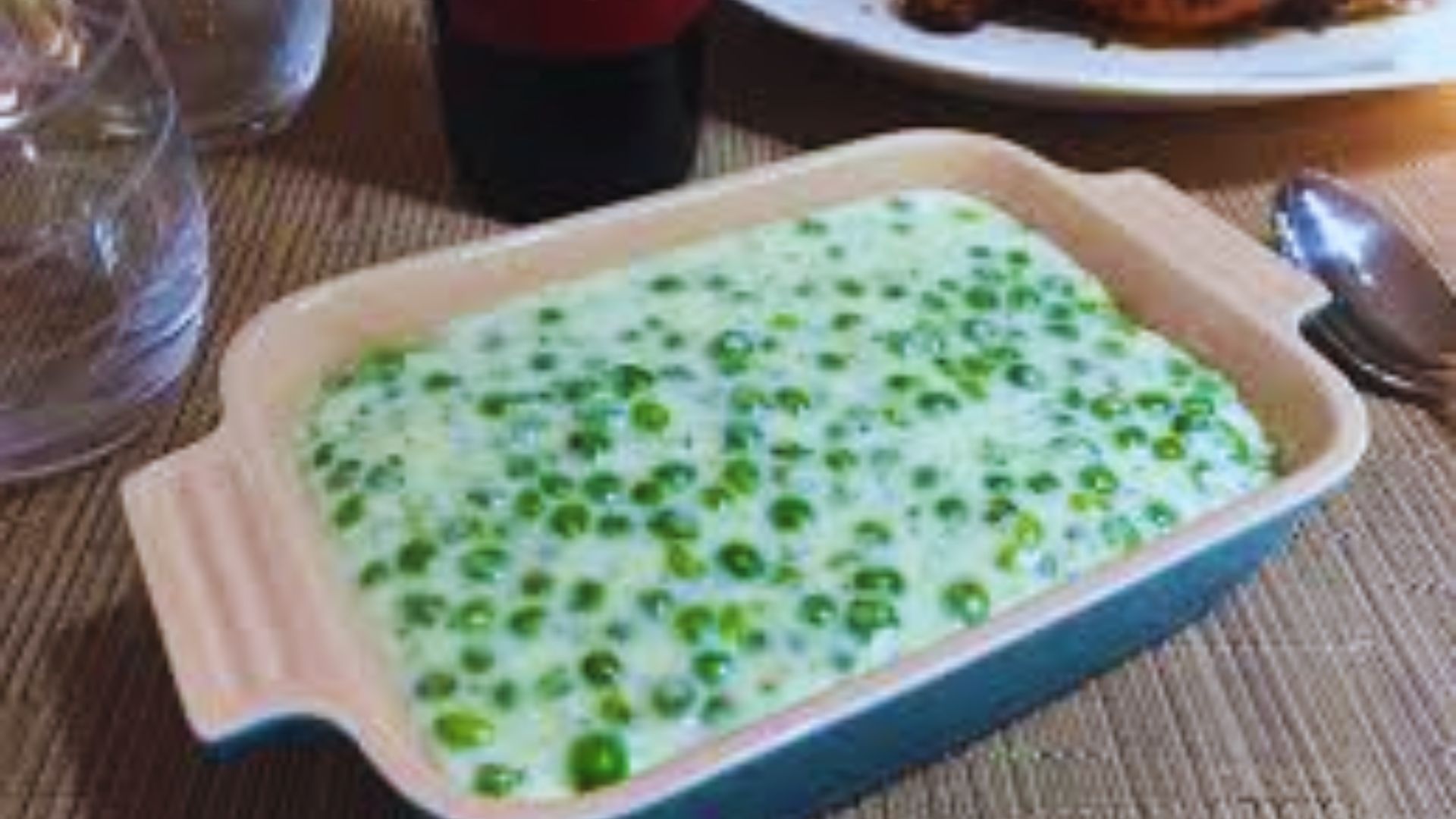
Peas cooked in a creamy, slightly sweet sauce with butter and a touch of flour. Simple, old-fashioned, and surprisingly good.
The natural sweetness of the peas works really well next to heavier meat dishes. Don’t write this one off just because it sounds plain.
37. Lángos
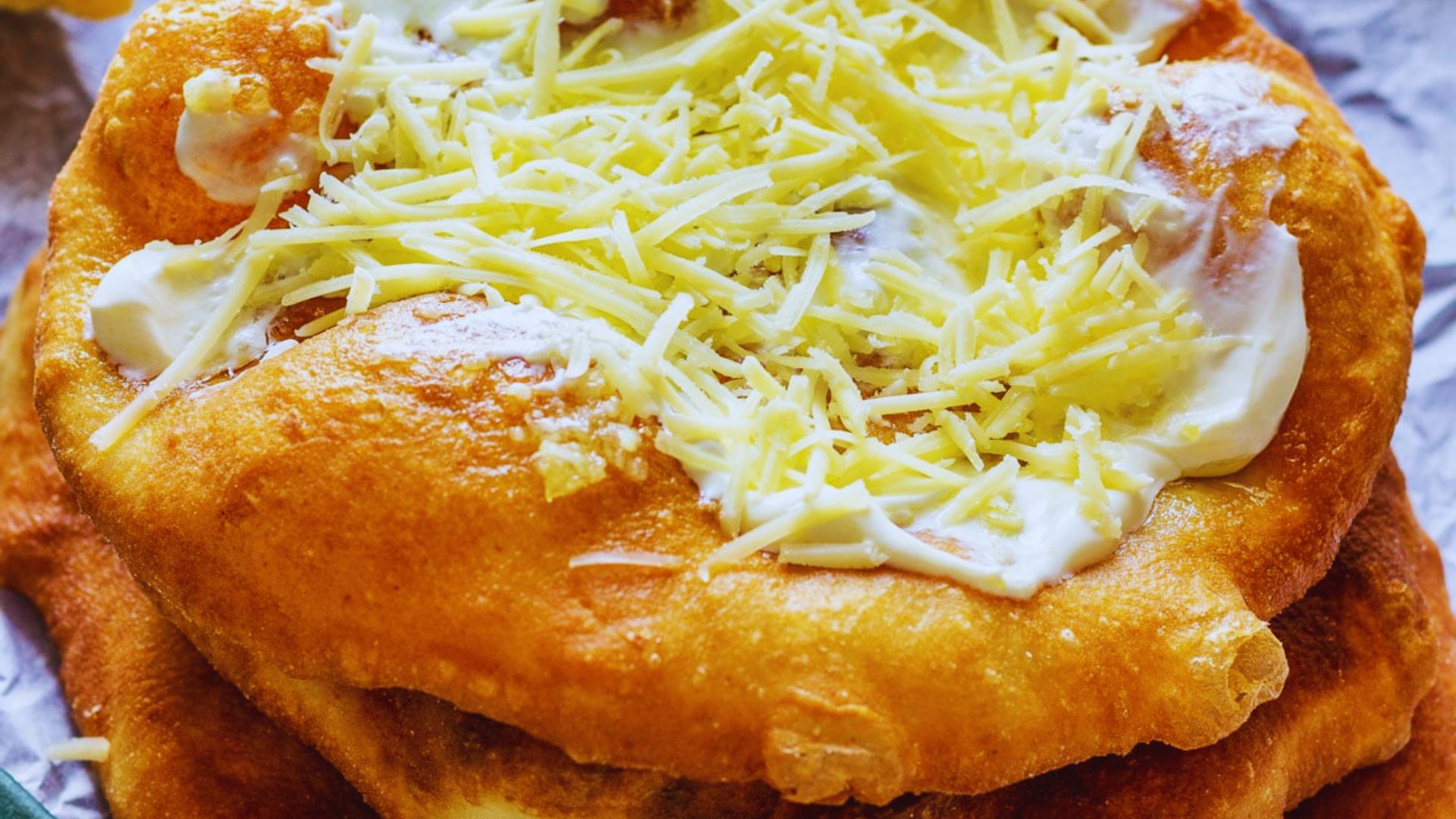
Lángos is Hungary’s most popular street food, full stop. Deep-fried dough served hot and fresh, topped with sour cream, grated cheese, or garlic butter.
The outside is crispy and the inside is soft and chewy. You’ll find it at every market and festival across the country.
38. Pogácsa (Savory Biscuits)

Pogácsa are small, round savory biscuits made with pork fat, cheese, or cracklings. They bake up golden and flaky on the outside.
The kind of snack you grab alongside a coffee or a cold beer. Every Hungarian grandmother has her own slightly different recipe.
39. Stuffed Flatbread
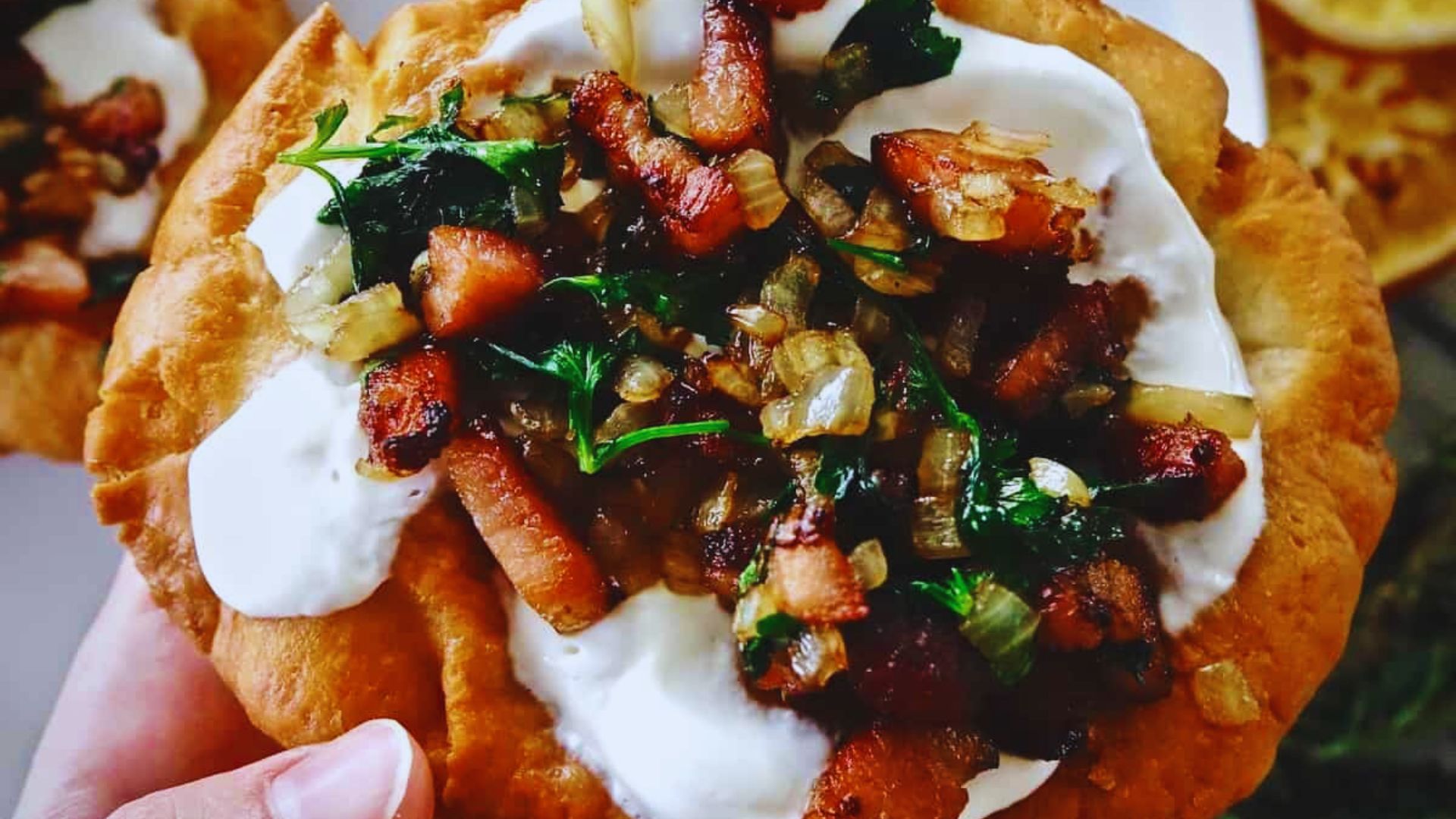
Flatbread stuffed with cheese, potato, or seasoned ground meat and cooked on a hot griddle.
The outside crisps up while the filling melts inside. A filling street food that’s easy to eat on the go and very hard to stop eating.
40. Chimney Cake (Kürtőskalács)
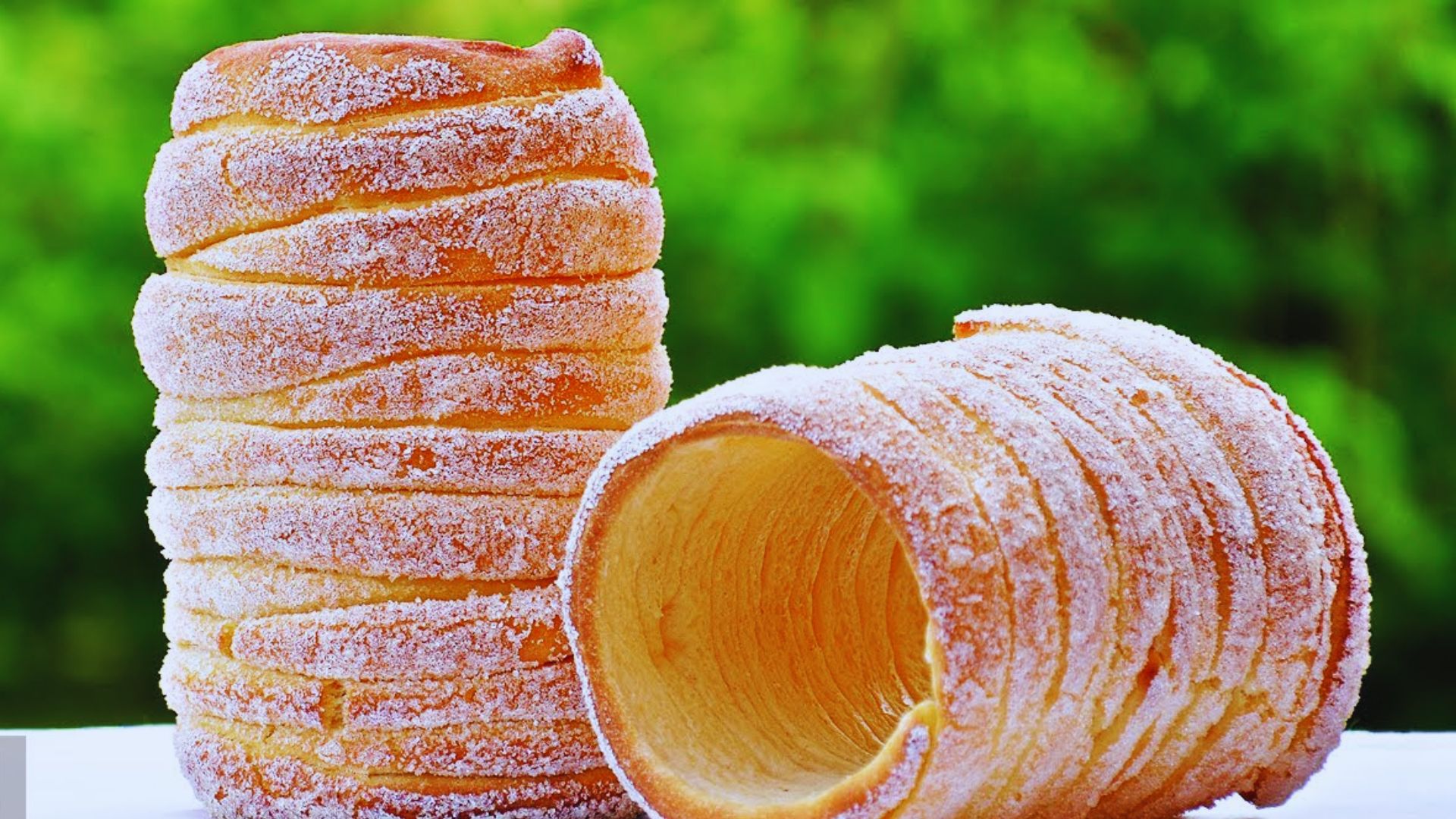
Kürtőskalács is one of the most iconic Hungarian street foods you’ll ever eat. Sweet dough is wrapped around a wooden spit and slowly rotated over hot coals until the outside caramelizes into a crunchy, golden crust.
The inside stays soft and fluffy. You can get it plain or rolled in cinnamon sugar, crushed walnuts, or coconut.
41. Pretzel Hungarian Style
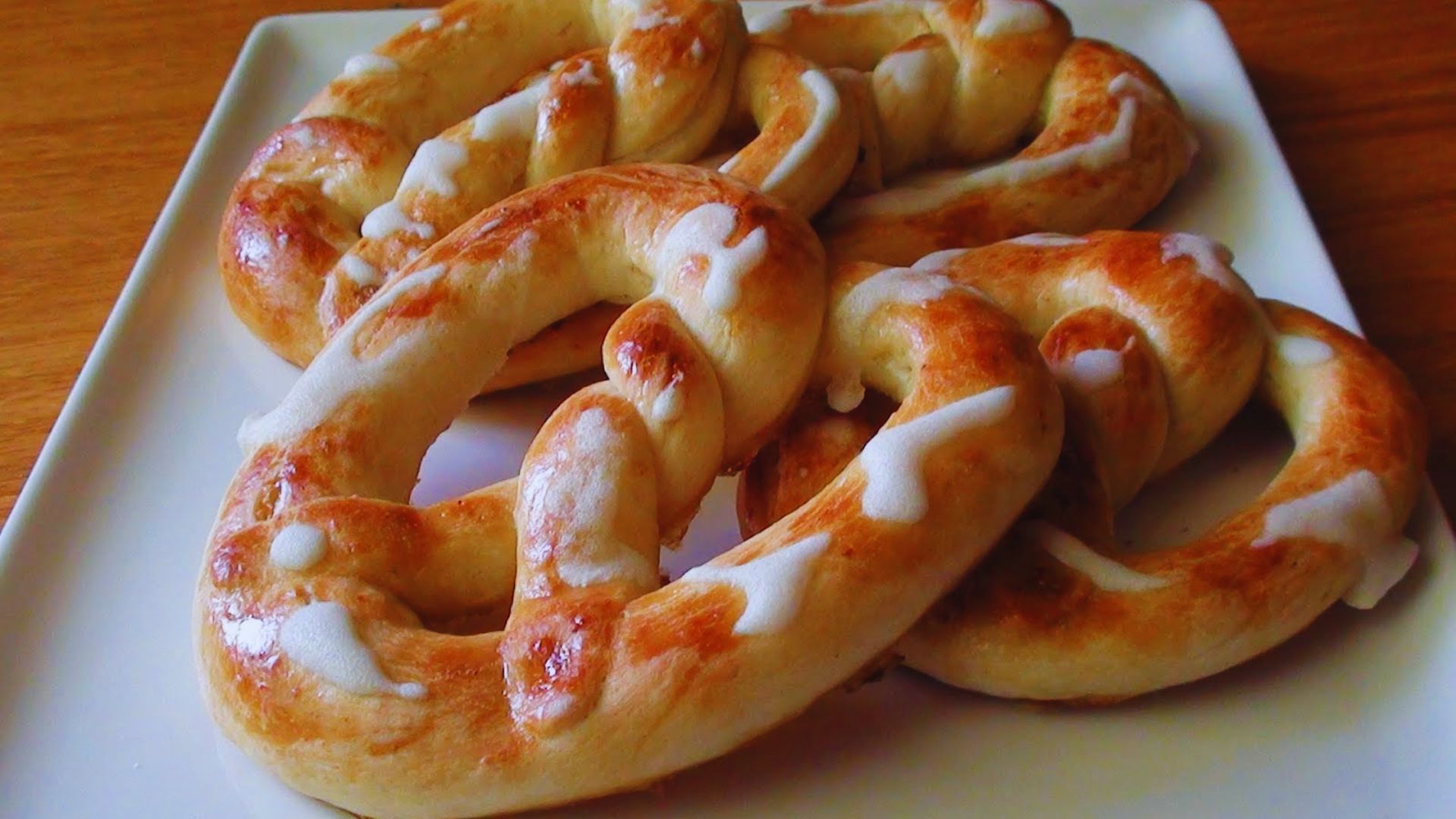
Hungarian pretzels are soft, thick, and chewy, topped with coarse salt and caraway seeds. They’re doughier and more satisfying than thinner pretzel styles.
You’ll find them at bakeries and train stations all over the country. Great as a quick snack with a smear of mustard.
42. Sausage Sandwich
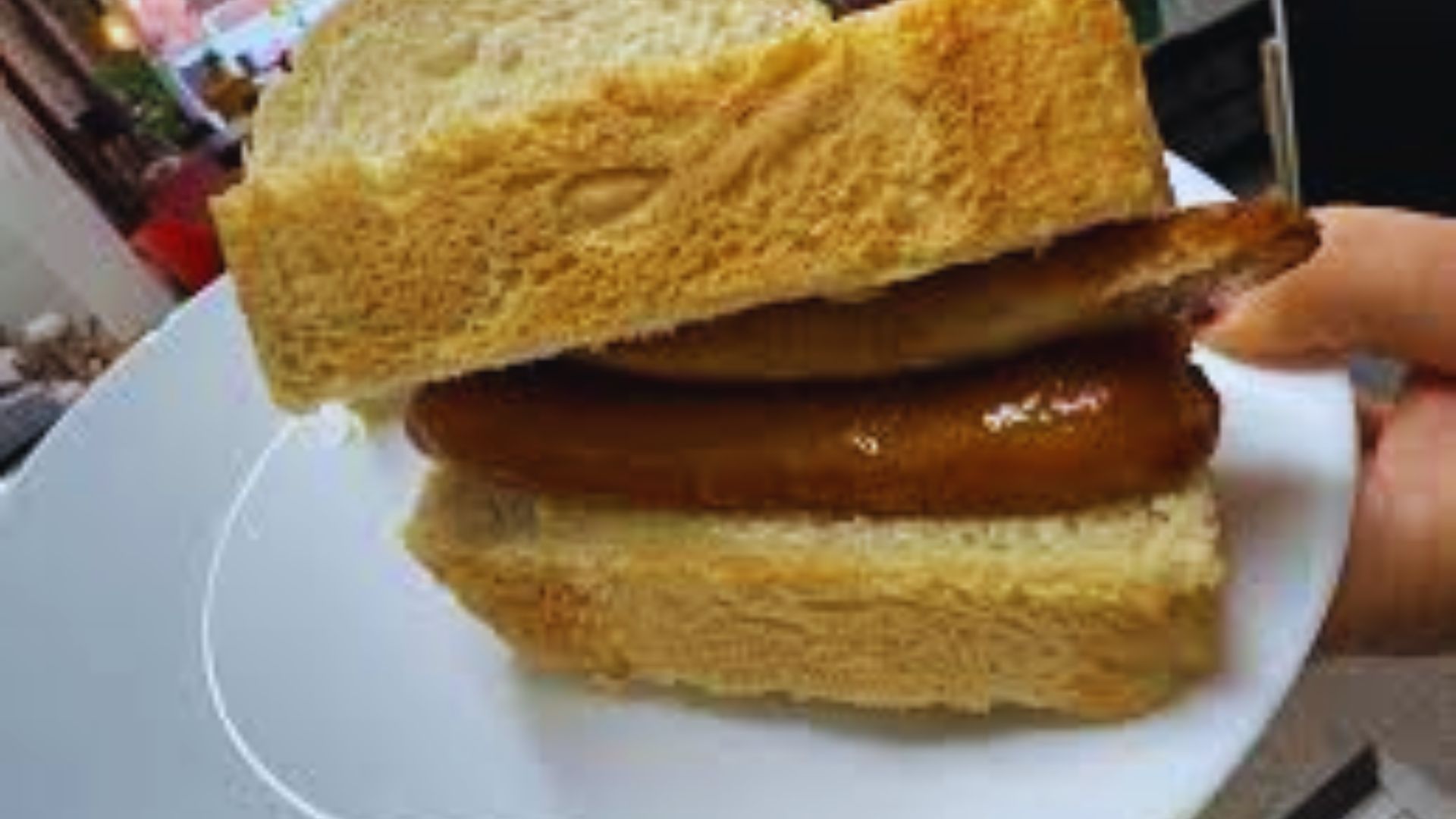
A grilled Hungarian sausage tucked into a fresh roll with mustard and pickles. No fancy preparation needed.
The smoky sausage, tangy mustard, and crunchy pickles do all the work. This is the kind of thing you eat standing at a market stall and it tastes better for it.
43. Street Goulash Bread Bowl
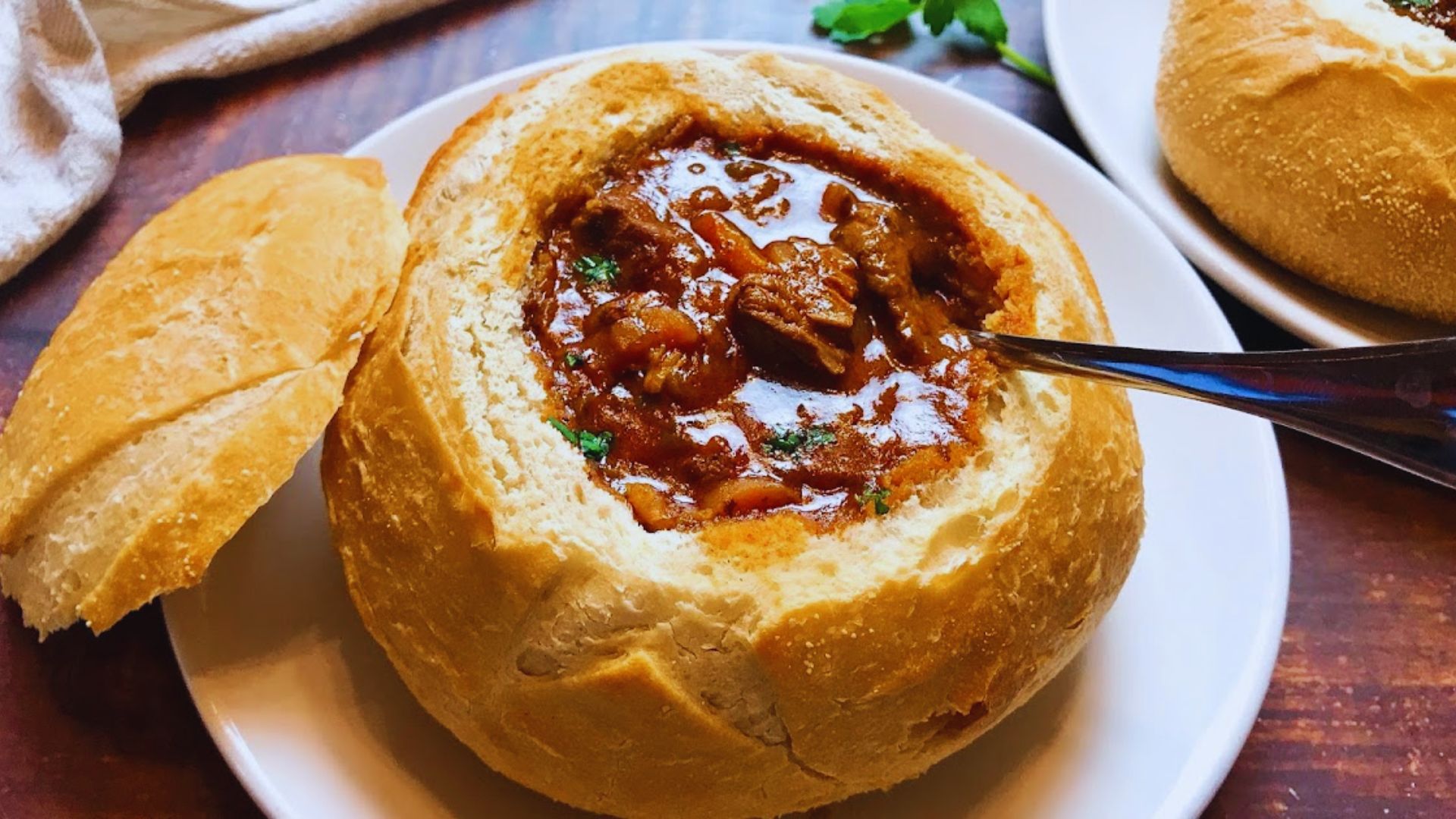
Thick, rich goulash served inside a hollowed-out bread roll. The bread soaks up the paprika broth as you eat and becomes part of the meal.
It’s messy, filling, and completely worth it. Hungarian food at its most fun and casual.
44. Fried Dough Snacks
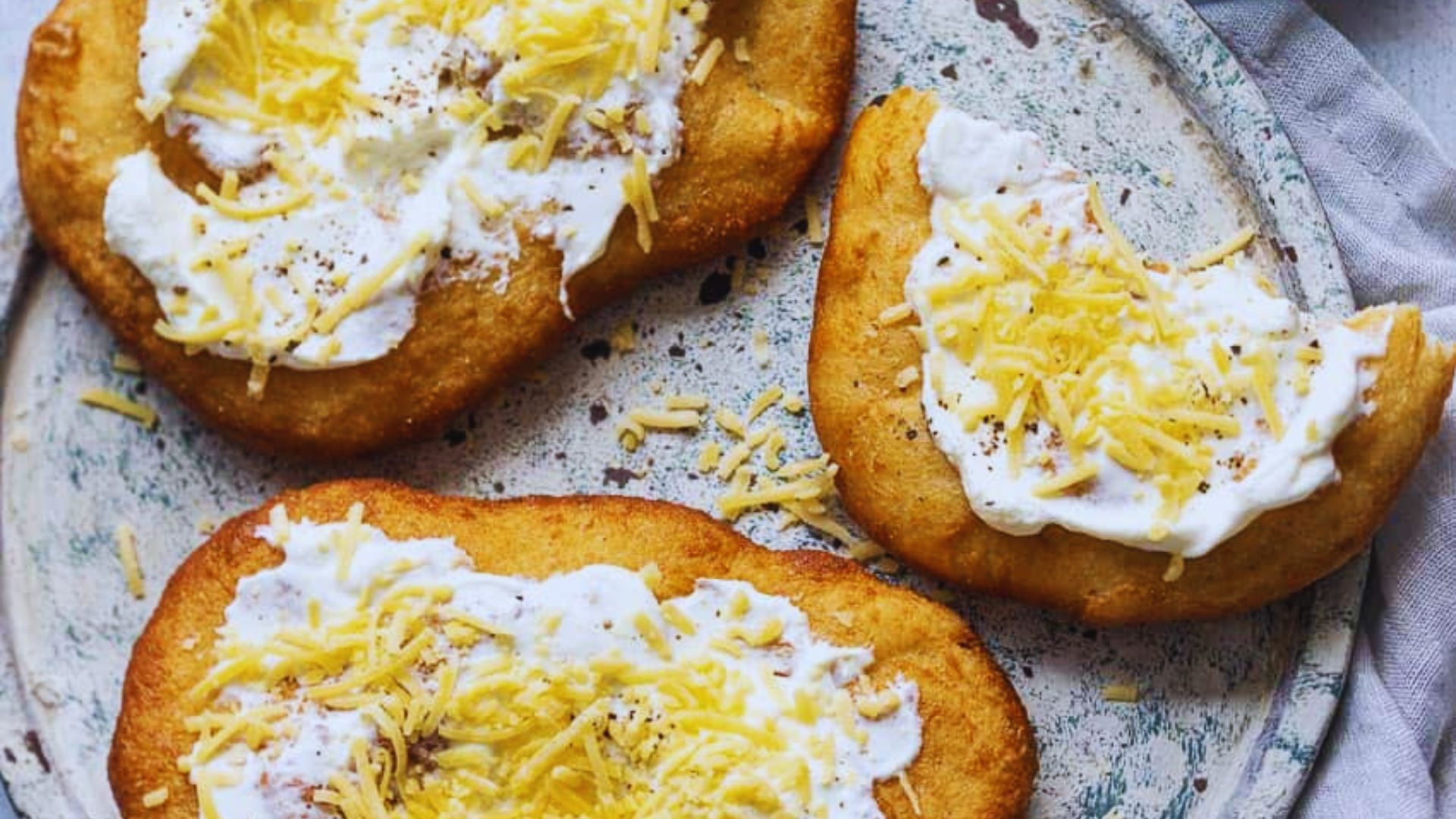
Small pieces of fried dough that puff up golden and slightly crispy. They can be sweet or savory, eaten with powdered sugar, jam, or just plain.
A simple snack that requires no justification. Sometimes the most basic things are the best.
45. Cheese-Stuffed Bread
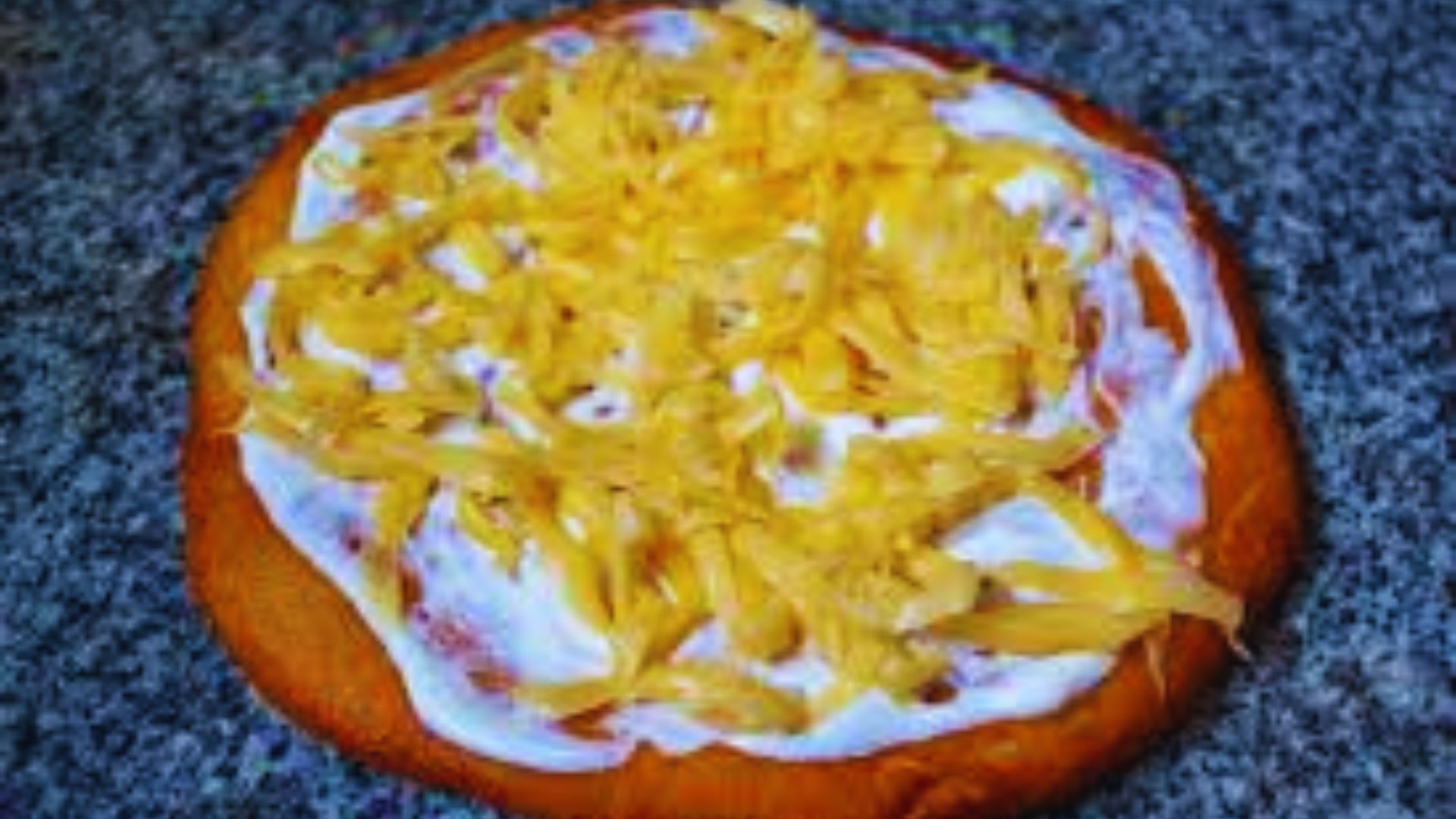
Soft bread dough filled with melted cheese, then baked until golden on the outside and gooey inside. Serve it warm and pull it apart. Great as a snack or next to a bowl of soup on a cold day.
46. Meat-Filled Pastry
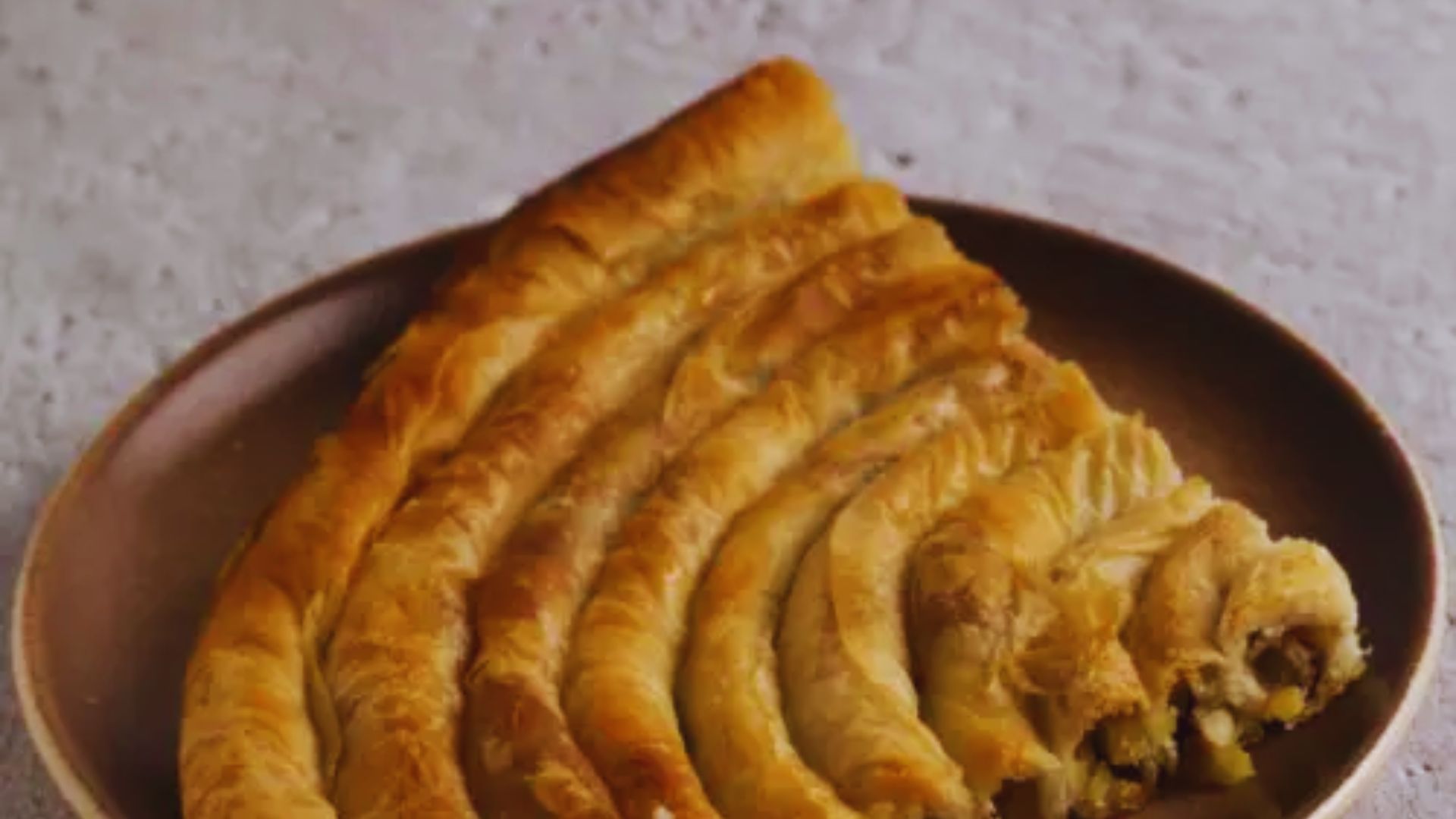
Buttery pastry dough stuffed with seasoned ground meat, then baked until flaky and golden. Very popular in Hungarian bakeries as a portable, filling snack.
Think of it as Hungary’s version of a meat pie, just with better pastry.
47. Savory Crepes (Hortobágyi Palacsinta)
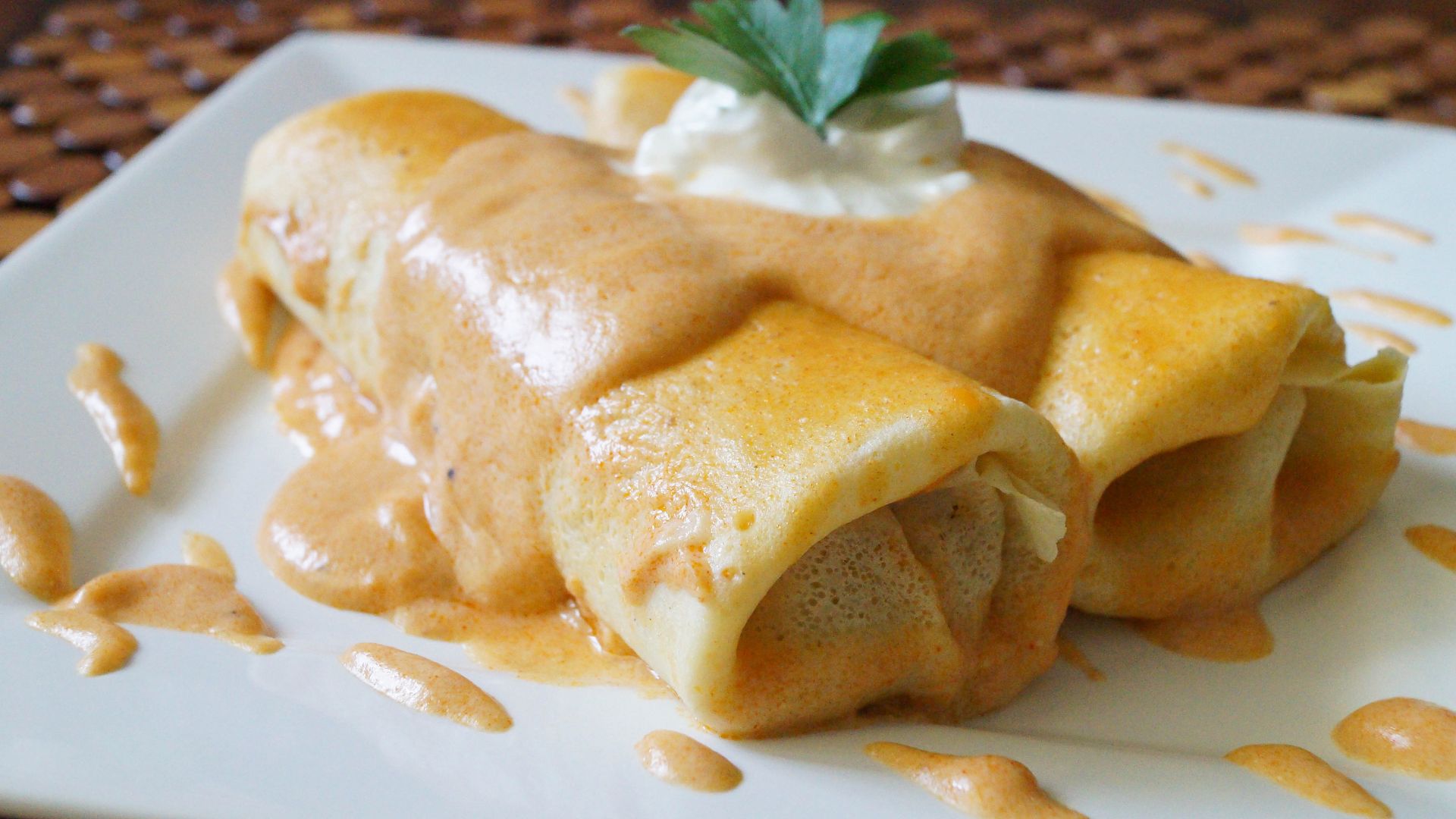
Hortobágyi Palacsinta is one of the most recognized savory dishes in Hungarian food. Thin crepes are filled with chicken or veal paprikash, rolled up tight, and then baked in a paprika cream sauce.
The filling is rich and deeply flavored, and the soft crepe wraps everything together perfectly. Named after the Hortobágy plains region in eastern Hungary, this dish is as traditional as it gets.
Hungarian Desserts & Sweets
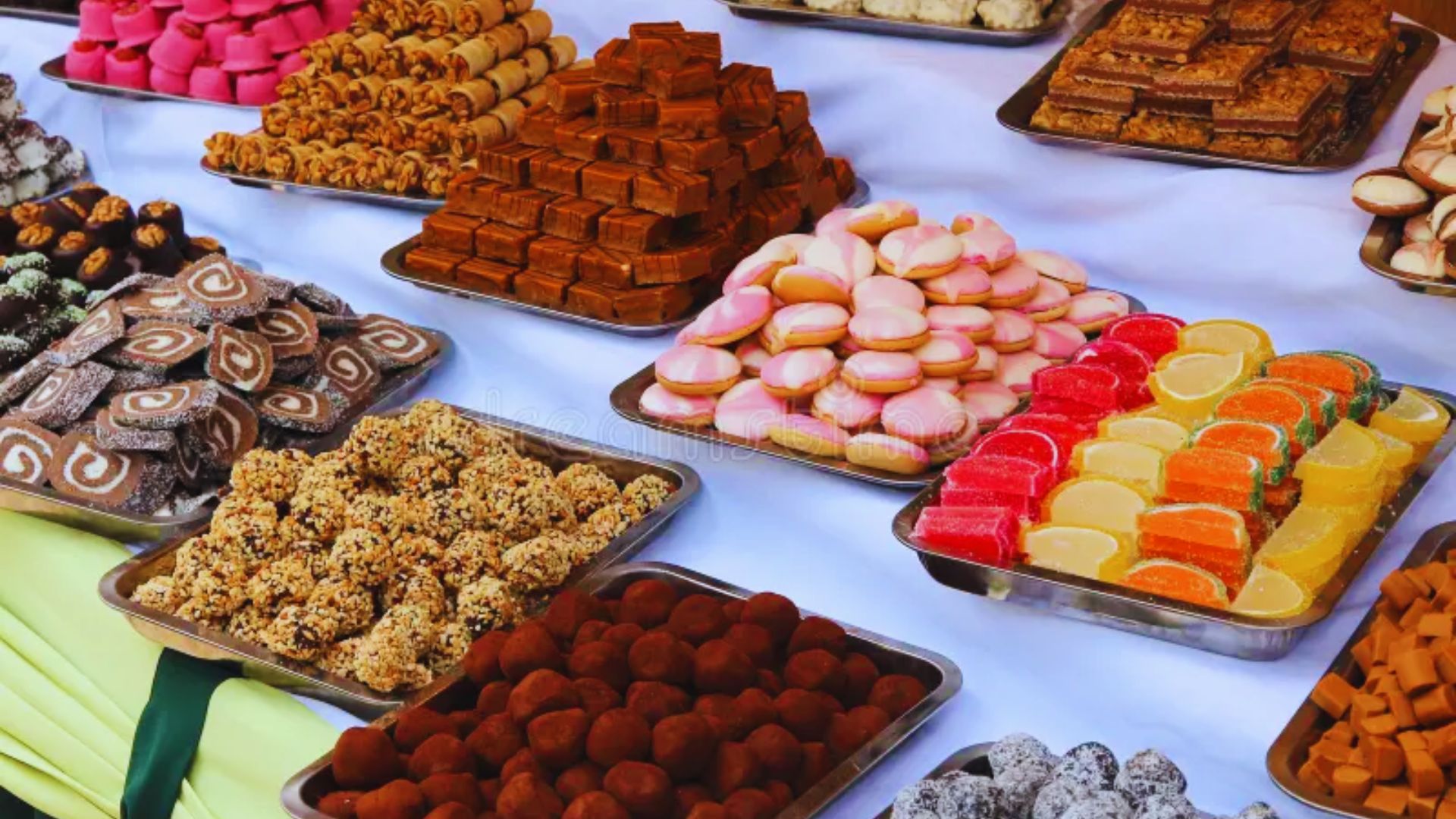
Hungarian desserts lean rich and layered. Think caramel, chocolate, walnuts, and poppy seeds in every form imaginable. These are the sweets that have been on tables here for generations.
- Dobos Torte: is a layered sponge cake with chocolate buttercream between each layer and a hard caramel glaze on top. Created in Budapest in the 1880s, it remains one of Hungary’s most celebrated desserts.
- Chimney Cake (Sweet Version): is the dessert spin on the street food classic. The same caramelized spiral pastry gets filled or topped with Nutella, ice cream, or whipped cream for a more indulgent treat.
- Somlói Galuska: is a rich trifle-style dessert layered with sponge cake, walnuts, raisins, rum-flavored cream, and chocolate sauce. Served in generous spoonfuls. Very indulgent.
- Gundel Pancakes: are thin crepes filled with a sweetened walnut and raisin mixture, then flambéed with rum and finished with dark chocolate sauce. Named after the legendary Gundel restaurant in Budapest.
- Strudel (Rétes): is a flaky pastry wrapped around sweet fillings like apple, sour cherry, or poppy seeds. Hungarian strudel is famous for its extremely thin, hand-stretched dough.
- Cottage Cheese Dumplings: are soft dumplings made from cottage cheese, egg, and flour. Boiled until tender, then tossed in buttered breadcrumbs. Served as a dessert or a light meal.
- Hungarian Sponge Cake: is a simple, light cake flavored with lemon or vanilla. It forms the base for many of Hungary’s more complex baked desserts.
- Walnut Roll (Bejgli): is a rolled pastry filled with sweetened ground walnuts. The traditional Hungarian Christmas pastry, baked in nearly every home during the holiday season.
- Poppy Seed Roll: is the poppy seed version of bejgli. The filling is sweet, slightly floral, and nutty. A holiday table staple alongside the walnut roll.
- Honey Cake: is a dense, spiced cake made with honey that actually gets better over time as the flavors develop. A common find at Hungarian Christmas markets.
- Chocolate Cream Cake: is a multi-layered celebration cake with rich chocolate cream between soft sponge layers. A classic at Hungarian birthdays and gatherings.
- Fruit Dumplings: are soft dough pockets filled with whole plums or stone fruits, boiled and rolled in sweetened breadcrumbs. A seasonal favorite in late summer.
Pasta & Dumpling Specialties
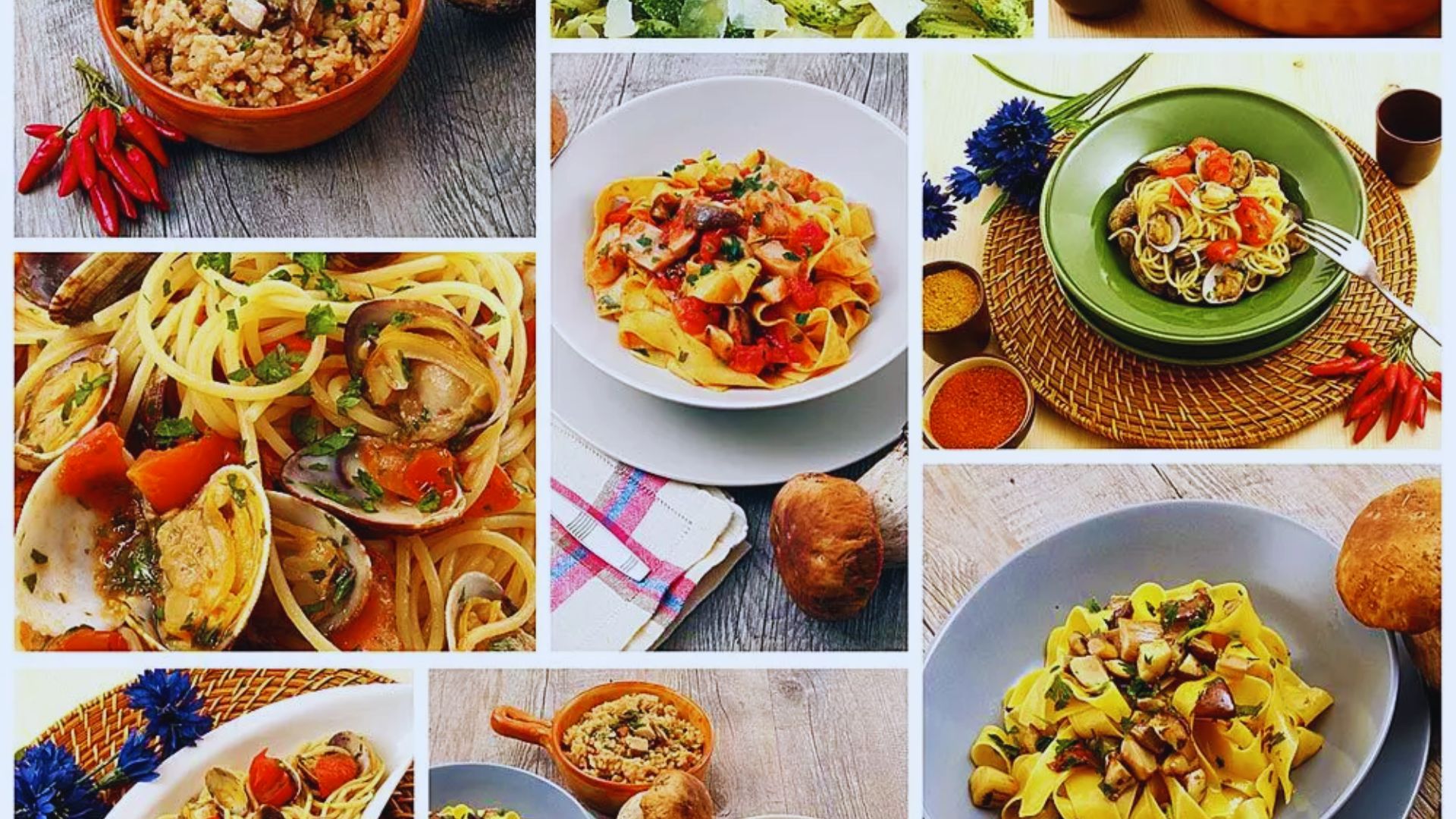
Pasta and dumplings show up in almost every corner of Hungarian cooking. Some are savory, some are sweet, and all of them are deeply comforting. This is the kind of food Hungarians grow up eating.
- Nokedli: are Hungary’s classic egg dumplings, already covered as a side dish but worth noting as a standalone comfort food. Served plain with butter, they hold their own as a simple meal.
- Csipetke: are tiny pinched dumplings added to soups like goulash. The name literally means “pinched.” They have a chewy, dense texture and absorb the broth beautifully.
- Cottage Cheese Pasta: is wide egg noodles mixed with cottage cheese and sour cream, finished with crispy bacon bits on top. One of the most beloved Hungarian comfort food dishes.
- Poppy Seed Pasta: is cooked noodles tossed with ground poppy seeds and powdered sugar. It sounds odd. It’s actually a classic Hungarian sweet noodle dish that many people grow up eating.
- Sweet Noodle Dessert: uses cooked noodles tossed with sweetened walnut or poppy seed mix. A nostalgic dish showing how Hungarian cooking uses pasta in both savory and sweet ways.
- Dumplings with Stew: are large, thick dumplings served alongside rich paprika stew. They soak up the sauce completely and become the best part of the plate.
- Potato Dumplings: are made from mashed potato dough, boiled until soft. Served with sour cream or tossed in butter. A simple, reliable Hungarian staple.
- Bread Dumplings: are made from stale bread mixed with egg and milk, shaped and cooked. A classic way of using up leftover bread without wasting anything.
Exceptional & Regional Dishes
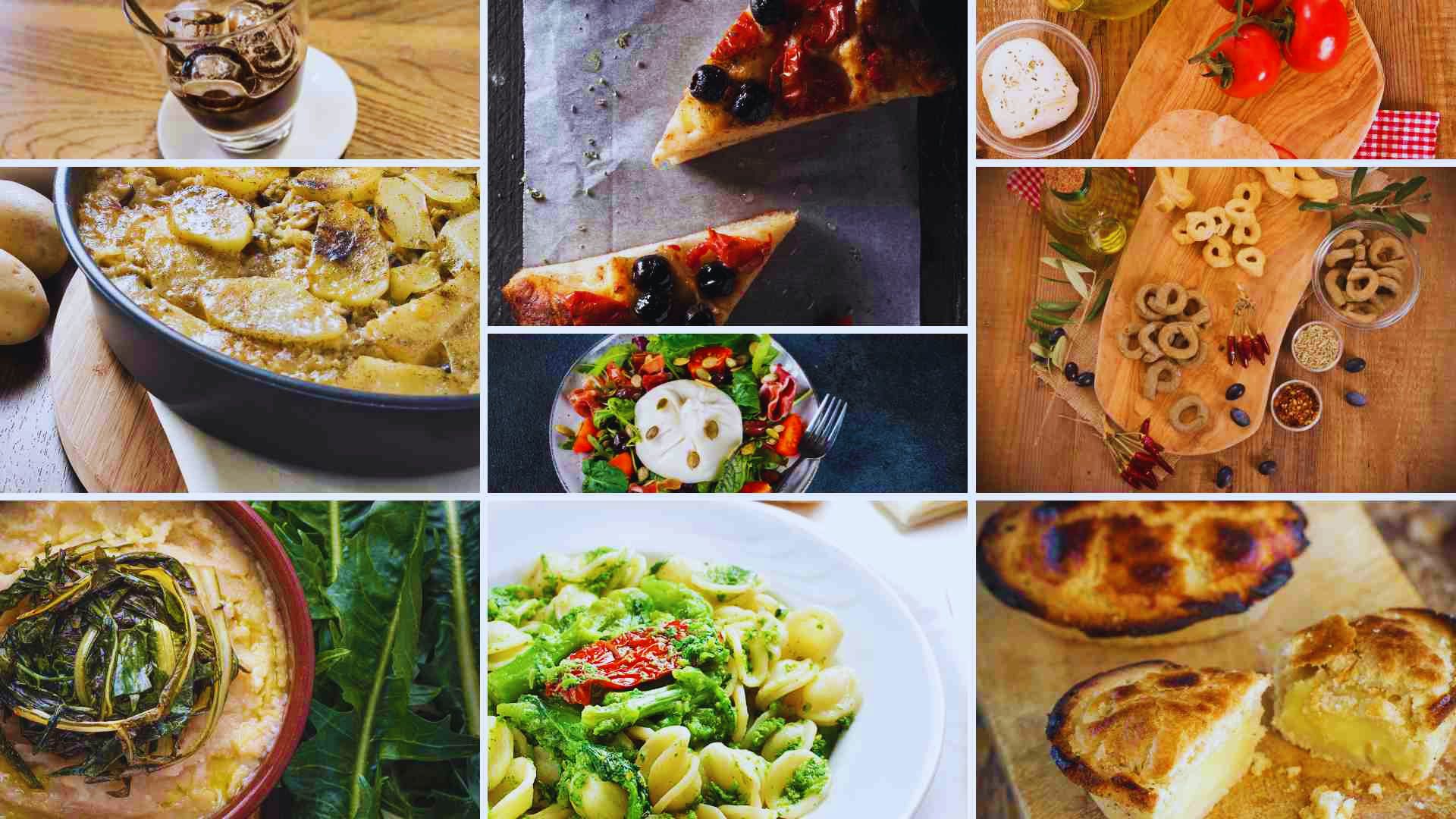
Hungary’s regions each bring something different to the table. From smoky Transylvanian cabbage to tangy Székely goulash, these dishes go beyond the classics. They’re worth seeking out if you want the full picture.
- Transylvanian Cabbage: is a slow-cooked dish of sauerkraut, smoked pork, and rice from the Transylvania region. Rich, smoky, and slightly sour all at once.
- Székely Goulash: is a pork goulash made with sauerkraut and sour cream. A specialty from the Székely region with a tangy, hearty flavor that sets it apart from regular goulash.
- Hortobágy Meat Crepes: are the regional predecessor to the savory crepes listed earlier. Named after the Hortobágy plains, this version is considered a cornerstone of Hungarian regional cuisine.
- Goose Soup: is a rich broth made from goose and root vegetables. A traditional dish in Hungarian homes, especially around the feast of St. Martin in November.
- Blood Sausage: is made from pork blood, fat, and spices stuffed into sausage casing. Very traditional Hungarian food, especially popular at winter pig slaughters called disznótor.
- Liver Dumpling Soup: is a clear broth with soft, savory dumplings made from seasoned liver. An acquired taste, but a very traditional one.
- Shepherd’s Stew: is a hearty mutton stew with vegetables and paprika. It comes from the Hungarian plains where shepherds cooked over open fire. Rustic and very flavorful.
- Rustic Bean Stew: is a thick, slow-cooked stew of white beans, smoked pork, and paprika. A staple of Hungarian village cooking that’s deeply filling.
Snacks & Light Bites
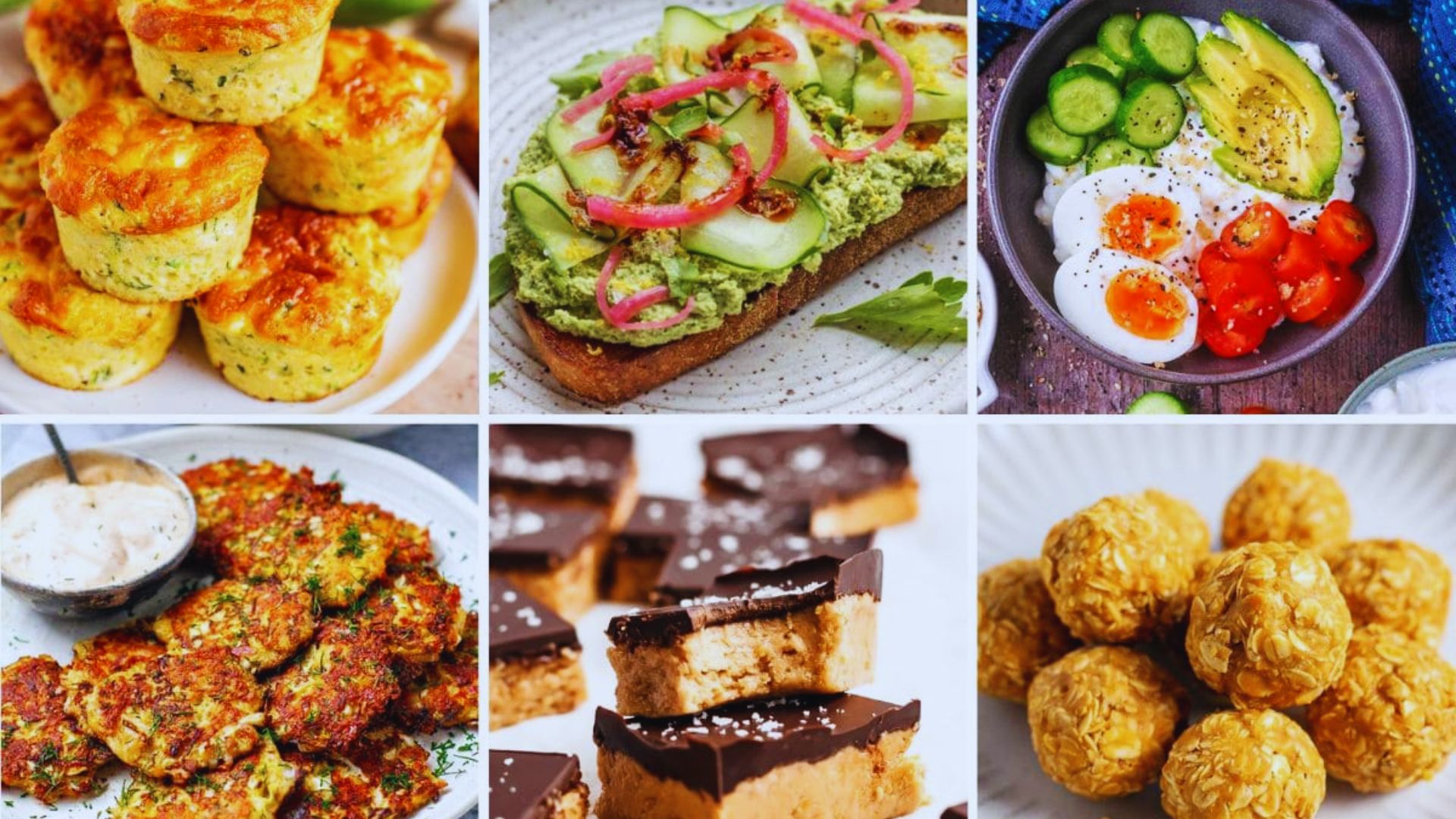
Hungarian snacks are simple, bold, and built on good bread and pork fat. They don’t need much to be satisfying. A thick slice of zsíroskenyér or a jar of pickled sausage says more about the food culture here than any sit-down meal.
- Pickled Sausage: is smoked sausage preserved in brine and vinegar, sold in jars and eaten as a quick snack with bread. Very popular in Hungarian delis and markets.
- Cheese Balls: are fried or baked seasoned cheese balls with a crispy outside. A popular party snack and bar food across Hungary.
- Crackling Spread (Töpörtyű): is a spread made from rendered pork cracklings, rich and intensely flavored. Spread onto thick white bread and topped with raw onion and paprika.
- Egg Spread: is a creamy spread of hard-boiled eggs, butter, and mustard. Simple, quick, and a very common sight on Hungarian breakfast tables.
- Paprika Chips: are thin potato chips seasoned with a bold paprika flavor. The most popular chip variety in Hungary and extremely addictive.
- Bread with Lard Spread (Zsíroskenyér): is white bread spread thickly with lard and topped with raw onion and paprika. Sounds simple, tastes deeply satisfying, and is one of the most nostalgic snacks in Hungarian food culture.
Traditional Drinks & Pairings

No Hungarian meal is complete without the right drink alongside it. Pálinka kicks things off, Tokaji wine closes them out, and everything in between has its match. Here’s what to sip while you eat.
- Pálinka: is Hungary’s famous fruit brandy, made from plums, apricots, or pears, with a very high alcohol content. Drunk as a shot before meals and deeply embedded in Hungarian tradition.
- Tokaji Wine: is Hungary’s most celebrated wine, produced in the northeastern Tokaj region. The sweet Tokaji Aszú is considered one of the great wines of Europe.
- Hungarian Red Wines: from regions like Eger and Villány are bold and full-bodied. Egri Bikavér, known as Bull’s Blood, is the most well-known and pairs perfectly with heavy Hungarian food.
- Fruit Syrups: are sweet, concentrated syrups made from elderflower, sour cherry, or raspberry. Mixed with water, they’re the most popular non-alcoholic drink in Hungarian homes.
- Herbal Teas: made from local herbs like chamomile, lime blossom, and peppermint are widely consumed after meals or as a simple comfort drink.
- Beer with Sausage: is a classic Hungarian pairing. Light lager goes perfectly with grilled or smoked sausage. A staple combination at summer festivals.
- Mulled Wine: is a fixture at Hungarian Christmas markets. Red wine heated with cinnamon, cloves, and star anise. Warming, fragrant, and very festive.
- Coffee with Pastries: is the quintessential Budapest café experience. Strong espresso alongside a slice of dobos torte or a piece of strudel. Budapest’s café culture is legendary, and this pairing is at the center of it.
Tips for Trying Hungarian Food
If you’re trying Hungarian food for the first time, a little bit of context goes a long way. The food is hearty, paprika-forward, and portions tend to be generous. Here’s what I’d keep in mind before you sit down at a Hungarian table.
- Paprika comes in types. Sweet paprika is mild and the most common. Hot paprika adds real heat. Most dishes use sweet unless the menu says otherwise.
- Vegetarian options exist but aren’t always obvious. Lecsó, potato paprikash, vegetable paprikash, and fried cheese are all solid meat-free choices.
- Eat where locals eat. A simple “étterem” (restaurant) or “vendéglő” (inn-style eatery) will usually give you more authentic Hungarian food at a much better price than tourist-facing spots.
- Try the soups first. In Hungary, soups are a serious course, not a starter you skip. Goulash, Jókai bean soup, and halászlé are all full meals on their own.
- Don’t skip sour cream. It shows up everywhere in Hungarian cooking for good reason. It balances the paprika, adds creaminess, and is worth embracing rather than avoiding.
- Portions are large. Ordering a starter and a main at a traditional Hungarian restaurant can leave you struggling. Choose one or the other if you’re unsure.
Once you know the basics, Hungarian food becomes very easy to enjoy. The flavors are bold but not complicated, and the dishes are built for people who want to actually feel full after eating.
Conclusion
Hungarian food has stayed with me long after every trip. The paprika-stained stews, the street-side lángos, the sweet strudel with a strong coffee.
These aren’t just meals; they’re a real window into a culture that takes cooking seriously.
If you can find Hungarian food near you, go. If you’re planning a trip, eat everything on this list that you can.
And if you’ve already tried some of these dishes, I’d love to know which one was your favorite. Drop it in the comments below.
Frequently Asked Questions
What is the most famous Hungarian food?
Goulash is the most iconic Hungarian food dish, recognized all over the world. It’s a slow-cooked beef and paprika soup that represents the country’s cuisine better than anything else.
Is Hungarian food spicy?
It’s more flavorful than spicy, with paprika adding depth and color rather than sharp heat. If you want it hotter, you can ask for dishes made with hot paprika.
What is traditional Hungarian food made of?
The core ingredients in traditional Hungarian food include meat, paprika, potatoes, sour cream, and fresh bread. These basics show up in almost every dish on a Hungarian table.
Can I find Hungarian food near me easily?
Many Eastern and Central European restaurants include Hungarian dishes on their menus. Searching “Hungarian food near me” online is the quickest way to find something local.
What dessert is Hungary famous for?
Dobos Torte and Chimney Cake are two of the most well-known Hungarian sweets. Both are easy to find in Budapest and at Hungarian food markets around the world.
