

Rome has a way of overwhelming you, in the best possible sense. The Colosseum, the Trevi Fountain, the Vatican Museums, the layers upon layers of history stacked on top of each other at every corner. It's a city that gives you almost too much to take in.
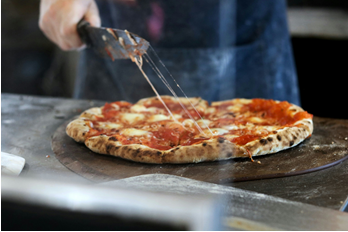
And yet, some of the most memorable experiences travelers bring home from Rome have nothing to do with monuments. They happen in kitchens, covered in flour, laughing with strangers, pulling a pizza out of a professional oven they had a hand in making.
If you're heading to Rome, whether it's your first time or your fifth, a cooking class might just be the most unexpectedly meaningful thing you add to your itinerary. Here's everything you need to know about finding the right one, what to expect, and why pizza and gelato is the combination that delivers every single time.
Why take a cooking class in Rome?
Rome rewards the curious. The city has layers, historical, artistic, culinary, and most visitors only scratch the surface of the last one. Yes, you'll eat well almost anywhere you sit down. But eating is passive. A cooking class is something else entirely.
When you learn to make Roman pizza (really learn it, with your hands in the dough, with someone explaining why you rest it and how long and at what temperature) you start to understand the city differently. Food stops being background noise and becomes a living piece of culture.
There's also a practical upside: you leave with skills. Not just a recipe card, but actual muscle memory. The kind of thing that comes in handy on a rainy Sunday months later when you want to bring a little bit of Italy into your kitchen.
And then there's the social element. Cooking classes in Rome tend to draw a wonderfully mixed crowd, couples celebrating anniversaries, families traveling with kids, solo travelers who wanted to do something different for an afternoon. The shared table has a way of creating conversation that sightseeing rarely does.
How to choose the right class
Not all cooking classes are created equal, and in a city as popular as Rome, it pays to be selective. Here's what separates a genuinely great experience from a tourist trap with aprons.
- Hands-on, not just hands-nearby. Some classes are really just demonstrations with a tasting at the end. The best ones put you to work from the first minute, mixing, kneading, assembling, baking. You want to feel like you actually made something.
- Small groups. A class of six is a different experience from a class of thirty. With a smaller group, you get more attention from the chef, more room to actually work, and a more personal atmosphere. Look for classes that cap attendance at a reasonable number.
- Local expertise. Your chef should be someone with genuine roots in Italian culinary tradition, not just someone who learned to make pizza on YouTube. The anecdotes, the little tips, the "this is how we actually do it" moments, those only come from real experience.
- Something to take home. Whether it's a recipe booklet, a certificate, or just the knowledge that you've mastered a new skill, the best classes leave you with more than a full stomach. Bonus points if dinner and wine are included at the end, because after three hours of cooking, sitting down to eat what you made is very much part of the deal.
If you want a starting point that ticks all these boxes, a hands-on pizza and gelato cooking class in the heart of Rome is the kind of experience worth looking into, small groups, a purpose-built school in the center of the city, professional chefs, and a full dinner with wine to close it out.
Pizza and gelato: the combination that makes perfect sense
You could take a pasta class in Rome. You could take a bread class, or a wine and cheese class, or a market tour with cooking to follow. All of them are worthwhile. But for first-timers especially and for anyone who wants an experience that feels both iconic and genuinely fun, pizza and gelato is hard to beat.
Here's why this pairing works so well.
Pizza is Roman in its bones. This isn't Naples: Roman pizza has its own identity, its own techniques, its own character. The dough is different. The baking approach is different. Learning to make it here, in this city, with a chef who grew up eating it, gives you something that no other city can offer.
Gelato, meanwhile, is a lesson in subtlety. It looks simple. It isn't. The ratios matter, the temperatures matter, the timing matters. Watching and in many classes, participating in, the gelato-making process is one of those experiences that changes how you eat the finished product forever. You'll never walk past a gelateria again without thinking about what's happening inside those silver containers.
And together? They make for a three-hour afternoon that moves between savory and sweet, active and observational, hands-on and educational. It has natural pacing and a very satisfying ending.
Tips for getting the most out of your Rome cooking class
Book ahead. This seems obvious, but good classes in Rome fill up fast, especially during spring and early summer. Don't leave it until the day before.
Go hungry. Or at least, don't eat a massive lunch beforehand. You're going to be making pizza and gelato and then sitting down to eat them. Honor the occasion.
Tell them about dietary needs upfront. Most classes can accommodate vegetarians, and many can adjust for specific allergies. What they usually can't handle is celiac disease, the flour is everywhere and cross-contamination is unavoidable in a working kitchen. Check before you book.
Wear comfortable clothes. An apron covers a lot, but flour has opinions. Don't wear your best outfit.
Engage with the chef. The best moments in any cooking class come from asking questions. Why this technique? Why this ingredient? What would a Roman grandmother do differently? Chefs who teach these classes love talking about food, let them.
Don't rush off at the end. The dinner after the class is part of the experience. Sit down, pour yourself a glass of wine, eat the pizza you just made, and let it land properly before you head back out into the city.
A different kind of Rome memory
Rome will give you a lot of memories. The light at golden hour over the Forum. The moment the Sistine Chapel ceiling finally comes into view. The first bite of supplì from a street corner you'll struggle to find again on a map.
A cooking class adds something different to that list, the smell of your own pizza coming out of the oven, the cold sweetness of gelato you had a hand in making, the slightly flour-dusted satisfaction of having learned something real.
Not just a meal. A skill, a story, and something to recreate at home long after the trip is over.
