

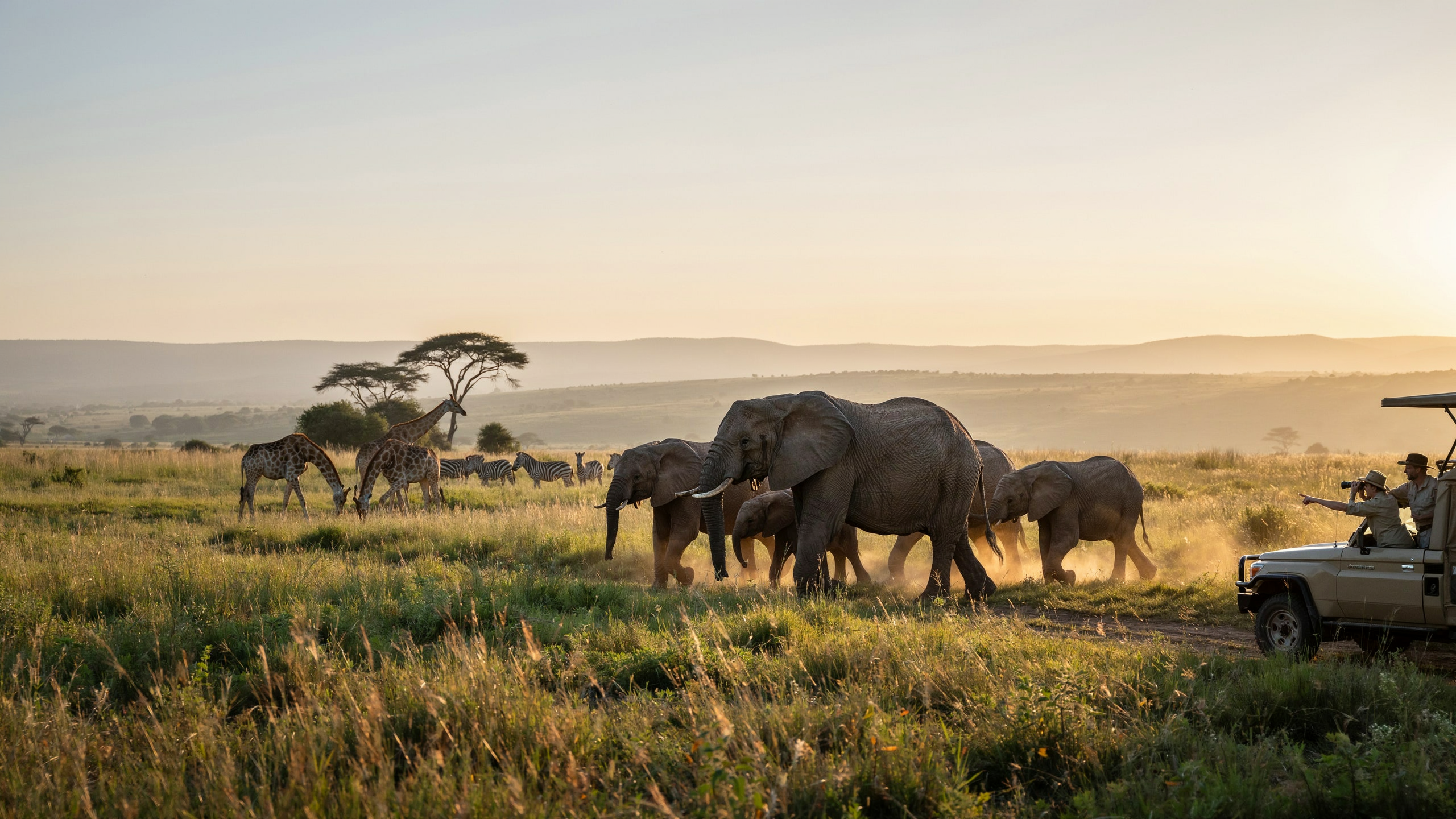
A major wildlife trip may involve early starts, long journeys and plenty of time waiting for an animal to appear. That patience can lead to moments the whole family remembers: tracks emerging beside a trail, movement in the treetops or a whale surfacing close to the boat. The experience comes from entering the animal’s habitat and allowing its behaviour to determine what happens next.
Travelling with older children makes more demanding excursions possible, from walking through humid forest to spending several hours in a small boat or safari vehicle. The key is choosing an itinerary that matches everyone’s stamina, interests and tolerance for unpredictable conditions.
The five trips below require more planning than a conventional family holiday, but none needs to feel out of reach. The right season, experienced guides and enough time in each habitat can turn an ambitious idea into a journey the family can realistically undertake.
Walking Among Blue-Footed Boobies and Giant Tortoises in the Galápagos, Ecuador
On the Galápagos coast, marked trails cross black lava where marine iguanas gather to warm themselves. Blue-footed boobies may nest close to the route or perform their high-stepping courtship display during the breeding season. Wildlife can appear remarkably unconcerned by visitors, but everyone must remain on the trail and keep the required distance.
The experience changes in the highlands of Santa Cruz, where giant tortoises move through grassland and muddy pools. Older children who are comfortable on uneven lava trails and in the water can participate more fully in excursions to tortoise habitats, seabird colonies and shallow snorkelling sites. Excursions may involve uneven volcanic ground, stepping ashore in shallow water or entering the sea from a small boat, so the activity level should suit every family member.
Families considering a Galapagos yacht charter should compare approved itineraries carefully because each route includes different islands, visitor sites and wildlife habitats. Sleeping aboard removes the need to return to the same island each evening, allowing the vessel to travel while the family rests. Licensed naturalist guides lead excursions in protected areas, while visitors must obtain the required transit card, pay the park entry fee and complete biosecurity inspections before or upon arrival.
Gliding Past Elephants by Mokoro in the Okavango Delta, Botswana
A mokoro journey moves slowly through the Okavango Delta’s shallow channels, with a guide standing at the stern and steering the narrow canoe between papyrus, water lilies and reed beds using a long pole. Traditionally carved from tree trunks, many mokoros are now made from fibreglass to reduce pressure on native trees. From this low position, families may spot painted reed frogs, malachite kingfishers and red lechwe, while elephants sometimes appear on nearby islands or wade across the floodplain.
Mokoro excursions reveal the quieter details that are easily missed from a safari vehicle. The canoe has no engine, so the main sounds come from birds, insects and the pole entering the water. Guides maintain a safe distance from elephants, hippos and other large animals, and sightings depend on the channel, water level and time of day.
Floodwater from Angola reaches different parts of the delta during Botswana’s dry season, but its timing and extent vary each year. Some camps have access to permanent channels, while others can only run mokoro excursions when seasonal water levels permit. Families should check minimum ages for canoe trips and guided nature walks, as restrictions differ between camps. Staying for several nights allows time for both water-based excursions and safari drives across the drier islands.
Watching Penguin Colonies and Calving Glaciers on the Antarctic Peninsula
On the Antarctic Peninsula, inflatable boats travel between sculpted icebergs and glacier fronts before carrying visitors ashore at rocky landing sites. Gentoo and chinstrap penguins may be nesting, feeding chicks or moving between the colony and the sea, depending on the month. Glaciers sometimes release sections of ice into the water with a deep crack, although calving is unpredictable and vessels must remain at a safe distance.
Wildlife activity and landing conditions vary throughout the austral summer. Earlier departures may encounter more snow around nesting colonies, while later voyages can bring growing chicks and greater opportunities to see humpback whales feeding in surrounding waters. Leopard seals, crabeater seals and orcas may also appear, but no itinerary can promise a particular species or behaviour.
Wildlife lovers weighing up Antarctica cruises should compare the number of days allocated to the peninsula, passenger capacity and planned opportunities for shore landings. Ships carrying more than 500 passengers cannot land visitors in Antarctica, while smaller expedition vessels use inflatable boats to reach approved sites when weather and ice permit. Families should also check minimum ages and consider whether everyone is comfortable spending roughly two days crossing the Drake Passage in each direction.
Spotting Sloths and Nesting Sea Turtles in Tortuguero, Costa Rica
Tortuguero’s narrow canals run through lowland rainforest and wetlands near Costa Rica’s Caribbean coast. Exploring by canoe, kayak or small motorboat brings visitors beneath dense vegetation where sloths, capuchin monkeys and toucans may appear overhead. Caimans and basilisks can be harder to distinguish along the muddy banks, making an experienced local guide particularly useful.
The beach supports four nesting sea turtle species at different times of year. Green turtles are most numerous from July to October, while leatherbacks generally arrive between March and June. Nesting takes place after dark and can only be observed under regulated conditions with an authorised guide. Visitors must follow instructions designed to prevent noise, light and movement from disturbing the turtles, and sightings are never guaranteed.
There is no road into Tortuguero, so families arrive by boat or domestic flight. The boat journey is part of the experience, passing through waterways that gradually narrow as they approach the village and national park. Spending at least two nights leaves time for a morning canal excursion and, during nesting season, a guided evening walk without trying to fit both around the arrival and departure journeys.
Swimming With Whale Sharks on Ningaloo Reef, Australia
Between March and July, whale sharks gather in the waters off Ningaloo as seasonal increases in marine productivity draw them towards the reef. Licensed boats use spotter aircraft to locate the animals before small groups enter the water with a guide. Swimming beside a fish several metres long changes the scale of the ocean around you, although encounters depend on weather, visibility and the movements of the sharks.
The offshore excursion is only one part of Ningaloo. At beaches around Cape Range National Park, the reef can be reached with a short swim from shore, bringing snorkellers above coral gardens inhabited by turtles, rays and reef fish. Manta rays can be encountered throughout the year around Coral Bay, while humpback whales migrate along the coast from roughly June to November.
Most flights arrive at Learmonth Airport, followed by a road transfer to Exmouth, while Coral Bay lies farther south. Minimum ages differ among Ningaloo operators. Children entering the water must generally be confident swimming in the open ocean, while families with a non-swimmer should confirm whether the child can remain aboard and whether an adult must stay with them. Several days in the region leave room for the full-day whale shark excursion, shore snorkelling and a visit to the gorges and beaches of Cape Range National Park.
Which wild adventure will your family choose?
Think about how your family would prefer to spend the day. A Galápagos itinerary includes uneven lava trails, highland walks and time in the water. In the Okavango, excursions take place by mokoro and safari vehicle. An Antarctic voyage means several days at sea; Tortuguero adds boat transfers and after-dark walks, while Ningaloo requires confidence in open water.
The season will determine much of what is possible, from turtle nesting in Costa Rica to whale shark gatherings off Western Australia. Compare travel time, activity levels and age restrictions before settling on an itinerary, and allow enough days for weather or wildlife movements to alter the plan. No encounter is guaranteed, but careful preparation can take an adventurous family into the right habitat at the right time.
