

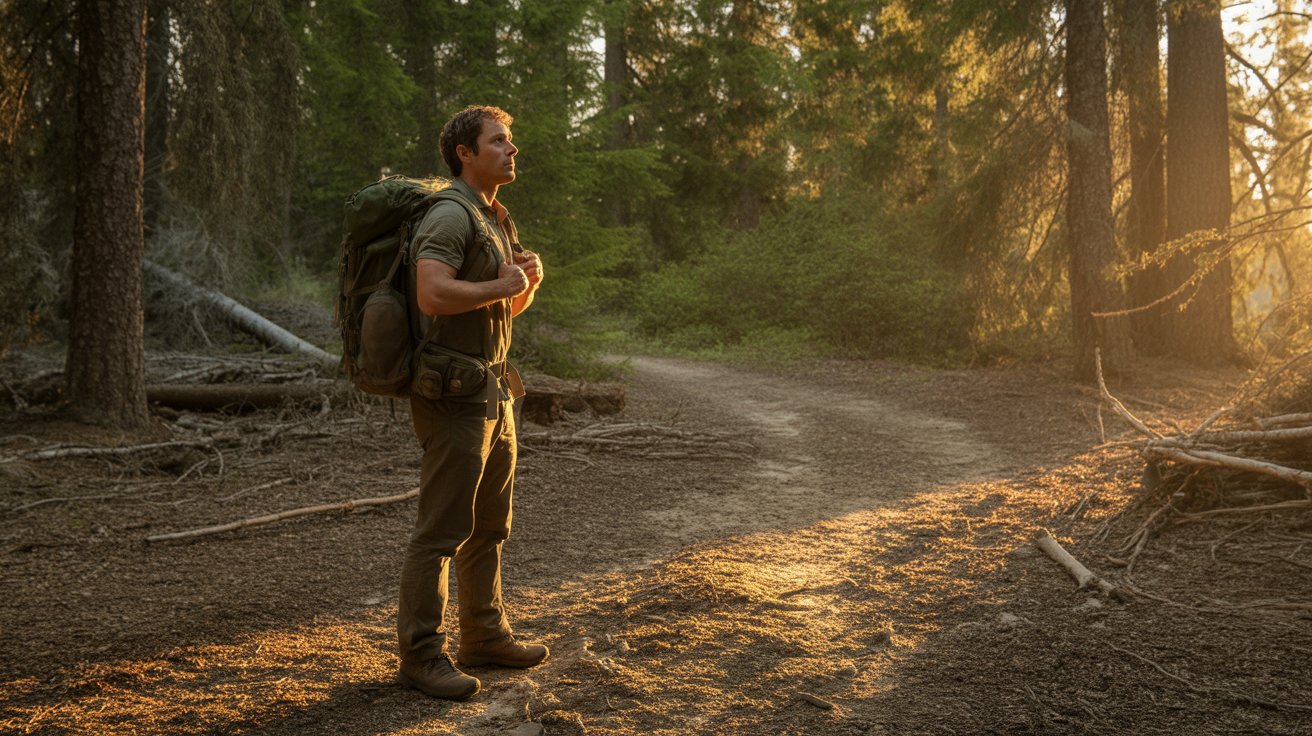
The best hikers are typically not the ones who need to be rescued. It’s not that they’re somehow better or tougher than those that do; they’re just able to perceive, process and understand information about what’s happening in the environment around them in such a way that they avoid the high-risk situations needing rescue in the first place. They know that they need things like a flashlight, food supplies, a personal locator beacon, etc., to be prepared. This isn’t some sort of magic fairy dust that only elite hikers are blessed with. It’s a trainable set of habits and thought processes.
Pre-Trip Intelligence: Awareness Starts Before the Trailhead
Many people think of organizing a trip as just a series of logistical steps. Reserve the spot, compile the provisions, maybe glance at the forecast. But actual preparation is different from simply organizing an agenda: it’s planning for success.
Real preparation is looking at the elevation guide to ensure you won’t be climbing 1,400 feet over those final two miles as night falls. It’s reading the most recent trail updates to learn that a stream crossing has become impassable, that there’s still snow in the pass, or that a curious grizzly has been spotted in the region. It’s understanding that “partly cloudy” doesn’t mean the same thing at 9,000 feet, particularly when you’re deep in a rain-shadowed valley with microclimates, where “cloudy” and “sunny” can change every 45 minutes.
What they’ve learned from all their long history of incident reports is that “off-trail travel” and “inadequate equipment/experience” are pretty much always at the top of the contributing causes. Which both just point back to the same source: the hiker didn’t know enough about what they were getting into before they got there.
Reading the Environment While You Move
When you’re walking, awareness isn’t passive. It takes effort.
For your own safety, you stop every so often, turn around, and see how things look from the opposite direction. Same ridgeline, same rock outcropping, same trail fork. Except now all those landmarks are unrecognizable, tangled in a different perspective.
This isn’t just a trick for hikers. It isn’t some kind of orienteering contest. Building that mental map also triggers feedback loops with your brain. Your memory, for instance. It’s making tracks of all the things that have stood out since you hit the trail. Lips of dry streambeds and the way bear grass whistles in even mild winds.
You start to feel what you notice. The sun, usually warm on your back, suddenly didn’t feel so hot a little while ago. And those meager breezes on your face stopped making it seem any cooler.
Managing the Human Factors
Equipment may malfunction and the weather can change unexpectedly. However, the most important factor in trail emergencies is the hiker who has to make quick decisions. Making the wrong decision under pressure can have serious consequences.
When you are tired, decision-making becomes harder. If, after 6-7 hours on the trail, you are facing worsening weather, you are more likely to underestimate how long it will take to summit and get back down as darkness falls. This is when fatigue and ego become a dangerous mix.
The OODA loop, Observe, Orient, Decide, Act, was developed for use by fighter pilots, but it also applies very well in this context. The danger is that steps one and two become very short under fatigue and summit fever. You stop observing and you very quickly decide that what you are orienting towards, the summit, is what you want to be the case, rather than what is the case.
If you know you are turning around at, say, 2 pm before setting out and have given yourself that deadline when you were not tired and emotionally invested in it, then the decision does not even enter the fatigued brain.
When the Sun Goes Down
Running out of daylight is the moment when you can lose the ability to adapt to environmental changes.
Your natural sensory input, the way you perceive the trail, the environment, and the conditions via sight and sound, is drastically reduced. While most people resort to using a headlamp, it may give you visibility at your feet but doesn’t provide the broader awareness you had during the day.
A high lumen flashlight makes a different impact as well. A longer throw will truly let you read where the trail leads to, pick up on reflective marks, and know when terrain is about to shift. This isn’t about just staying safe. This is about not having to lose time over-troubleshooting every step you take.
At night you’ll have to force your hearing to compensate for reduced visibility, provided you can hear well in the first place. This step will give you a heads-up in case anything is about to go wrong.
The Gear Supports the Skill
Having the essentials with you is a starting point, not a limit. A mapping app, an emergency blanket, a good light, none of this works unless you have the situational awareness to use it before things get out of hand.
Situational awareness isn’t what you break out when the wheels come off. It’s what keeps the wheels on in the first place. Think of it as equipment. Train with it before you need it.
