


Ever packed for a trip and still felt like something was missing? Camping can feel that way if you are not prepared.
Knowing what to bring camping makes a big difference in how smooth your trip goes. From shelter and food to clothing and safety items, each part matters more than you think.
I have learned from my own trips that a simple plan can save time and stress.
In this guide, you will find clear tips, helpful lists, and smart ways to pack so you can stay ready, comfortable, and focused on enjoying your time outdoors without any last-minute worries.
Everything You Need to Know Before You Pack
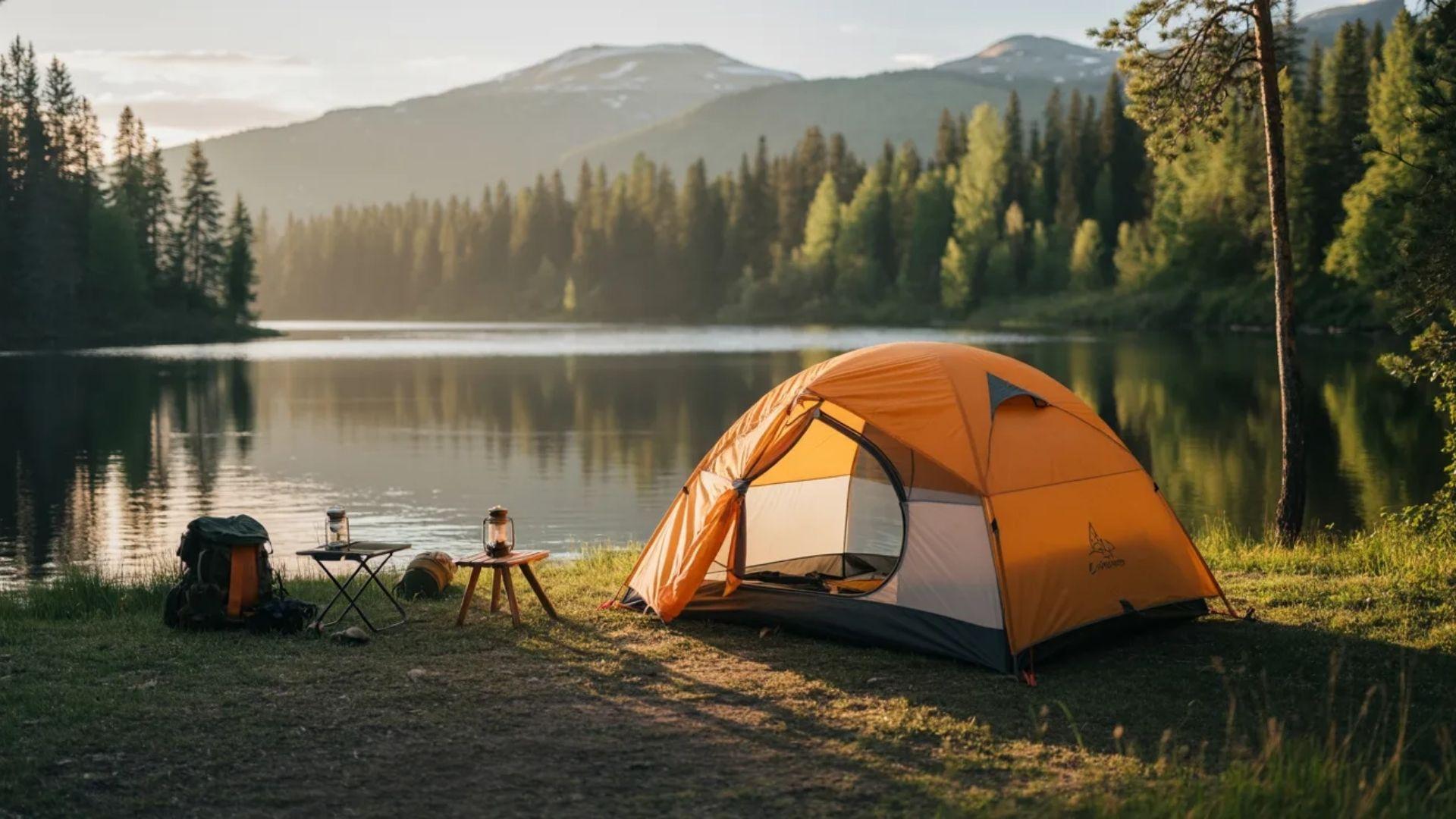
Before you pack, plan your trip based on location, duration, and weather. A short trip needs fewer items, while longer stays require more preparation.
Always check the forecast and pack for changing conditions. Also, think about your campsite. Some places offer basic facilities, but others require you to carry all your gear.
Keep your packing simple and organized. Focus on items that support safety, comfort, and food needs. Avoid overpacking, as extra gear can be hard to manage.
Group items by use, like sleeping, cooking, and clothing, so you can find them easily. A clear plan helps you save time and avoid forgetting important items.
What to Bring Camping: Complete List
Packing the right items makes your camping trip simple and stress-free. This complete list helps you stay prepared, organized, and ready for your time outdoors.
1. Camping Essentials: Shelter & Sleeping
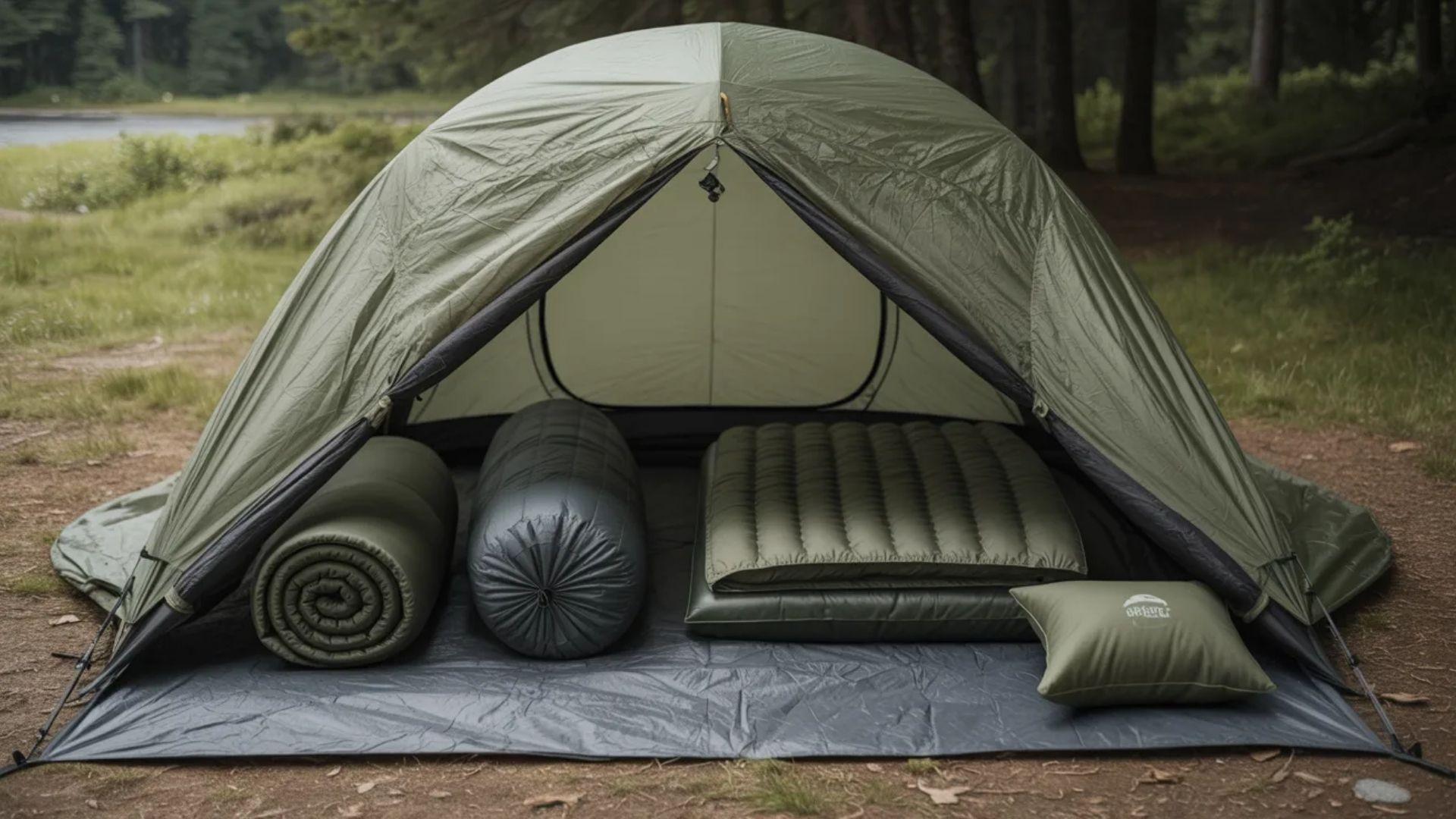
A good night’s rest keeps you safe, warm, and comfortable outdoors. These items form the base of your sleeping setup and help you handle changing weather and ground conditions.
- Tent: Includes poles, stakes, a rainfly, and a ground tarp or footprint to keep moisture out and provide shelter.
- Sleeping Bag: Choose based on temperature rating and weight so it suits the weather and is easy to carry.
- Sleeping Pad / Air Mattress: Adds comfort and insulation from the cold ground, which helps you sleep better.
- Pillow: A camping pillow or one from home can support your neck and improve sleep quality.
- Extra Items: Rope or cord for setup, an extra tarp for cover, and a small repair kit for tent stakes or gear.
Tip: For solo trips, a small tent is enough and easier to set up. For families, choose a larger tent with extra space for gear and movement.
A proper sleeping setup helps you wake up rested and ready for the day. It also protects you from cold ground and sudden weather changes.
2. Camp Kitchen & Food Gear
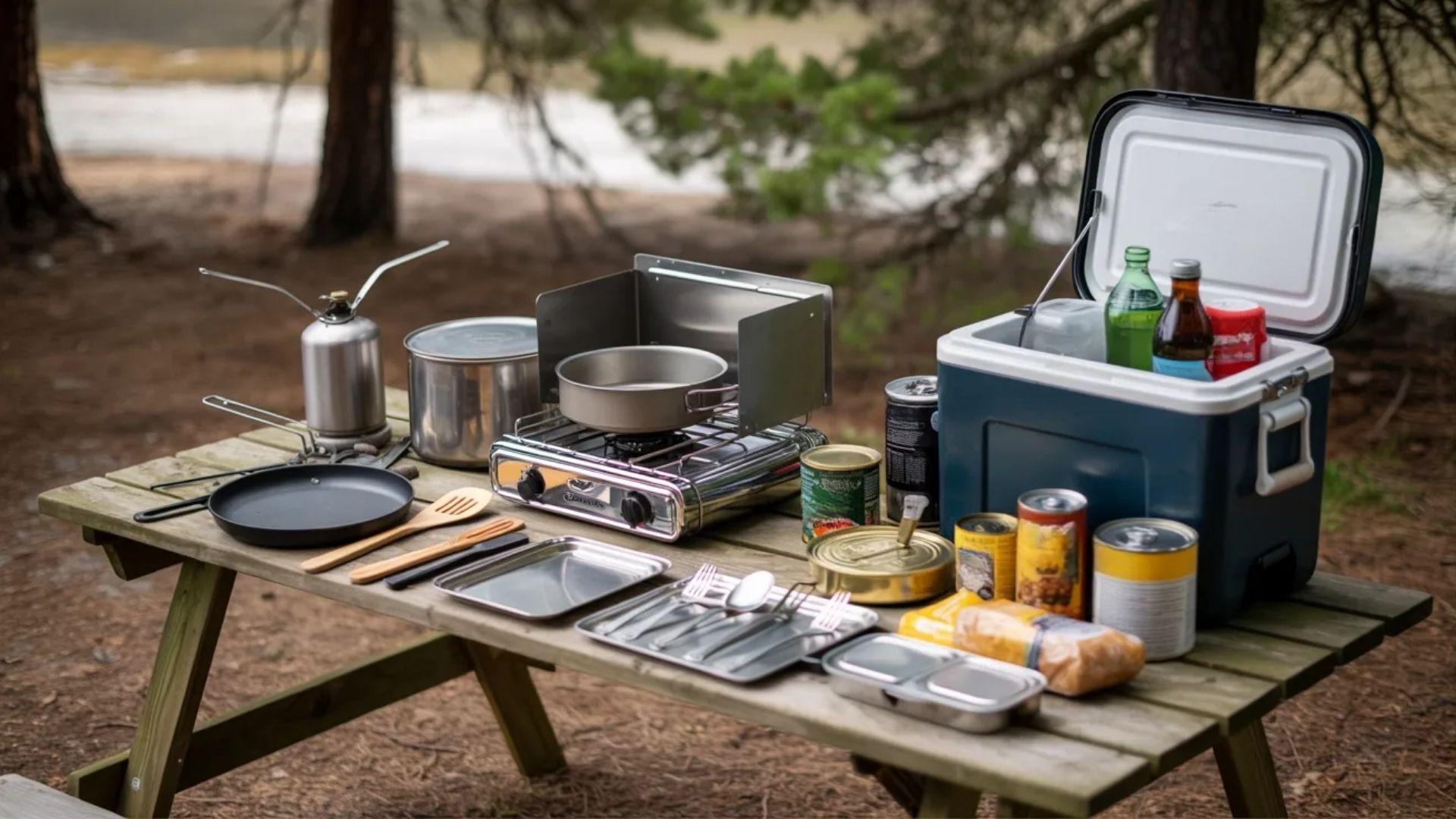
Good food keeps your energy up during camping. A simple setup helps you cook, stay hydrated, and keep your campsite clean.
- Cooking Equipment: Camp stove with fuel, plus a lighter or matches to cook meals safely.
- Cookware: Basic pots, pans, a spatula, and a stirring spoon for easy cooking.
- Mess Kit: Plates, bowls, cups, and forks or spoons for serving and eating food.
- Food & Drinks: Non-perishable items, a cooler with ice packs, snacks, and reusable water bottles or jugs for drinking.
- Cleanup Supplies: Biodegradable soap, sponge, dishpan, and trash bags to keep your area clean.
- Optional Gear: Portable grill for extra cooking, coffee press for drinks, foil for wrapping food, and a can opener for sealed items.
A well-planned kitchen setup saves time and effort at the campsite. It also helps you enjoy meals without hassle or mess.
3. Clothing & Footwear
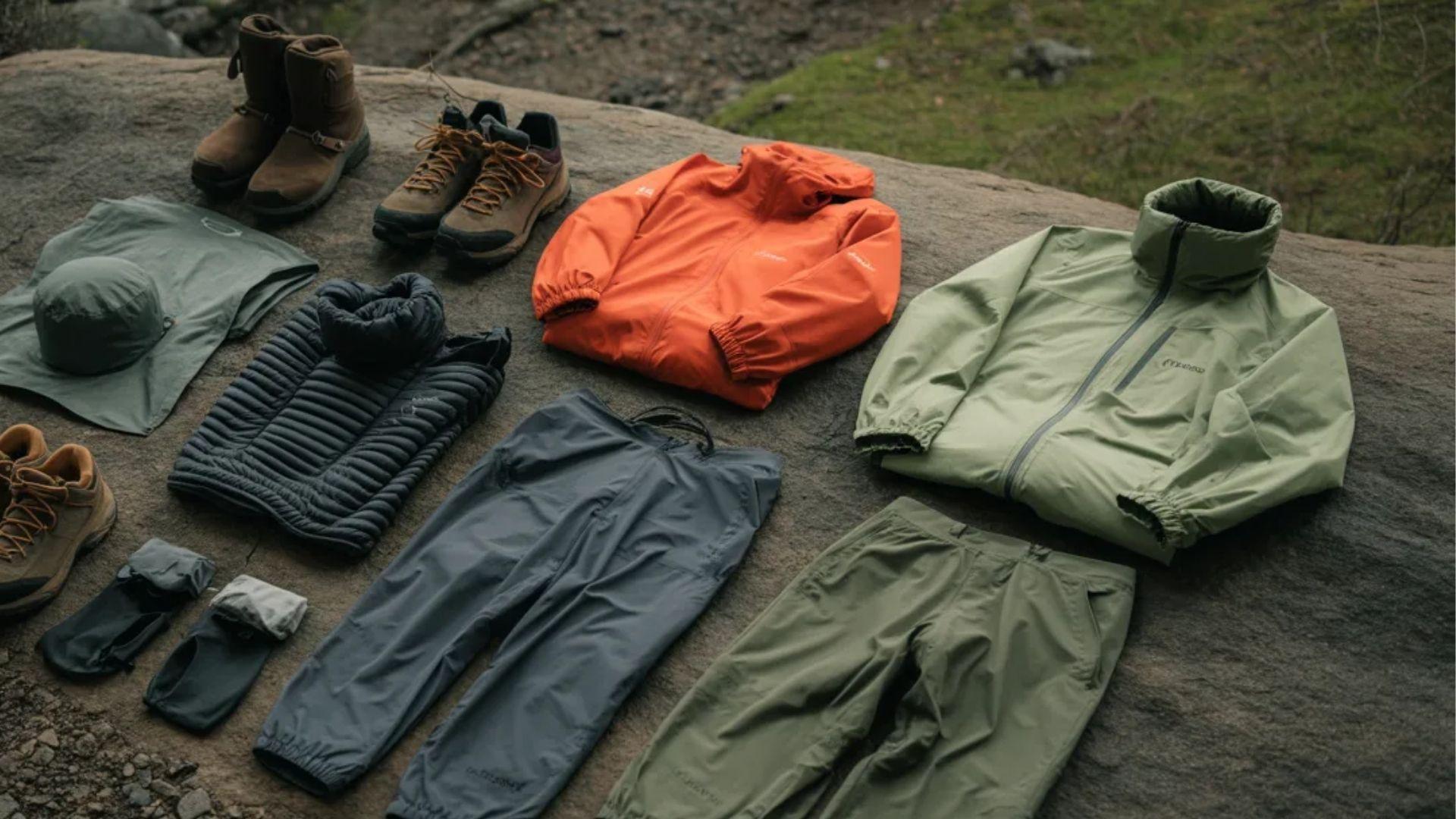
The right clothes keep you comfortable and protect you from weather changes. They also help you adjust to different temperatures easily.
- Base Layers: Moisture-wicking shirts and long sleeves that keep sweat away from your skin.
- Insulation: Fleece jacket, hoodie, or vest to keep you warm in cooler conditions.
- Rain Gear: Jacket, poncho, or waterproof pants to stay dry during rain.
- Bottoms: Hiking pants, shorts, or sweatpants for comfort and movement.
- Footwear: Hiking boots or shoes for walking, plus camp shoes or sandals for relaxing.
- Accessories: Hat, sunglasses, warm beanie, and gloves for added protection.
Tip: Avoid cotton as it holds moisture. Use layers so you can add or remove clothing based on the temperature.
The right clothing keeps you prepared for both warm and cold conditions. It also helps prevent discomfort during long hours outdoors.
4. Health & Safety Essentials
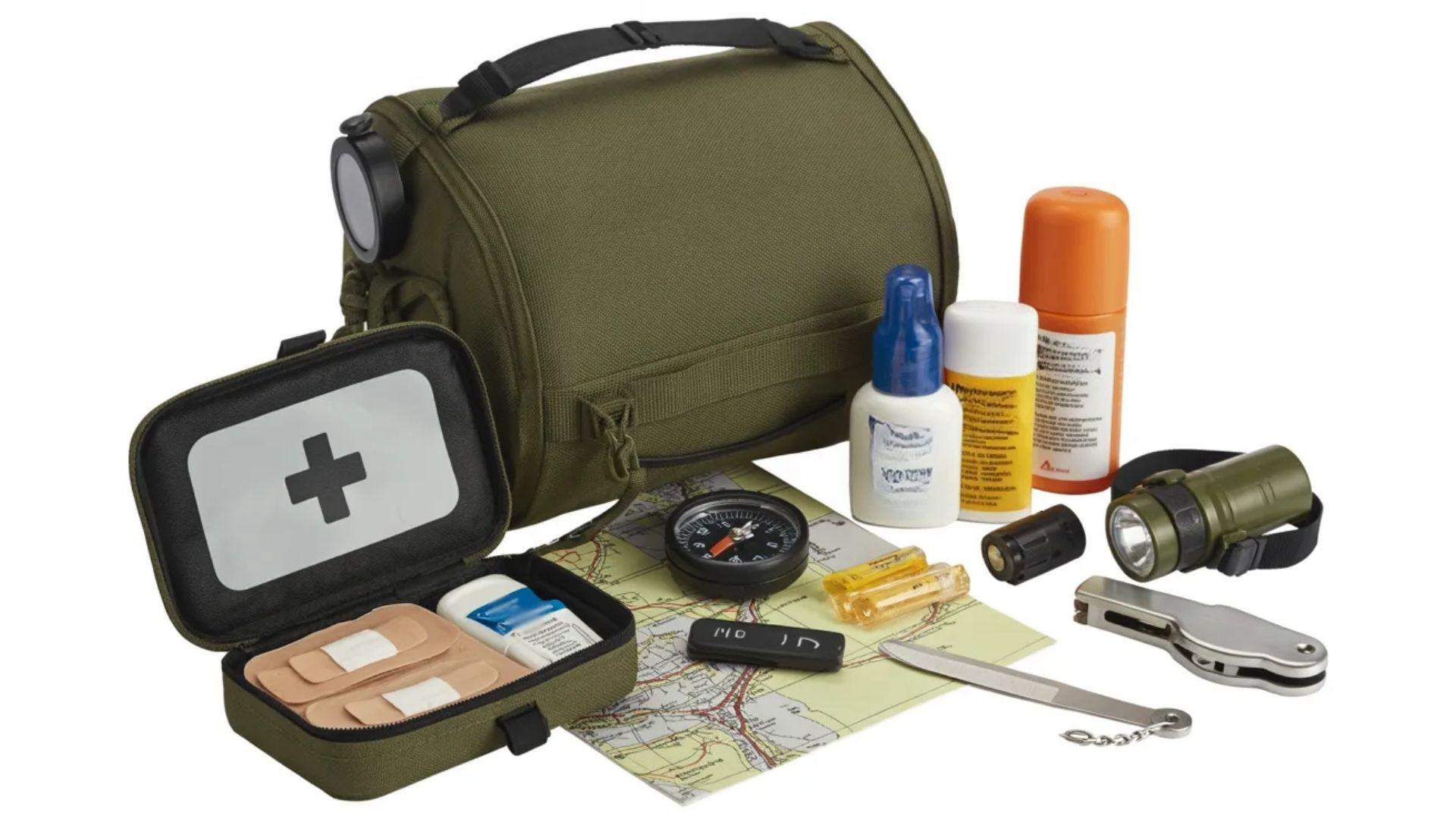
Staying safe is important when camping. Being prepared helps you handle issues and respond quickly if something goes wrong.
- First-Aid Kit: Band-aids, ointment, painkillers, and personal medications for minor injuries and health needs.
- Navigation: Map, compass, or GPS device so you can find your way without depending only on your phone.
- Lighting: Headlamp or flashlight with spare batteries for clear visibility at night.
- Sun & Bug Protection: Sunscreen, SPF lip balm, and insect repellent to protect your skin.
- Emergency Items: Whistle for signaling, a multipurpose knife for tasks, and duct tape for quick fixes.
These items help you stay ready for small and serious situations. Being prepared can make your trip safer and more relaxed.
5. Personal Items & Comfort
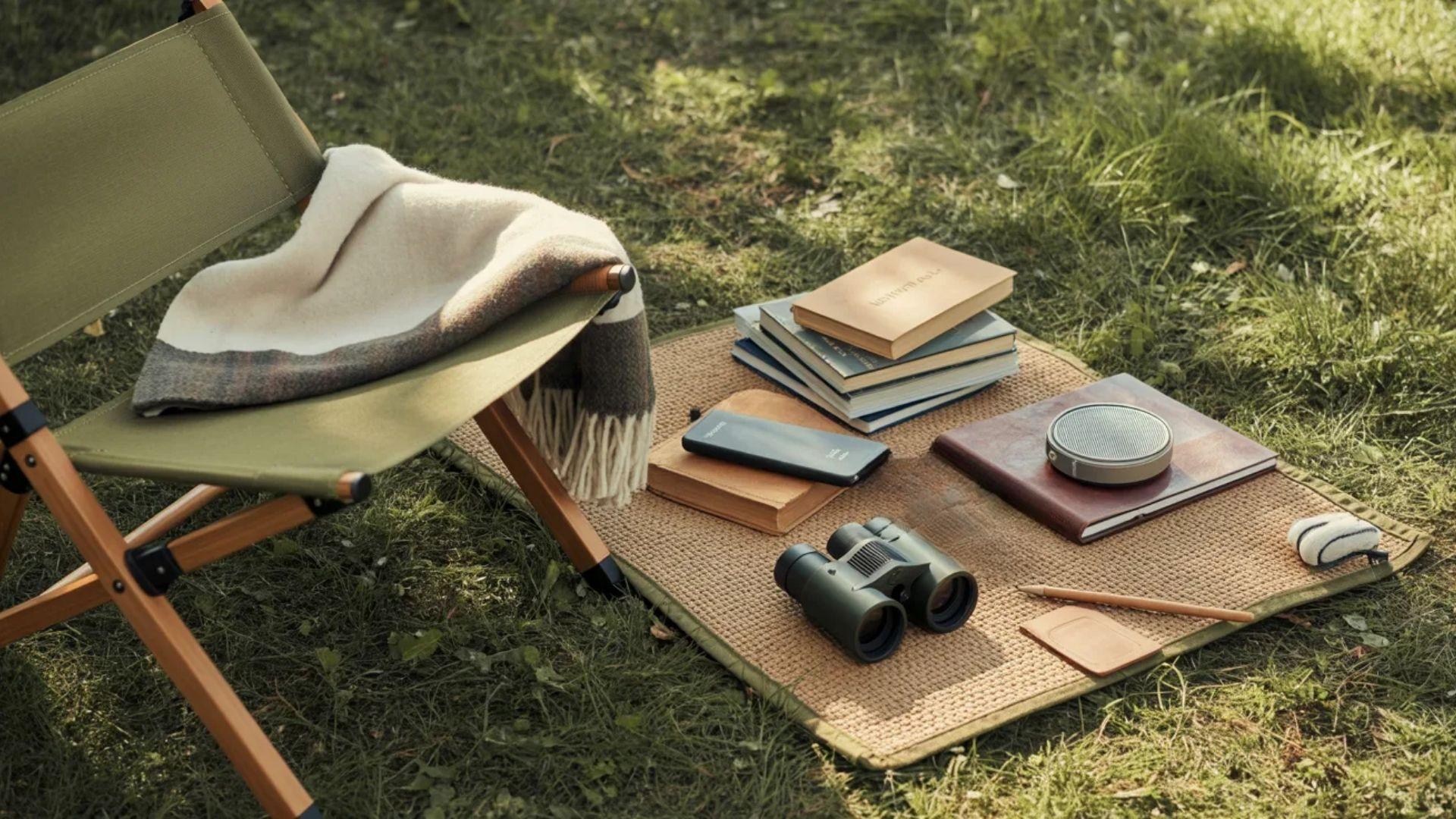
Small personal items help you stay clean, rested, and comfortable. They also add ease and give you ways to enjoy your free time.
- Toiletries: Toothbrush, toothpaste, hand sanitizer, toilet paper, soap, and wipes to stay clean.
- Comfort Items: Camp chairs, blankets, and a portable charger for extra ease.
- Entertainment: Books, games, a journal, or a camera or binoculars to pass the time.
- Optional Luxuries: Hammock for resting, string lights for soft lighting, and a small speaker for music.
Comfort items help you relax after a long day outdoors. They also make your overall stay more enjoyable.
6. Camping with Kids or Pets
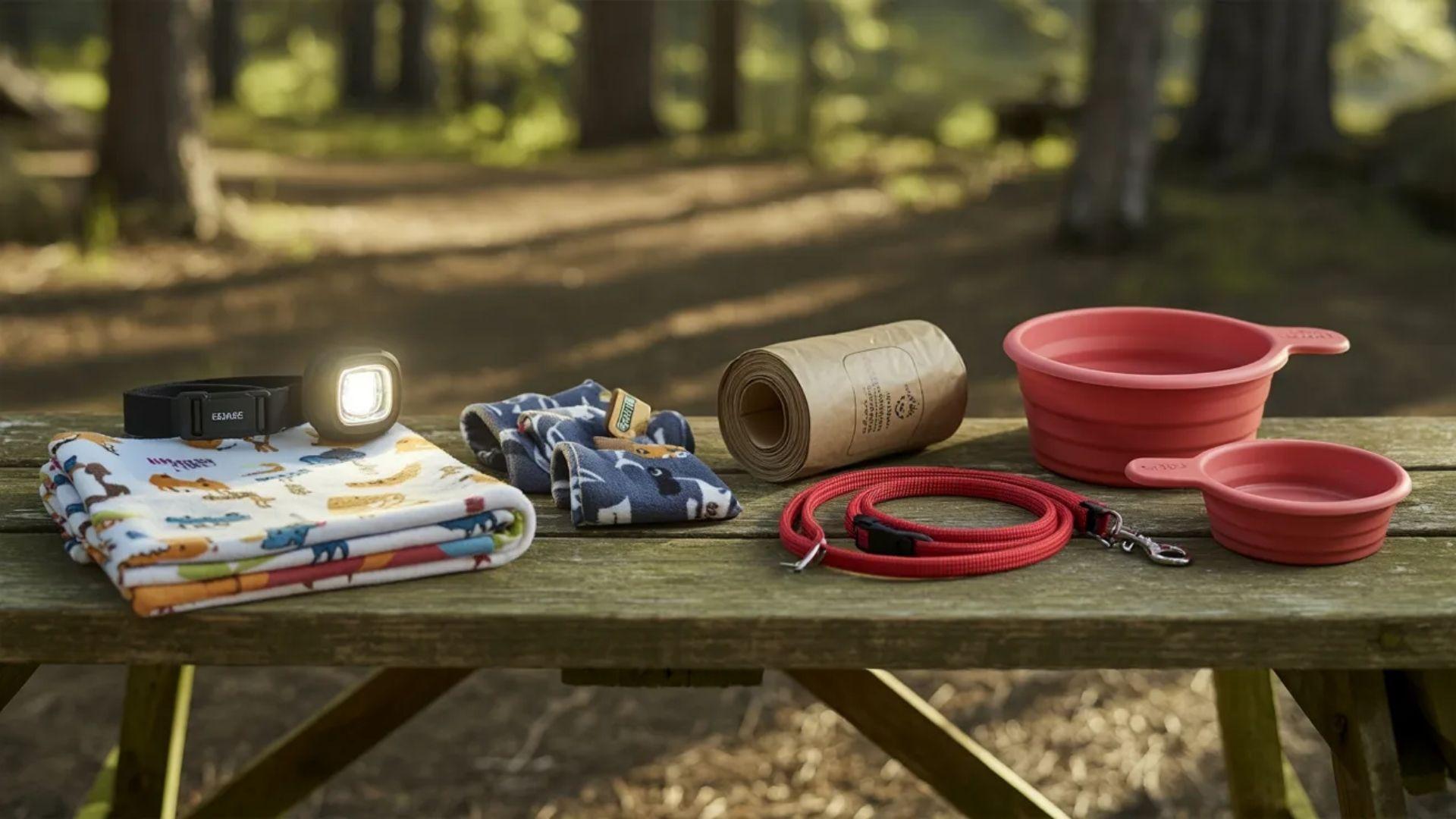
Planning ahead helps keep kids and pets safe and comfortable. It also makes the trip easier to manage for everyone.
- Kids’ Gear: Flashlight or headlamp for each child, a favorite blanket or toy, and extra clothing for quick changes.
- Meals & Snacks: Simple, easy-to-pack foods that kids like and can eat without much prep.
- Safety: Child-specific first-aid items, sunscreen, and insect repellent for protection.
- Pets (if allowed): Leash, portable water bowl, enough food, and waste bags to keep the area clean.
Proper planning helps avoid stress during the trip. It also keeps kids and pets safe and comfortable.
7. Most Forgotten Items
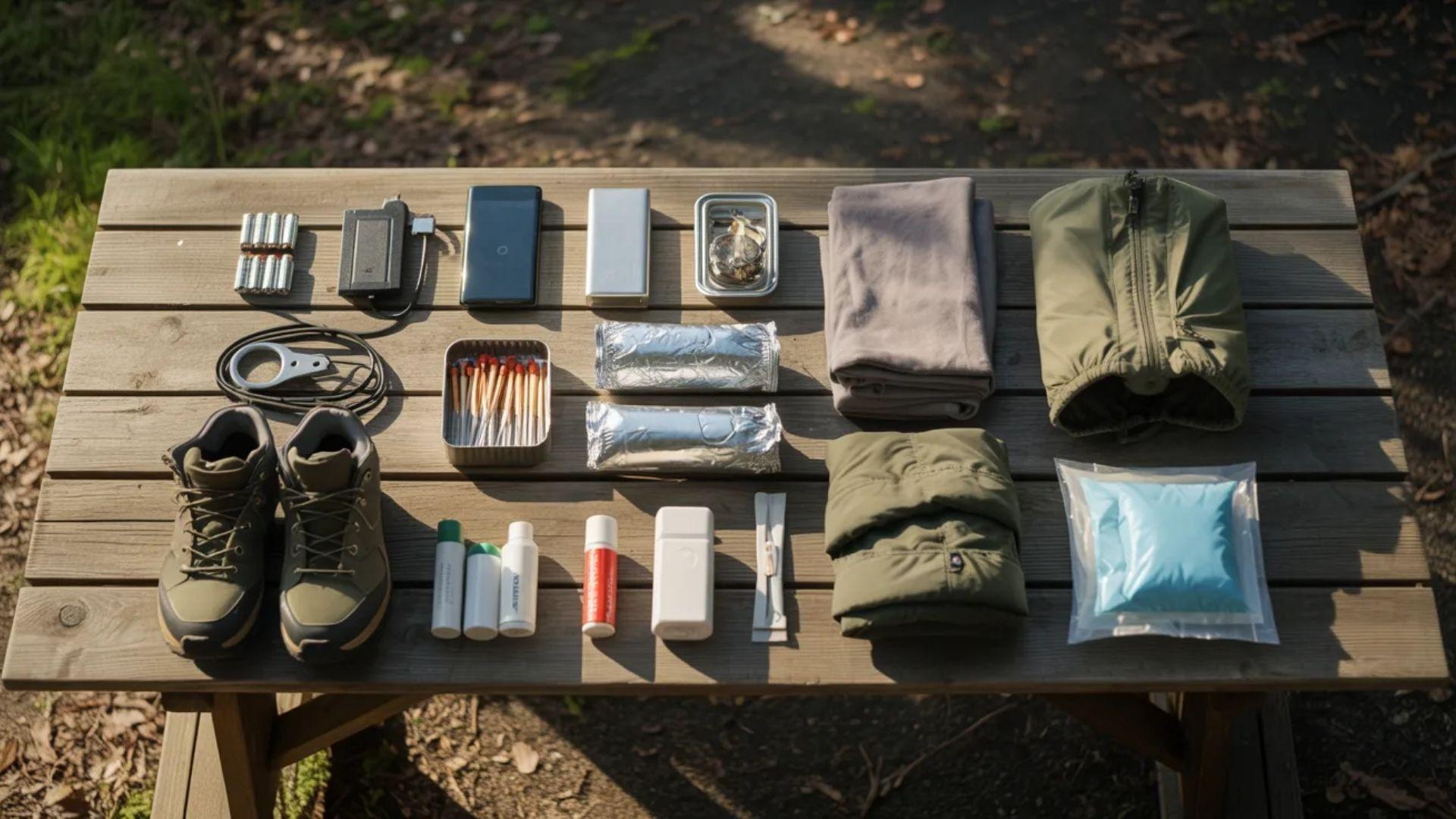
Some small items are easy to miss but can matter a lot during your trip. Packing them early helps you avoid last-minute stress and common mistakes.
- Small Essentials: Extra batteries, phone charger, lighter or matches, foil, and a can opener for daily use.
- Clothing Extras: Extra clothes, a rain cover, and spare shoes in case of wet or dirty conditions.
- Health & Hygiene Items: Personal medications, lip balm, and wet wipes to stay clean and comfortable.
Keeping these items in mind can save you from trouble later. A quick check before leaving helps ensure nothing important is missed.
Packing Tips and Tricks
A clear packing plan helps you stay organized and saves time during your trip. It also makes it easier to find items when you need them.
How to organize a camping checklist: Group items by category, like sleeping, cooking, and clothing, so nothing gets missed.
Packing cubes and waterproof bags: Use them to keep items sorted and protect gear from rain or spills.
Weight distribution for backpacks: Place heavier items close to your back and center for better balance.
Quick-access items (snacks, maps, first aid): Keep these in easy-to-reach pockets so you can grab them quickly when needed.
Smart packing helps you stay prepared and makes your camping trip easier to manage.
Common Mistakes to Avoid
Planning helps you avoid common issues that can affect your trip. Small mistakes can lead to discomfort or stress at the campsite.
| Mistake | Fix |
|---|---|
| Overpacking or forgetting essentials | Make a checklist and pack only what you need. Double-check before leaving. |
| Ignoring weather conditions | Check the forecast and pack clothes and gear based on it. |
| Not testing the gear beforehand | Set up and test your gear at home to make sure everything works properly. |
Avoiding these mistakes helps you stay prepared and enjoy a smooth camping trip.
Final Thoughts
From my own trips, I have learned that planning makes camping simple and stress-free. When you know what to bring camping, you feel ready for any situation.
The right gear and a simple checklist help avoid common problems. Keep things simple, stay prepared, and focus on enjoying your time outdoors.
A little effort before you leave can make your whole trip smooth and comfortable.
Save this guide so you can use it before every trip. Pack smart and enjoy your camping time!
Frequently Asked Questions
How Much Water Should You Bring Camping?
Carry at least 2-4 liters of water per person per day. Bring extra if there is no clean water source nearby.
Do You Need Permits for Camping Trips?
Some campsites require permits or bookings. Always check the area’s rules before you go.
How Do You Store Food Safely While Camping?
Use sealed containers and keep food in a cooler or away from animals. In some areas, use bear-proof storage if required.
What Is the Best Way to Stay Warm at Night?
Wear dry layers, use a proper sleeping bag, and keep your head and feet covered to hold body heat.
How Do You Keep Your Campsite Clean?
Pack out all trash, use trash bags, and clean dishes right after use to avoid mess and animals.
