

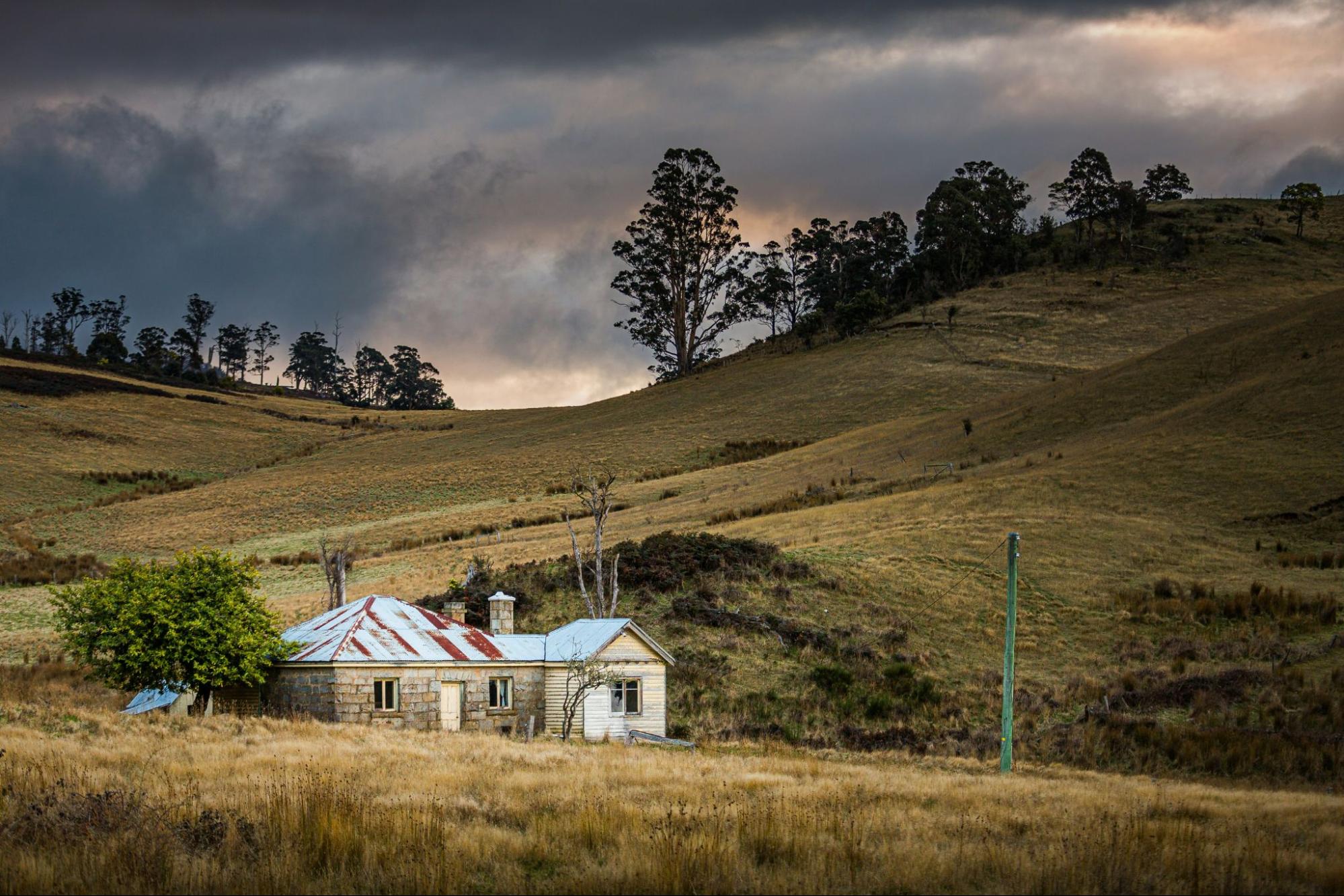
There’s a specific moment that tends to happen when you leave a dense city and land somewhere rural in Australia. It’s not dramatic. No cinematic reveal. It’s more practical than that.
You notice the gaps.
Not empty in a poetic sense, but functional gaps. Distance between houses. Distance between services. Distance between what you expect and what actually exists.
Rural Australia doesn’t just give you “more space”, it forces you to understand what space actually costs, how it’s used, and why housing there follows completely different rules than what you see in cities like Sydney or Melbourne.
Space Isn’t Free, It’s Just Distributed Differently
The first misconception is that rural space equals freedom without trade-offs. In reality, space is abundant, but infrastructure is not.
Drive a few hours out from Brisbane and you’ll start seeing properties measured in acres rather than square feet. But those acres come with responsibilities that urban housing quietly outsources.
Water, for example, is often not centralized. Many rural homes rely on rainwater tanks or bore systems. That means your water supply depends on weather patterns and storage capacity, not just a monthly bill.
Electricity can be similar. While the grid reaches far, reliability varies, and solar setups with battery storage are far more common. Not as an eco statement, but as a practical necessity.
Waste management also shifts. Septic systems replace sewer lines, and suddenly the idea of “flushing and forgetting” is no longer how things work.
So yes, you get more land. But you also inherit systems that cities have already solved for you.
Shed Kit Homes: The Practical Response to Distance and Cost
One of the most telling housing trends in rural Australia is the rise of shed kit homes. At first glance, they look like oversized metal barns. And in many ways, that’s exactly what they are, just reworked for residential use.
The reason they exist comes down to logistics.
Transporting traditional building materials to remote areas is expensive and time-consuming. Labor availability can be inconsistent. Weather conditions can delay builds for weeks. Shed kit homes simplify that entire process by delivering pre-engineered structures that can be assembled faster and with fewer specialized trades.
What a Shed Kit Home Actually Is
Shed kit homes are typically steel-framed structures, often using corrugated metal cladding, designed to be shipped as a package. Think of it as a modular system rather than a custom build from scratch.
Key characteristics include:
- Pre-cut and pre-measured components delivered on-site
- Simplified assembly process compared to traditional homes
- Flexible interior layouts once the external shell is complete
They’re not inherently “cheap” in a low-quality sense. They’re efficient. And in rural areas, efficiency often matters more than aesthetics.
Why They Make Sense in Rural Australia
The appeal becomes obvious once you factor in distance.
If your nearest major supplier is hours away, reducing the number of deliveries matters. If skilled labor is limited, simplifying construction matters. If timelines are affected by weather or access roads, predictable builds matter.
Shed kit homes address all three.
They also adapt well to the Australian climate. High ceilings improve airflow. Wide overhangs provide shade. Materials are chosen for durability against heat, wind, and, in some regions, heavy rain.
You’ll see them scattered across regions outside Perth and deeper into the interior, often blending into the landscape rather than standing out.
Housing Footprints Are Larger, but Not Always Smarter
With more land available, homes tend to spread out. Larger footprints, wider layouts, detached everything.
But that doesn’t automatically translate to better design.
In many rural properties, space is underutilized. Rooms exist because there’s no pressure to optimize. Storage expands because there’s room for it. Garages become multi-purpose zones, workshops, equipment storage, sometimes even secondary living areas.
What stands out is that housing is built around function first, not resale value or visual appeal.
In urban environments, every square foot is scrutinized. In rural areas, the question shifts from “How do we maximize this space?” to “Do we have enough of it to support what we need?”
That leads to practical design choices:
Outdoor Space Is Working Space
Land isn’t just decorative. It’s used.
You’ll see:
- Water tanks positioned based on roof runoff efficiency
- Sheds placed for equipment access rather than visual symmetry
- Driveways designed for utility vehicles, not just cars
Gardens are often functional too, growing food rather than just filling space.
Separation Becomes a Feature
Unlike city housing, where proximity is unavoidable, rural homes often separate structures intentionally. Main house. Secondary shed. Storage units. Sometimes even detached kitchens or guest areas.
This separation reduces fire risk in some regions and improves ventilation in hotter climates.
Distance Changes What “Nearby” Means
Living in rural Australia recalibrates your sense of distance quickly. A 30-minute drive is not considered far. It’s normal. Sometimes necessary just to reach basic services.
This directly impacts housing decisions.
You don’t choose a home based on walkability. You choose it based on access routes. Road quality matters. Flood-prone areas matter. Fuel costs matter.
Proximity to towns like Toowoomba or regional hubs becomes more important than proximity to cafés or public transport.
And because of that, housing clusters differently. Instead of dense neighborhoods, you get pockets of properties connected by roads rather than sidewalks.
Climate Shapes Everything, Quietly but Completely
Australia’s climate isn’t uniform, and rural housing reflects that in very practical ways.
In hotter regions, homes are designed to manage heat before anything else. Orientation matters. Windows are positioned for cross-ventilation. Materials are chosen to reflect rather than absorb heat.
In areas prone to bushfires, building codes influence design heavily. Clear zones around homes, fire-resistant materials, and specific construction methods are not optional, they’re required.
In wetter regions, elevation and drainage become priorities. Houses may be raised slightly to prevent water damage, and roofing design becomes critical for managing heavy rainfall.
These are not aesthetic choices. They’re responses to conditions that directly affect safety and livability.
The Trade-Off Between Independence and Convenience
What rural Australia makes clear is that housing is a balance between independence and convenience.
You gain control over your environment. You’re less affected by neighbors, zoning restrictions (to a degree), and urban density. But you also lose immediate access to services.
Repairs take longer. Deliveries cost more. Access to healthcare, education, and retail is less immediate.
This trade-off shapes how homes are built and maintained.
People plan for self-sufficiency where possible. Backup systems for power. Water storage beyond minimum needs. Extra space for supplies.
Housing becomes less about lifestyle branding and more about resilience.
What This Perspective Changes
Spending time in rural Australia doesn’t just change how you view that specific place. It changes how you evaluate housing in general.
You start questioning assumptions that feel normal in cities.
Why are homes so tightly packed? Why is outdoor space often decorative rather than functional? Why are so many systems invisible to the people using them?
Rural living exposes those systems by making you responsible for them. And once you’ve experienced that, it’s hard to ignore.
Final Takeaway
Living in rural Australia doesn’t romanticize space. It operationalizes it.
You see how land, housing, and infrastructure interact in a way that’s stripped of unnecessary complexity. More space doesn’t automatically mean better living, but it does reveal what actually matters when convenience is no longer built in.
Housing becomes clearer. Not simpler, but more transparent.
And that clarity stays with you long after you leave the wide gaps behind.
