


Picture a hundred miles of barrier island with no cities, no high-rises, and no strip malls — just ocean, shifting sand dunes, wild horses, and lighthouses that have guided sailors for centuries. That’s the Outer Banks of North Carolina, and it consistently surprises first-time visitors who arrive expecting a typical beach resort town and find something far more interesting.
Whether you’re mapping a multigenerational family trip, planning a quieter escape in your retirement years, or simply looking for a coastal destination with real depth, the Outer Banks delivers. This guide covers the experiences worth your time, the best seasons to visit, and how to sort through the unique lodging landscape so you can spend less time researching and more time watching the sun rise over the Atlantic.
If you’re still in the early stages of dreaming up this trip alongside other potential destinations, our long-term trip planning guide walks through how to organize extended travel — handy if you’re considering the OBX as part of a longer East Coast itinerary.
The Top Experiences You Cannot Miss on the Outer Banks
The OBX isn’t short on things to do, but the best approach is to pick a handful of experiences that match your interests rather than attempting to check every box on a crowded itinerary. These four are the ones that leave a lasting impression.
Walk in the Footsteps of the Wright Brothers
On December 17, 1903, Orville and Wilbur Wright accomplished the first successful powered airplane flight on a stretch of Kill Devil Hills that was chosen specifically for its reliable wind and soft sand. The Wright Brothers National Memorial preserves that exact site today, with granite boulders marking the four takeoff spots from that historic morning and a full-scale reproduction of the 1903 Flyer inside the visitor center museum.
It’s a surprisingly moving place to visit. Walking the ground where human flight began — and standing next to a replica of the fragile wood-and-canvas machine that made it possible — puts a lot of modern travel into perspective. The memorial is open year-round, the admission fee is modest, and the exhibits are genuinely well done. Worth at least half a morning.
Meet the Wild Horses of Corolla
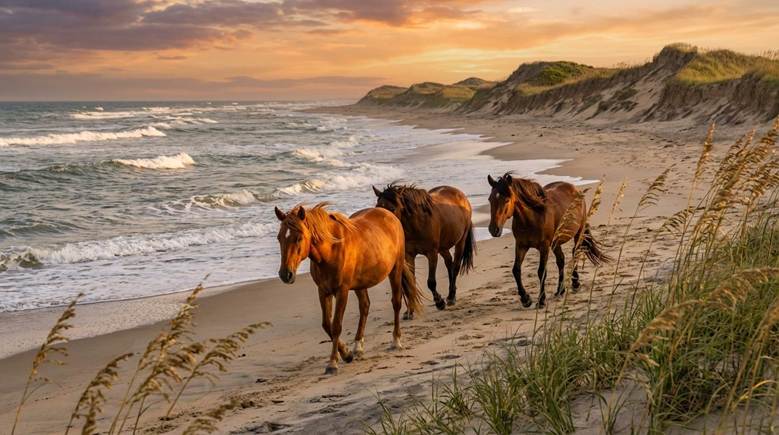
The northernmost stretch of the Outer Banks, near the village of Corolla, is home to roughly 100 to 130 Colonial Spanish Mustangs — descendants of horses brought to the Americas by Spanish explorers more than 500 years ago. They roam freely across the dunes and beaches north of the paved road, and watching a small herd move along the shoreline at sunrise is the kind of thing you remember years later.
The Corolla Wild Horse Fund has managed the herd’s conservation since 1989 and designates the horses as the official state horse of North Carolina. To see them, the practical approach is a guided 4WD tour — the horses live in a roadless area only accessible by driving on the beach. State law requires you to stay at least 50 feet away, which the guides enforce firmly and for good reason.
Cape Hatteras National Seashore
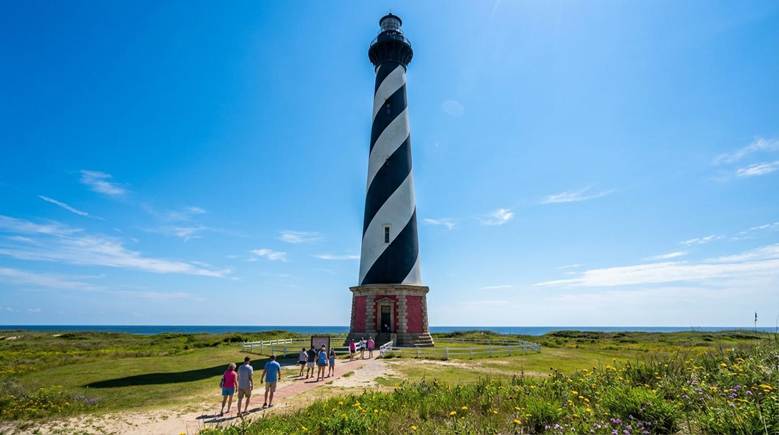
America’s first national seashore, established in 1953, stretches 70 miles along Hatteras Island and offers a very different flavor from the northern OBX towns. The Cape Hatteras National Seashore encompasses the iconic black-and-white-striped Cape Hatteras Lighthouse (the tallest brick lighthouse in the country), the Pea Island National Wildlife Refuge, and miles of undeveloped beach.
Offshore, roughly 3,000 shipwrecks have accumulated over the centuries in the treacherous shoals known as the “Graveyard of the Atlantic” — a magnet for scuba divers and snorkelers who come for wreck dives unlike anything on the East Coast. If diving isn’t your thing, the wildlife refuge alone is worth a visit: it’s one of the premier bird-watching spots on the entire Atlantic Flyway, particularly during spring and fall migration.
Jockey’s Ridge State Park
The largest natural sand dune system on the East Coast sits just inland from the Nags Head beach strip and costs nothing to visit. The dunes rise up to 100 feet, and on a clear afternoon, you can see both the Atlantic Ocean and the Roanoke Sound from the top. Kite flying and hang gliding lessons are popular here, but simply walking the dunes at sunset — when the light turns the sand a deep orange — is reward enough. The terrain is manageable for most fitness levels, and the park has accessible paths near the visitor center.
When to Go: Choosing the Right Season for Your Trip
Getting the timing right can make a real difference in what kind of experience you have — and what you pay.
- Summer (June through August) is peak season. Temperatures hover between 75 and 85°F, every restaurant and shop is open, and the beaches are at their liveliest. It’s also the most expensive season, and oceanfront rental properties for popular summer weeks are often booked by January of that same year. According to the Outer Banks Visitors Bureau, peak season occupancy rates exceeded 88.8% in recent years — meaning availability is tight, and prices reflect it.
- Spring (late March through May) is increasingly popular for good reason. Temperatures reach comfortable highs around 70 to 75°F, the wild horses are visible and active, wildflowers are in bloom, and the beaches feel spacious without being empty. Rental rates are significantly lower than in the summer, and you won’t need reservations months in advance.
- Fall (September through November) is a favorite among experienced OBX visitors. The water stays warm well into October, the beaches thin out after Labor Day, and rates drop noticeably. The Duck Jazz Festival draws music lovers to the northern OBX, and a quiet week on the Outer Banks in October — warm enough to swim, cool enough for long walks — is genuinely hard to beat. One caveat: hurricane season peaks between mid-August and mid-October, so travel insurance is a practical investment for fall trips.
- Winter (December through February) brings solitude and the lowest prices of the year. Temperatures range from 40 to 55°F — comfortable for hiking, birding, and golf, though not beach weather for most people. Many restaurants and shops scale back hours or close, so research ahead if you’re planning a winter visit.
For first-timers balancing cost, comfort, and crowd levels, late May or early September is the sweet spot. Shoulder season occupancy averages around 60% compared to the 88.8% summer peak, which means you’ll find availability, flexibility, and your own patch of beach.
Where to Stay: Understanding Outer Banks Vacation Rentals
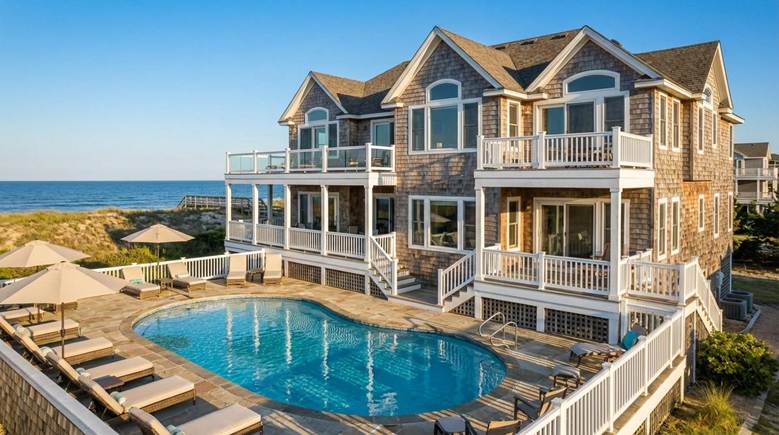
The Outer Banks lodging market is unlike most beach destinations. Hotels exist but are a minority — the dominant option is the private vacation rental home, and for groups of any size, this is almost always the better choice. Renting a house means a full kitchen, a private pool in many cases, direct beach access, and room for everyone to spread out comfortably. Visitor spending in Dare County topped $2.1 billion in 2024, and that economic activity is largely built around the rental home market rather than traditional hotel hospitality.
Each town along the 130-mile island chain has its own character:
- Corolla — Northernmost developed town, quieter and more residential, with planned communities, close to the wild horses.
- Duck — Upscale village feel, Sound-side sunsets, boutique shopping, slightly more refined atmosphere.
- Kitty Hawk / Kill Devil Hills — Central location, closest to the Wright Brothers Memorial and Jockey’s Ridge, good mix of amenities.
- Nags Head — Lively, largest selection of dining and shopping, good base for families who want convenience.
- Hatteras Island — Remote and nature-focused, best for those prioritizing national seashore access, surf fishing, and solitude.
For older travelers, it’s worth asking specifically about elevator access — many multi-story OBX rental homes are built tall to maximize ocean views, and several newer properties include elevators as a standard feature. Pet-friendly properties are also widely available.
Booking timing matters more here than almost anywhere else. For peak summer weeks in 2026, popular properties are already reserved — many rental companies report being booked 12 or more months in advance for their most desirable oceanfront homes. Shoulder season gives you more flexibility to plan closer to your travel date, but even then, earlier is better.
Working with an established local rental company that specializes in Outer Banks rentals simplifies the process considerably — they can match your group size, preferred town, amenity priorities, and budget to available properties rather than leaving you to sort through hundreds of individual listings.
Practical Planning Tips Before You Go
There are a few things you should do before departing. This includes considering things like:
- Getting there: The two practical airport options are Norfolk International Airport in Virginia (roughly 120 miles north of the northern OBX) and Raleigh-Durham International Airport (about 230 miles west). Both require a drive, and there is no substitute for having your own vehicle once you’re on the islands.
- Getting around: A car is essential. The islands stretch roughly 130 miles from Corolla to Ocracoke, and there’s no public transit to speak of. If you’re planning to explore the beach north of Corolla into the Carova area, where the wild horses roam, a 4WD vehicle with good ground clearance is required — you’ll be driving on the beach itself.
- Budget considerations: Many of the OBX’s best experiences are free. The beaches are free to access, Jockey’s Ridge State Park charges no entry fee, and the Pea Island Wildlife Refuge has no admission cost. The Wright Brothers National Memorial and Cape Hatteras Lighthouse charge a modest per-person fee, but nothing that will strain a travel budget. The main cost variables are rental accommodations, dining, and guided tours (such as the 4WD horse tours in Corolla).
- Accessibility: Travelers with mobility considerations will find that the OBX accommodates them reasonably well. Many modern rental homes have elevator access, national park visitor centers are generally fully accessible, and oceanfront properties bring your door closer to the water. It’s worth calling ahead to specific properties to confirm accessibility features if this matters to your group.
- Travel insurance: If you’re visiting in the fall — or frankly, any time you’re spending several thousand dollars on a rental property — travel insurance is a sensible precaution. Hurricane season officially runs June 1 through November 30, with peak activity in September and October.
Before you start packing, check our beach vacation packing checklist to make sure nothing essential gets left behind.
The Outer Banks Rewards Every Kind of Traveler
The Outer Banks isn’t a destination you consume in a weekend and cross off the list. It’s a place where people come back — sometimes for decades — because the combination of natural landscape, living history, and genuine quiet is hard to find anywhere else on the East Coast.
Whether you’re standing at the base of the Cape Hatteras Lighthouse watching the Atlantic stretch to the horizon, catching a glimpse of wild horses moving through the dunes at dawn, or simply sitting on the deck of a rental home listening to the surf at night, this place delivers something that feels worth the trip at any age.
Start planning early if you have a specific summer week in mind. And if you have flexibility, consider arriving in the shoulder seasons — you’ll spend less, share the beaches with fewer people, and discover that the Outer Banks in September or May is every bit as beautiful as the postcard version in July.
