

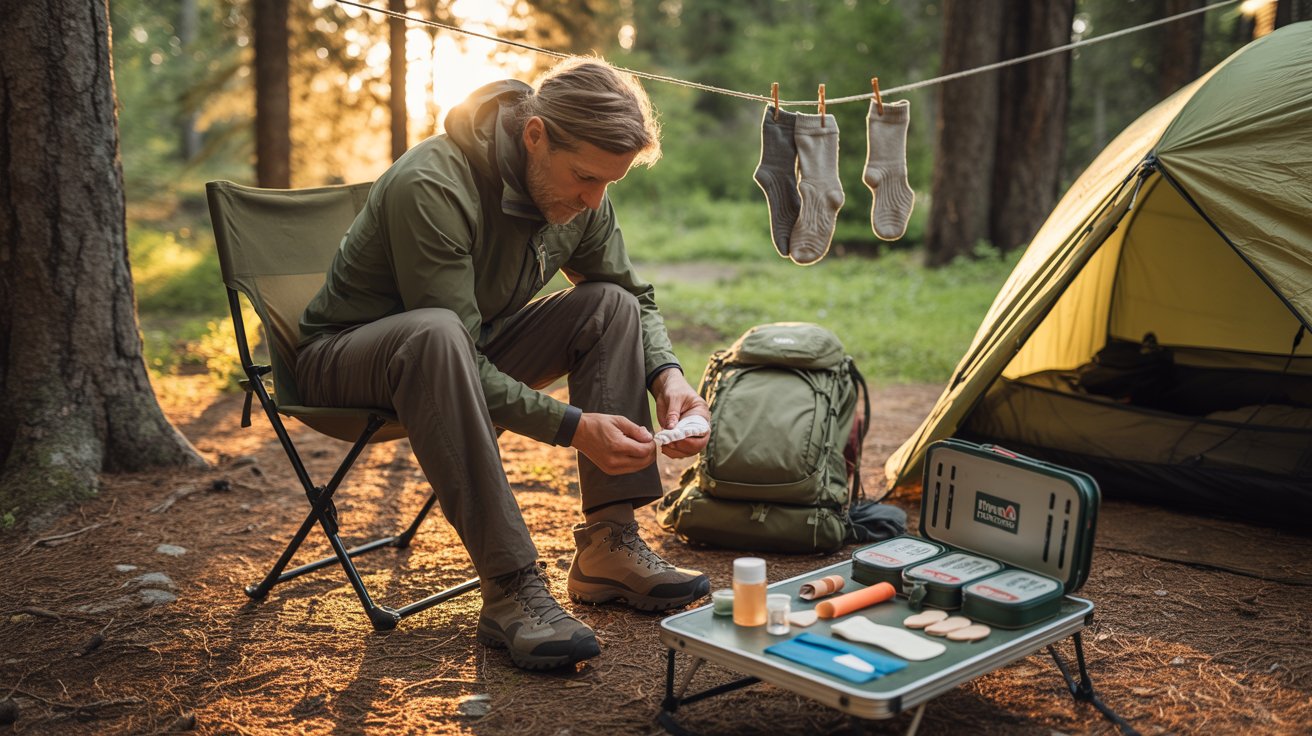
Camping sounds relaxing until your feet start hurting halfway through the trip. A blister can ruin a hike fast, and damp socks can make every step uncomfortable. Many campers spend plenty of money on tents and gear but ignore foot care until problems show up. The truth is simple. If your feet are miserable, the whole trip feels longer.
Good foot care while camping does not require anything complicated. A few smart habits can keep you comfortable whether you are camping at a local park or hiking deep into the mountains.
Choose Better Socks
Most people assume thick socks are good enough for camping. That usually leads to sweaty feet and painful rubbing.
You don’t want normal wool socks, make sure you’re buying merino wool socks for men or women. The benefits of merino wool socks while camping are easy to notice during long days outdoors. Merino wool handles moisture better than cotton, dries faster, and stays comfortable in changing temperatures. It also helps reduce odor, which becomes important after a couple of days outside.
Bring extra pairs and change socks regularly, especially if they get damp from sweat or rain.
Keep Feet Dry
Moisture causes many camping foot problems. Wet skin softens and becomes more likely to blister.
Take your boots off during breaks and let your feet breathe whenever possible. If boots get soaked, avoid placing them directly beside a fire because heat can damage them. Instead, let your boots air dry naturally.
Camp sandals or slip-ons are also useful around campgrounds because they give your feet a break after long hikes.
Prevent Blisters Early
Blisters usually start with small hot spots or rubbing. Do not ignore those warning signs.
Apply blister tape or moleskin as soon as irritation begins. Waiting too long only makes things worse. Boot fit matters too. Tight boots create pressure, while loose boots cause rubbing around the heel.
Trim your toenails before camping trips as well. Long nails pressing against boots can become painful during downhill hikes.
Wear Proper Footwear
Camping footwear should provide support, traction, and comfort. Thin sneakers may work at a basic campground, but rough trails require better protection.
Make sure your boots fit correctly with the socks you actually plan to wear outdoors. Thick socks inside tight boots can quickly become uncomfortable.
Your overall hiking clothes setup matters too. Breathable clothing helps regulate body temperature and reduces excess sweating during hikes.
Clean Feet Daily
Even short camping trips require basic foot hygiene. Dirt and sweat build up quickly inside socks and boots.
Wash your feet daily if possible and dry them thoroughly, especially between your toes. Fresh socks before bed also help your skin recover overnight and make sleeping more comfortable.
Pack A Foot Kit
A small foot care kit can solve problems before they get serious. Bring blister pads, athletic tape, antiseptic wipes, nail clippers, and extra socks.
Many campers skip this step until they actually need it. That usually happens at the worst possible moment.
Taking care of your feet while camping helps prevent discomfort, blisters, and soreness that can ruin a trip. Dry socks, supportive footwear, and simple daily habits make a major difference once you spend long hours outdoors.
