

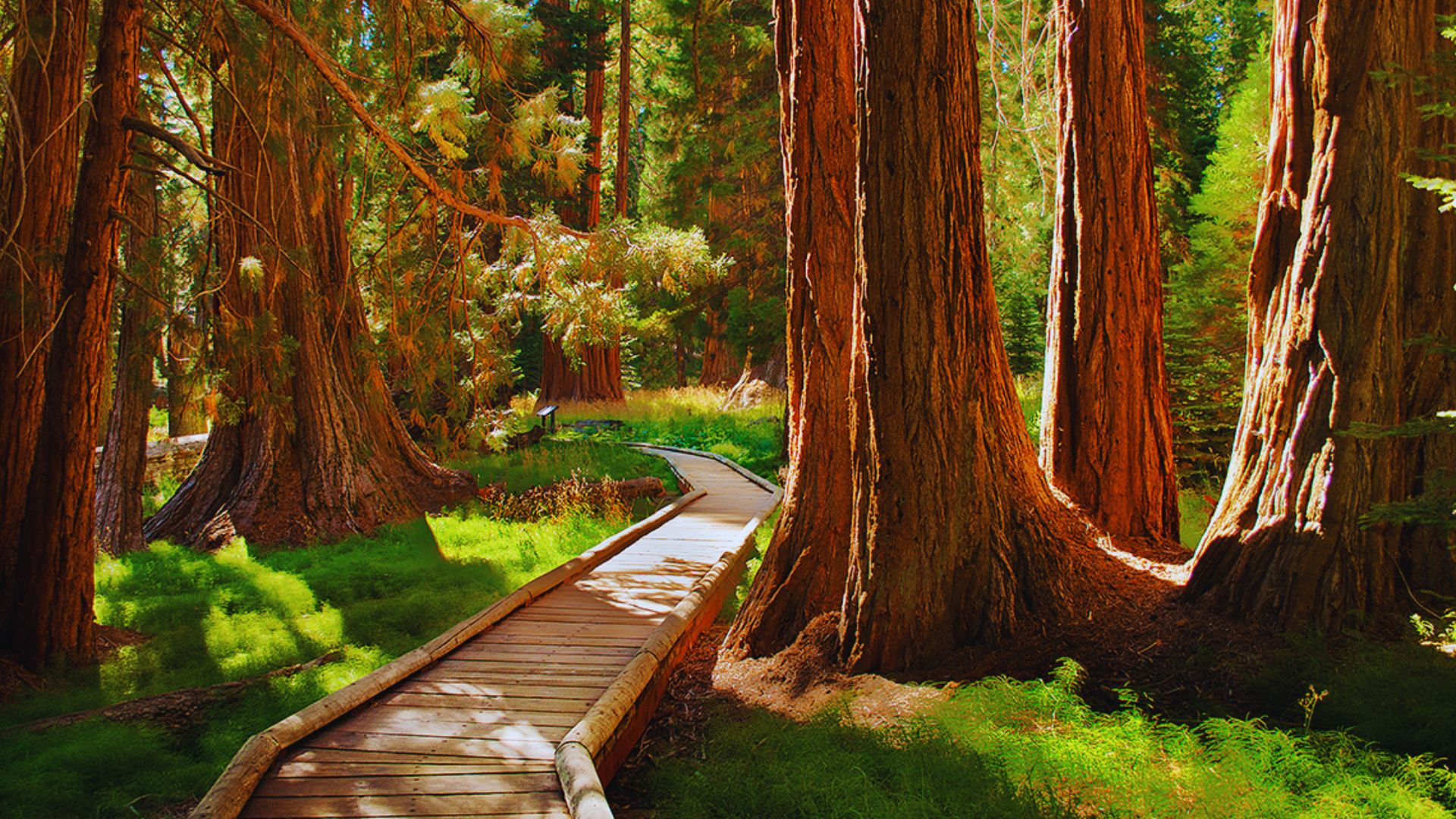
I have hiked in a lot of parks. None of them prepare you for your first sequoia.
You round a corner on one of the Sequoia National Park trails and suddenly everything you thought was big stops making sense.
These trees are not just large. They are ancient in a way that physically stops you mid-step.
I put this guide together from real time on these trails. Every skill level. Every type of experience the park offers.
If you are trying to figure out which trails are worth your time, this is where to start.
General Overview of Sequoia National Park Trails

Sequoia National Park contains over 800 miles of maintained trails. That range covers everything from flat, paved walks suitable for strollers to remote backcountry routes that will challenge experienced hikers.
Trails are generally divided into three difficulty levels. Easy trails are short, flat, and accessible to most visitors. Moderate trails involve some elevation and longer distances. Strenuous trails demand fitness, proper gear, and advance planning.
Before you go: Some backcountry trails require wilderness permits, especially for overnight trips.
Day hikes on most popular trails do not require permits, but parking at major trailheads fills up early. Arriving before 9am during summer months is strongly recommended.
Top 27 Sequoia National Park Trails
Peru has its ruins. Sequoia has its giants. Here are the trails worth your time, from the most visited to the genuinely overlooked.
1. General Sherman Tree Trail

Difficulty: Easy | Distance: 0.8 miles round trip
This short trail leads to the General Sherman Tree, the largest tree by volume on Earth. The path descends from the upper parking area through a grove of enormous sequoias.
The scale of the tree itself is hard to process until you are standing in front of it. Give yourself more time than you think you need.
Best season is late spring through fall. The trail is paved and accessible for most visitors.
2. Congress Trail

Difficulty: Moderate | Distance: 2 miles loop
The Congress Trail is a loop through one of the densest concentrations of giant sequoias in the park. It passes the President Tree, the House Group, and the Senate Group.
Named trees along the route give you reference points without making the hike feel like a checklist. The forest here has a genuinely cathedral quality.
Allow two hours to walk it without rushing. It connects with the General Sherman Tree, making a natural combination hike.
3. Moro Rock Trail

Difficulty: Strenuous | Distance: 0.6 miles round trip
Short but steep. The Moro Rock Trail climbs a granite dome via carved stone steps and railings cut directly into the rock.
The summit at 6,725 feet delivers a 360-degree view of the Great Western Divide, the San Joaquin Valley, and the surrounding peaks. On clear days the view stretches for over 100 miles.
The climb involves over 300 steps. It is accessible to most reasonably fit visitors but not suitable for those with a fear of heights or limited mobility.
4. Big Trees Trail

Difficulty: Easy | Distance: 1.3 miles loop
The Big Trees Trail circles Round Meadow through a forest of giant sequoias with interpretive signs explaining the ecology of the grove. It is one of the most educational walks in the park.
It is entirely flat, fully paved, and suitable for strollers and wheelchairs. This makes it one of the best options for families with young children.
Spring brings wildflowers to the meadow edge. Early morning visits offer the best light for photography.
5. Tokopah Falls Trail

Difficulty: Moderate | Distance: 3.4 miles round trip
This trail follows the Marble Fork of the Kaweah River to the base of Tokopah Falls, one of the largest waterfalls in the Sierra Nevada.
The path stays relatively flat until the final approach to the falls. River crossings and granite formations along the way make it scenic throughout, not just at the destination.
Late spring is the best time to visit when snowmelt pushes the falls to full force. The trailhead is near Lodgepole Campground.
6. Lakes Trail

Difficulty: Strenuous | Distance: 12.5 miles round trip
The Lakes Trail climbs through dense forest to reach Heather, Aster, Pear, and Emerald Lakes in the backcountry of the park.
The elevation gain is significant, around 2,900 feet total. Most hikers treat this as an overnight trip using backcountry campsites near the lakes.
The views from the upper sections rival anything in the Sierra Nevada. A wilderness permit is required for overnight camping.
7. Alta Peak Trail

Difficulty: Strenuous | Distance: 13.5 miles round trip
Alta Peak sits at 11,204 feet and offers one of the most expansive views in the entire park. The trail gains over 4,000 feet in elevation from the Wolverton trailhead.
This is a full-day commitment for strong hikers. Start early, carry plenty of water, and be prepared for afternoon thunderstorms in summer.
The trail passes through multiple ecological zones, from sequoia forest to rocky alpine terrain. The summit view on a clear day is genuinely unforgettable.
8. Crescent Meadow Loop

Difficulty: Easy | Distance: 1.8 miles loop
Crescent Meadow is described as the gem of the Sierra, a title it earns in wildflower season. The loop circles the meadow through a mix of sequoia groves and open grassland.
Tharp’s Log, a historic cabin built inside a fallen sequoia, sits along the route and is worth a stop. The meadow is also prime habitat for black bears and mule deer.
This trail connects to several longer routes, making it a natural starting point for bigger days in the Giant Forest area.
9. Alta Meadow Trail

Difficulty: Moderate | Distance: 11.6 miles round trip
A longer, quieter alternative to the more popular Giant Forest trails. Alta Meadow sits above 10,000 feet and offers open views across the Great Western Divide.
The trail passes through peaceful forest sections before opening into the meadow. Wildflowers in July and early August are exceptional.
This route sees fewer visitors than the main Giant Forest trails, making it one of the better choices for solitude.
10. Heather Lake Trail

Difficulty: Moderate | Distance: 8.4 miles round trip
Heather Lake is the first of the backcountry lakes accessible from the Wolverton trailhead. The trail climbs steadily through fir and pine forest before reaching the lake at 9,270 feet.
The lake sits in a glacially carved bowl and reflects the surrounding peaks on calm mornings. Swimming is possible in late summer when the water warms slightly.
This trail is a good introduction to the higher elevation terrain for hikers not ready for the full Lakes Trail commitment.
11. Eagle View Trail

Difficulty: Moderate | Distance: 1.5 miles round trip
A short but rewarding trail that leads to a rocky viewpoint above the Giant Forest. The panoramic views take in the western foothills and the Central Valley beyond.
The trail is less crowded than Moro Rock despite offering comparable views in a different direction. Birdwatching along the route is excellent, particularly for raptors.
Best visited in morning light when the valley below is often filled with a low layer of cloud.
12. Twin Lakes Trail

Difficulty: Moderate | Distance: 13.5 miles round trip
Twin Lakes sit in a high alpine basin at around 9,500 feet. The trail passes through diverse forest terrain before climbing to the lakes, which sit side by side in a glaciated valley.
The route is long but not technically demanding. Most visitors treat it as a full day hike or combine it with a backcountry overnight.
Fishing is available at Twin Lakes with a valid California fishing license.
13. Bearpaw Meadow Trail

Difficulty: Easy to Moderate | Distance: 11.5 miles one way
Bearpaw Meadow sits on the edge of the backcountry and offers views across the Kings Canyon high country. The trail is relatively gentle for its length.
The Bearpaw High Sierra Camp operates as a tent-cabin lodge during summer and can be booked in advance. It makes a comfortable base for further exploration.
Photography opportunities along the route are excellent, particularly in the meadow sections during golden hour.
14. Hamilton Lake Trail

Difficulty: Strenuous | Distance: 21 miles round trip
Hamilton Lake is one of the most dramatic backcountry destinations in the park. It sits at 8,235 feet beneath towering granite walls at the foot of the Great Western Divide.
This is a multi-day trip for most hikers. Backcountry permits are required and should be booked well in advance during the summer season.
The lake itself is pristine and the surrounding scenery is among the most impressive in all of Sequoia. Worth every step.
15. Tokopah Valley Trail

Difficulty: Moderate | Distance: 3.4 miles round trip
Similar to the Tokopah Falls Trail but focused on the broader valley scenery rather than just the waterfall endpoint. The granite walls of Tokopah Valley rise dramatically on both sides.
The trail follows the river closely for much of its length, offering plenty of spots to stop and rest near the water.
This is one of the most consistently scenic routes in the park for the effort required.
16. Granite Pass Trail

Difficulty: Strenuous | Distance: 18 miles round trip
Granite Pass is a high backcountry route that takes hikers into the remote northeastern section of the park. The terrain is characterized by massive granite formations and open high country vistas.
Very few day hikers attempt this route. Most trips are planned as two to three day backcountry excursions.
The remoteness is the point. If solitude and raw wilderness are what you are after, this trail delivers both.
17. Trail of 100 Giants

Difficulty: Easy | Distance: 1.3 miles loop
Located in the Giant Sequoia National Monument adjacent to the park, this loop trail passes through a dense grove of giant sequoias including several trees over 200 feet tall.
The trail is fully accessible and suitable for all ages. Interpretive signs explain the ecology and history of the sequoia grove.
This is one of the best alternatives to the main Giant Forest trails when parking is limited during peak season.
18. Castle Rock Trail

Difficulty: Moderate | Distance: 6 miles round trip
Castle Rock is a large granite formation in the southern section of the park, accessible via a trail that passes through oak woodland and chaparral.
Wildflowers along the lower sections of the trail are impressive in spring. The rock itself offers views south toward the Tehachapi Mountains.
This trail sits outside the main tourist zone and sees relatively few visitors, making it a good choice for a quieter experience.
19. Mineral King Trail

Difficulty: Strenuous | Distance: Varies by destination
Mineral King is a remote valley in the southern part of the park, accessible via a narrow, winding 25-mile road from Three Rivers. The drive alone takes about 90 minutes each way.
Multiple trails originate from the Mineral King area, ranging from day hikes to multi-day backcountry routes. Sawtooth Peak and White Chief Lake are among the most popular destinations.
The valley is known for its marmot population, which has a habit of chewing on car hoses. Bring chicken wire to wrap around your vehicle if you are parking overnight.
20. Sawmill Creek Trail

Difficulty: Moderate | Distance: 4 miles round trip
Sawmill Creek runs through a quiet section of the park with a small seasonal waterfall and reliable wildlife activity. Deer, black bears, and various bird species are regularly spotted along this route.
The trail is relatively flat and well-shaded, making it a good option during hot summer afternoons.
Not heavily visited, which gives it an unhurried quality that the main Giant Forest trails cannot always offer.
21. Huckleberry Meadow Trail

Difficulty: Easy | Distance: 4 miles loop
This loop circles through a section of the Giant Forest passing Huckleberry Meadow, where seasonal berries attract birds and mammals in late summer.
The trail passes the historic Squatter’s Cabin, one of the oldest remaining structures in the park. The forest here is dense and quiet even during peak season.
A good choice for an unhurried morning walk when you want sequoias without the crowds at the main trailheads.
22. Panoramic Point Trail

Difficulty: Moderate | Distance: 1 mile round trip
Located in the Kings Canyon section just north of Sequoia, Panoramic Point offers one of the most accessible 360-degree views in the region. The short trail climbs quickly from the parking area.
Views take in the Kings Canyon, the Sierra crest, and on clear days the San Joaquin Valley far below.
The road to the trailhead is closed in winter, making this a spring through fall destination only.
23. Cliff Spring Trail

Difficulty: Moderate | Distance: 5 miles round trip
Cliff Spring is a lesser-known trail in the Mineral King area that leads to a hidden waterfall tucked into a narrow canyon. The spring is reliable even in late summer when other water sources dry up.
The trail passes through varied terrain including rocky slopes and shaded creek drainages. Wildlife sightings are common.
This is a rewarding route for hikers who have already done the main Mineral King trails and want something quieter.
24. Giant Forest Museum Trail

Difficulty: Easy | Distance: 1 mile round trip
A short, accessible trail connecting the Giant Forest Museum to several large sequoias in the immediate area. The museum itself is worth an hour and provides excellent context for everything you see on the trails.
The trail is paved and suitable for wheelchairs and strollers. Interpretive signs make it one of the most informative short walks in the park.
A natural starting point for first-time visitors before heading out on longer routes.
25. Silver City Trail

Difficulty: Strenuous | Distance: 8 miles round trip
Silver City is a historic area in the Mineral King region with connections to late 19th-century mining activity. The trail passes remnants of the mining era alongside scenic mountain terrain.
The route involves significant elevation change and some exposed sections. It is best suited to experienced hikers comfortable with remote terrain.
Historical context adds an extra dimension to this hike beyond the scenery alone.
26. Tokopah Basin Trail

Difficulty: Moderate | Distance: 5 miles round trip
A broader exploration of the Tokopah Basin beyond the falls, this trail extends into the upper valley where granite slabs and small tarns characterize the landscape.
The upper basin sees far fewer visitors than the falls trail below. The scenery shifts from river corridor to open high country as you gain elevation.
A logical extension for hikers who have already completed the Tokopah Falls Trail and want more.
27. Bear Ridge Trail

Difficulty: Strenuous | Distance: 10 miles round trip
Bear Ridge climbs steeply through the southern section of the park to a high ridgeline with expansive views across the Kaweah River drainage and the surrounding wilderness.
The incline is relentless in sections, making this one of the more physically demanding trails in the park. Trekking poles are recommended.
The reward is solitude and views that most park visitors never see. If you want to earn your scenery, this trail delivers.
Trail Planning Tips for Sequoia National Park
Good preparation makes a significant difference on Sequoia National Park trails, especially at higher elevations where conditions can change quickly.
A few practical steps before you leave the trailhead will make your day safer and more enjoyable.
Key tips before you hike:
- Start early. Parking at major trailheads fills by mid-morning during summer. Arriving before 9am gives you better parking options and cooler temperatures for the climb.
- Carry more water than you think you need. High elevation hiking accelerates dehydration. Carry at least two liters per person for any trail over three miles.
- Dress in layers. Temperatures at elevation can drop quickly, especially after afternoon storms. A light jacket and rain layer pack small and matter a lot.
- Wildlife awareness is essential. Black bears are active throughout the park. Store all food in bear canisters or bear boxes, never in your car or tent.
- Practice Leave No Trace. Stay on marked trails, pack out all waste, and avoid picking plants or disturbing wildlife. The park’s ecosystem is fragile and heavily visited.
- Check accessibility before you go. The Big Trees Trail, Giant Forest Museum Trail, and Trail of 100 Giants are wheelchair-accessible. Most other trails involve uneven terrain and significant elevation change.
- Wilderness permits are required for all overnight backcountry trips. Day hikes on most trails do not require permits, but some high-demand trailheads have reservation systems during peak season.
- Group size limits apply on most backcountry trails. Check current regulations on the National Park Service website before your trip.
Knowing the best Sequoia National Park trails for your fitness level and available time helps you build a realistic plan.
The park is large and distances between trailheads are significant. Do not try to cover too much in a single day.
Conclusion
I have stood at the base of a sequoia that was alive during the time of Julius Caesar. No screen does that justice. You have to go.
The Sequoia National Park trails on this list cover every skill level and every kind of experience the park offers. There is no wrong choice.
So here is my question for you: which trail are you doing first?
Drop it in the comments. If you are unsure where to start, tell me your fitness level and I will point you in the right direction.
Frequently Asked Questions
What are the easiest trails in Sequoia National Park?
The General Sherman Tree Trail, Big Trees Trail, and Giant Forest Museum Trail are the most accessible easy options. All three are paved, short, and suitable for families and first-time visitors.
Which trails offer the best views of giant sequoias?
The Congress Trail and Crescent Meadow Loop offer the best sustained views of giant sequoias over a longer distance. The General Sherman Tree Trail delivers the single most impressive individual tree in the park.
Are there any trails suitable for children or beginners?
Yes, the Big Trees Trail, Trail of 100 Giants, and Huckleberry Meadow Trail are all well-suited to children and beginner hikers. They are flat, well-marked, and short enough to complete without fatigue.
Do I need a permit to hike in Sequoia National Park?
Day hikes on most trails do not require a permit. Overnight backcountry trips require a wilderness permit, which should be booked in advance through the National Park Service reservation system.
When is the best time of year to hike these trails?
Late spring through early fall, roughly May to October, is the best window for most trails. Higher elevation routes are often snow-covered until July and can receive early snow again in September.
