

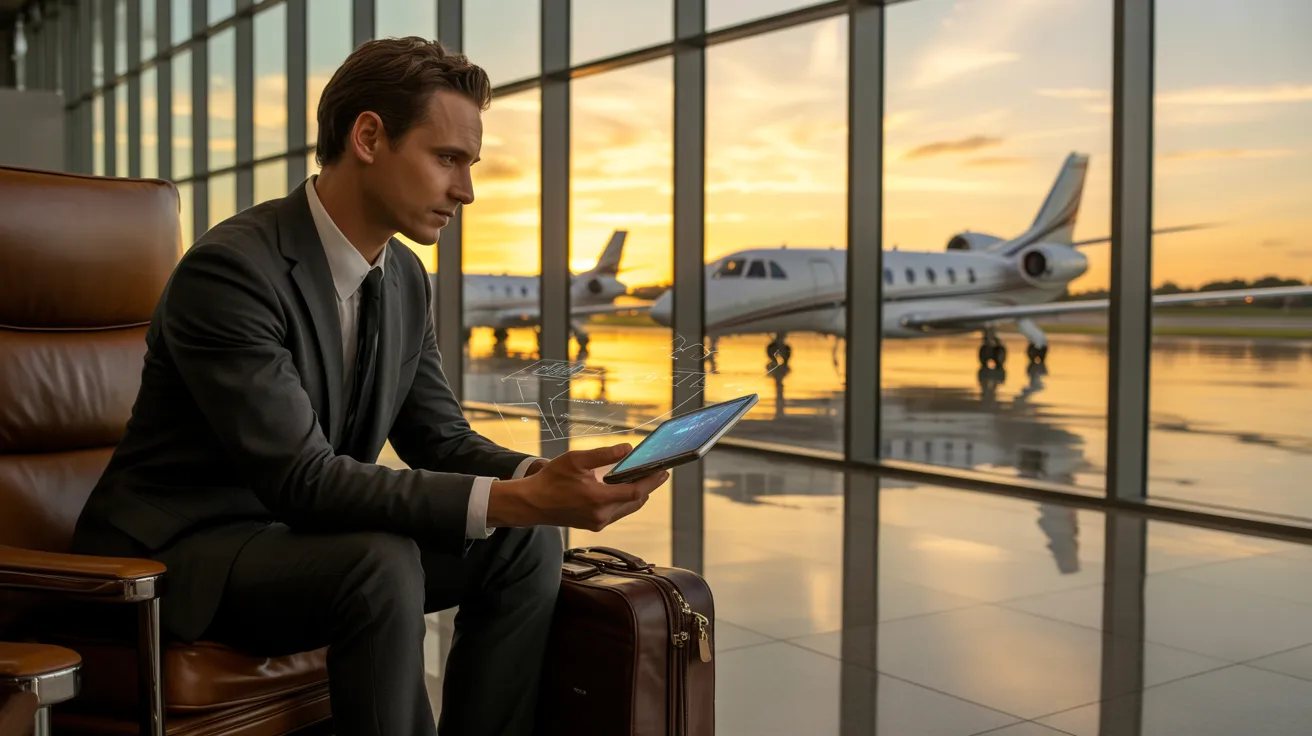
You don’t have the luxury of wasted time when you travel. Every trip you take connects to relationships and outcomes that matter. You’re expected to move globally while staying fully present and productive, answering investors from one time zone, leading teams in another, and making high-stakes decisions in between.
Yet the reality often feels different if you’re dialing into a leadership meeting while standing in an airport security queue or scrambling to adjust plans when a delayed connection disrupts a full day of meetings.
That tension is shaping a new approach to executive travel in 2026. Here are three trends that are poised to help you stay effective and in command of your time wherever you work.
1. Frictionless Border Crossing
You already know how much time disappears in airport lines. Even when you plan carefully, immigration and security checks introduce uncertainty. That’s starting to change through digital identity systems, particularly the International Air Transport Association’s One ID initiative.
This system replaces repeated document checks with biometric verification, allowing you to move through airports using a single, secure digital identity. For example, instead of showing your passport multiple times at Heathrow or JFK, you pass through checkpoints using facial recognition linked to your travel credentials.
2. On-Demand Global Mobility
When your schedule changes at short notice, commercial travel rarely adapts fast enough. You’ve likely experienced delays, missed connections, or limited routing options that force you to compromise. Corporate jet programs address this gap by giving you direct control over when and where you fly.
Using a corporate jet charter lets you depart closer to your actual meeting time, land at secondary airports, and adjust plans mid-journey. For instance, instead of routing through a major hub, you might fly directly into a regional airport near your final destination, saving valuable time on the ground.
3. Seamless On-Board Connectivity
Even when you optimize your routes, time in transit can still feel disconnected from your work. Traditional in-flight Wi-Fi often limits what you can realistically accomplish. However, systems like Starlink are changing that expectation.
Starlink delivers high-speed internet through a network of orbiting satellites. On private aircraft, this technology effectively turns the cabin into a private office, letting you join video calls or access cloud platforms like Microsoft Teams without interruption.
Final Thoughts…
Executive travel is shifting from a fragmented process to a connected system. Systems that once involved trade-offs are starting to work together, with different parts of the journey aligning to reduce friction rather than create it.
As a result, travel itself is becoming more responsive. This responsiveness expands what you can achieve within a single trip, allowing more to happen without adding unnecessary complexity.
