

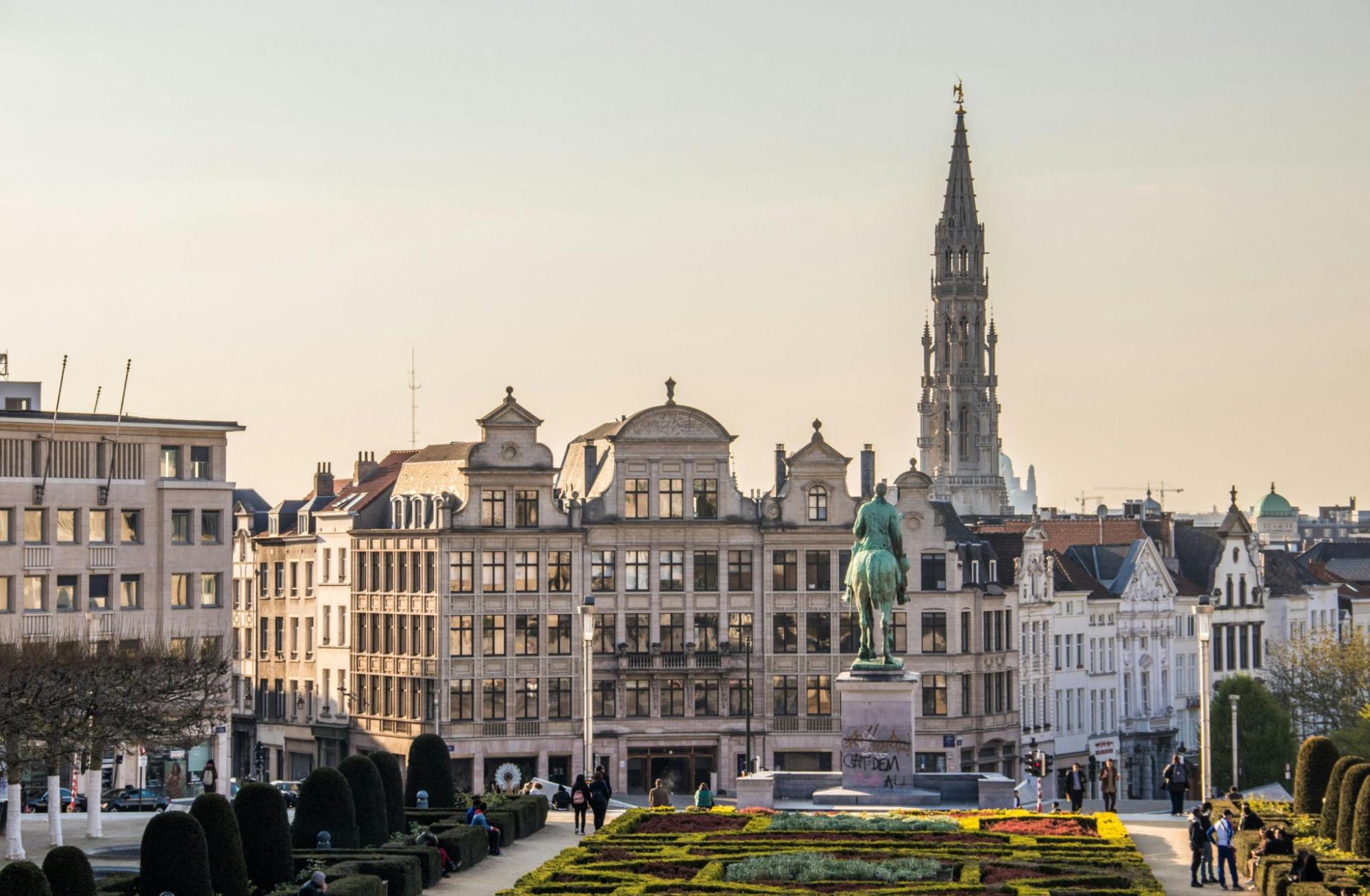
Brussels is usually approached from the inside out. You arrive by train, step into the hum of Brussels-Midi Station, and start working your way through waffles, guild houses, and the slow realization that yes, this city runs on both bureaucracy and chocolate. That’s the standard entry point.
A river cruise flips that. You don’t begin with the city. You arrive alongside it.
And that subtle shift changes what you notice, what you skip, and how you understand Brussels as more than a checklist stop between Paris and Amsterdam.
Seeing Brussels From the Water First
Brussels isn’t a river city in the postcard sense. There’s no equivalent to the Seine River or Danube River running straight through its tourist core. What it has instead is the Brussels–Scheldt Maritime Canal, a working waterway that quietly powers logistics, industry, and movement.
Approaching via this canal reframes expectations immediately.
Instead of medieval façades, you first see infrastructure. Warehouses. Cargo terminals. Cranes that look like they’ve been there longer than most governments. It’s not pretty in the conventional sense, but it’s honest. Brussels reveals itself as a functioning city before it performs as a beautiful one.
And that matters, because it sets the tone for everything that follows.
The neighborhoods near the canal, particularly around Molenbeek-Saint-Jean, feel different from the polished center. They’re denser, more local, less curated. Street art replaces lace shops. Cafés serve strong coffee without explaining it. You’re seeing Brussels as people live it, not just how it’s presented.
Planning a Brussels River Cruise
If you’re considering this route, the logistics are straightforward, but the details make the difference.
What stands out is not just the destination, but how Brussels is positioned within a broader network of waterways. These cruises often connect cities through navigable rivers and canals, which means Brussels becomes part of a continuous journey rather than a standalone stop.
Here’s what actually matters when choosing a cruise:
- Route structure: Some itineraries only pass near Brussels, requiring a transfer. Others dock closer, giving you direct access.
- Dock location: Proximity to the city center can vary. A 10-minute transfer versus a 40-minute one changes how much you can realistically explore.
- Timing of arrival: Early morning arrivals give you the best access to markets and bakeries before crowds build.
- Length of stay: Half-day stops are common, but a full day or overnight stay is where the experience shifts from rushed to meaningful.
The cruise itself is not the highlight. It’s the framing device. Brussels becomes one chapter in a sequence, and that sequence shapes how you interpret it.
The Grand Place Feels Different When You Don’t Start There
Most people’s first real “Brussels moment” happens at Grand Place. It’s dramatic, detailed, and almost aggressively photogenic. Gold accents, towering guildhalls, and enough symmetry to make your camera work overtime.
Arriving here after entering the city via its industrial edges changes the reaction.
Instead of being overwhelmed, you start analyzing. You notice how contained it is. How quickly the grandeur gives way to narrow streets. How the square operates as a concentrated burst of history rather than a city-wide aesthetic.
It becomes one layer, not the whole story.
Nearby, the famous Manneken Pis feels even smaller than expected. And that’s fine. When you’ve already seen the city’s working backbone, you don’t need every landmark to justify itself.
Food Stops That Actually Reflect the City
Brussels is often reduced to waffles, fries, and chocolate. Those are easy wins, but they’re not the full picture.
Coming from the canal side, you’re more likely to encounter everyday food before tourist staples. That means bakeries without English menus, sandwich counters serving dense, practical lunches, and cafés that prioritize regulars over reviews.
Still, some classics are worth navigating deliberately:
Fries Done Properly
Skip generic stands and look for places that double-fry in beef fat. The difference is structural, not just flavor. Crisp exterior, soft interior, and a range of sauces that go beyond ketchup.
Waffles With Context
There are two main types: Brussels waffles (lighter, rectangular) and Liège waffles (denser, caramelized). Knowing the difference helps you avoid the overpriced versions near major squares.
Chocolate Without the Branding Overload
You’ll see major names everywhere, but smaller chocolatiers often offer better value and less packaging. Focus on freshness and ingredient quality rather than presentation.
Moving Through the City Without Overcomplicating It
Brussels is compact, but it’s not always intuitive. Streets shift direction, signage alternates between French and Dutch, and Google Maps occasionally lags behind reality.
Here’s what helps:
- Public transport is reliable but not always necessary: The core areas are walkable if you plan your route.
- Trams are more useful than they look: They cover gaps that walking doesn’t efficiently bridge.
- Language isn’t a barrier: English is widely understood, but basic French greetings go a long way.
One unexpected advantage of arriving by cruise is that your entry point often places you slightly outside the busiest zones. You’re not fighting immediate crowds, which makes orientation easier.
Museums That Add Context, Not Just Content
If you’re choosing one or two museums, focus on those that explain Brussels rather than just displaying artifacts.
The Magritte Museum offers a structured look at René Magritte, but more importantly, it situates his work within Belgian identity. It’s not just art, it’s context.
For something more grounded, the Belgian Comic Strip Center highlights how comics became a national export. You’ll recognize characters, but the real value is understanding why they matter.
These stops balance out the visual overload of the city’s architecture.
What Feels Different After a River Arrival
The biggest shift isn’t emotional, it’s structural.
You stop treating Brussels as a highlight reel and start seeing it as a system. A place that moves goods, supports neighborhoods, and only occasionally pauses to show off.
That perspective changes small decisions:
You don’t feel pressured to hit every landmark. You spend more time in transitional spaces, streets between attractions, local cafés that aren’t on any list. You notice infrastructure, not just aesthetics.
And that’s where the experience becomes more complete.
When a River Cruise Makes Sense, and When It Doesn’t
A river cruise isn’t automatically the better way to visit Brussels. It depends on what you want.
It works well if:
- You’re traveling between multiple European cities and want continuity.
- You prefer structured logistics with minimal planning.
- You’re interested in how cities connect, not just how they present themselves.
It’s less ideal if:
- You want deep, multi-day exploration of Brussels specifically.
- You prefer complete flexibility in timing and movement.
- You’re focused on budget travel.
The key is understanding that the cruise shapes the narrative. It doesn’t replace the city, it reframes it.
Final Takeaway
Brussels doesn’t need a dramatic entrance to be interesting. In fact, it benefits from the opposite.
Arriving by river strips away the expectation that every moment needs to impress. You see the working parts first, the polished parts second, and the connections between them more clearly.
It’s not a more emotional experience. It’s a more accurate one.
And that accuracy stays with you longer than any single view of the Atomium or perfectly framed photo of the Grand Place.
