


Getting ready for my first RV trip felt overwhelming. I didn’t know what I actually needed versus what would just take up space. After several trips and some trial and error, I’ve figured out exactly what makes or breaks an RV camping experience.
Having the right gear makes all the difference between a stressful trip and a relaxing one. I’ve learned which items are truly essential and which you can skip.
I’m sharing my tested checklist so you can pack smart and hit the road with confidence, avoiding the mistakes I made early on.
What Is RV Camping and Why Proper Gear Matters
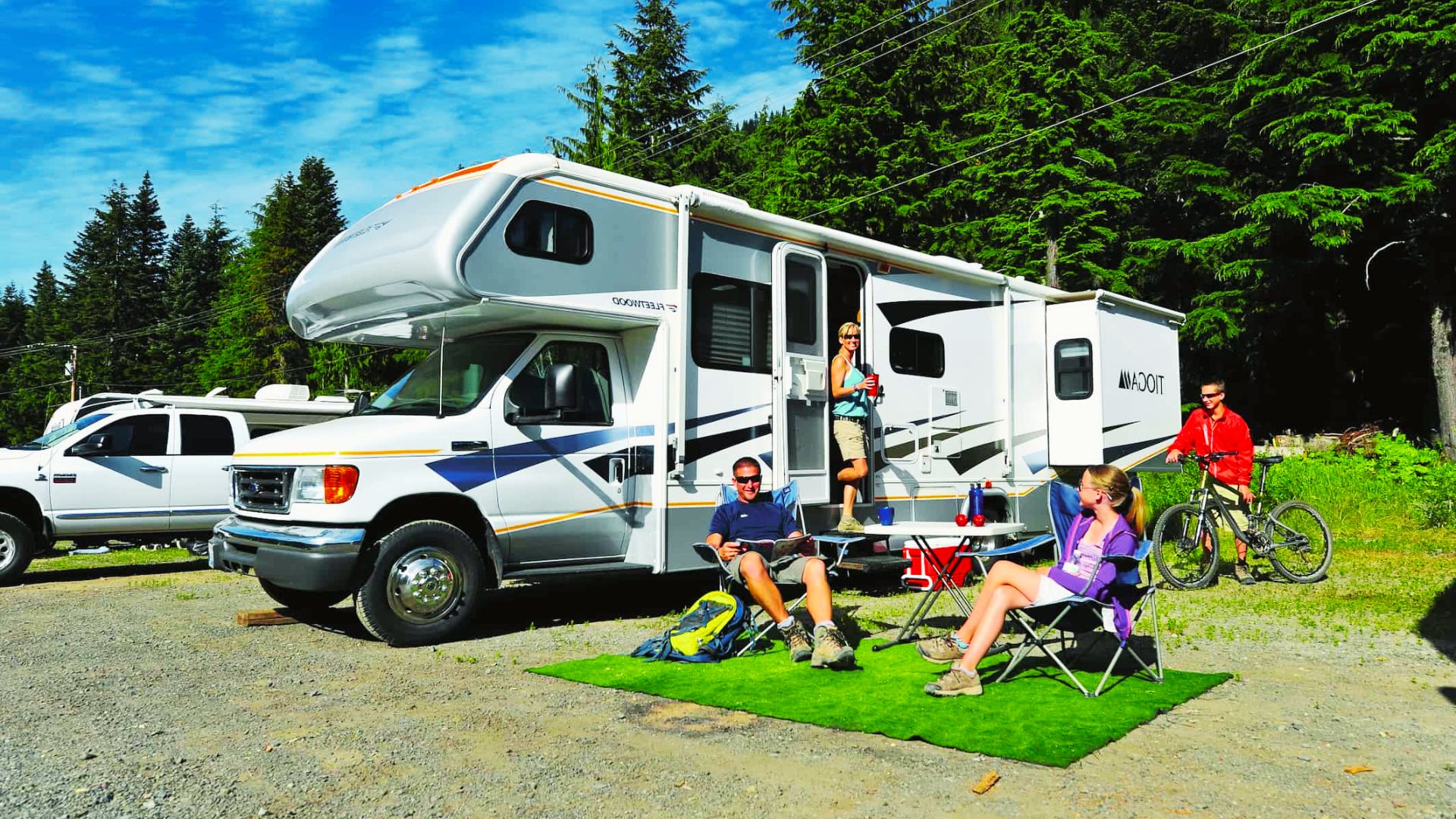
RV camping means traveling and staying overnight in a recreational vehicle, from small camper vans to large motorhomes. Unlike tent camping, you have a mobile living space with a bed, kitchen, bathroom, and storage.
The appeal is freedom. You can explore new places while bringing home comforts along, cooking your own meals and sleeping in a real bed without booking hotels.
However, RVs need specific equipment for safe setup, water management, and electrical connections. Having the right gear prevents damage and keeps your trip running smoothly.
Essential RV Setup and Safety Items
Before you hit the road, ensure your RV is properly equipped with essential safety and setup items. These items keep you safe and comfortable at every campsite.
1. Wheel Chocks and Leveling Blocks
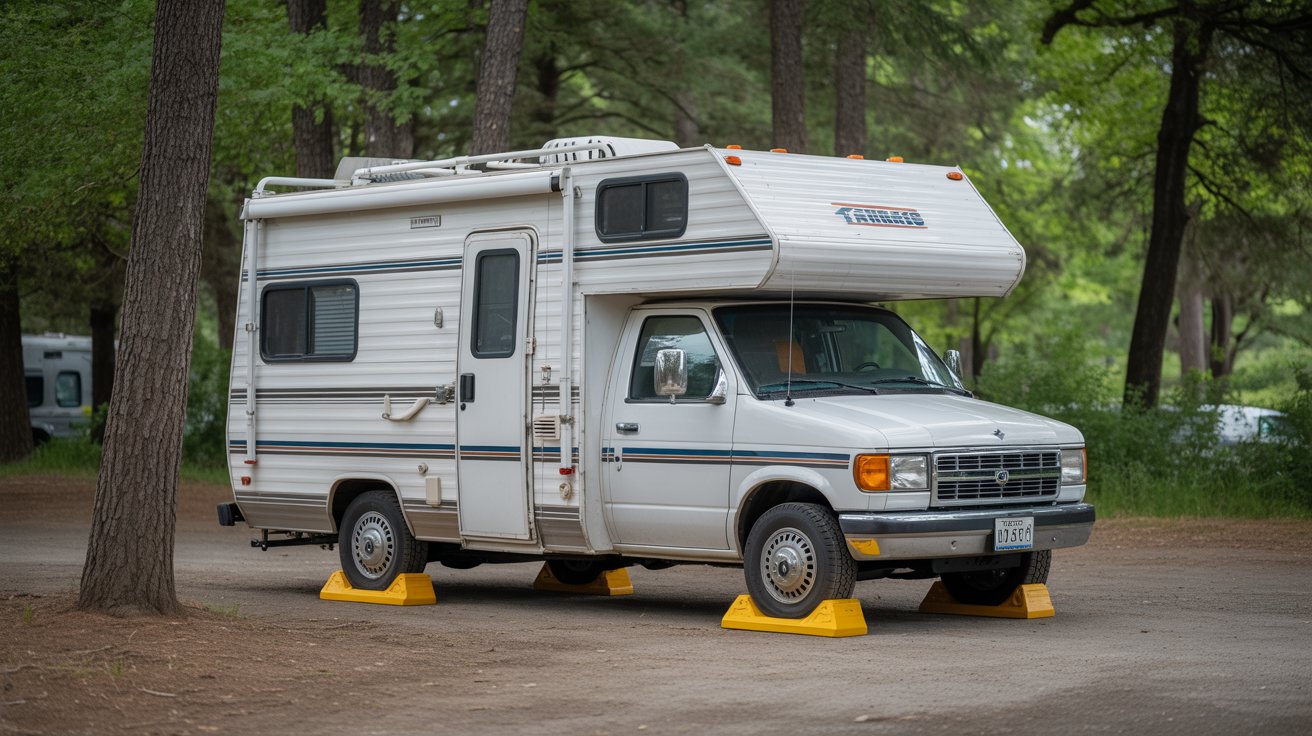
Wheel chocks stop your RV from rolling when parked on slopes or uneven ground. They’re small wedges that go behind your tires to keep everything stable and secure.
Leveling blocks help you park on flat ground, which is more important than you think. When your RV is level, appliances like refrigerators work better, and you’ll sleep more comfortably without rolling to one side of the bed.
2. Water Management System
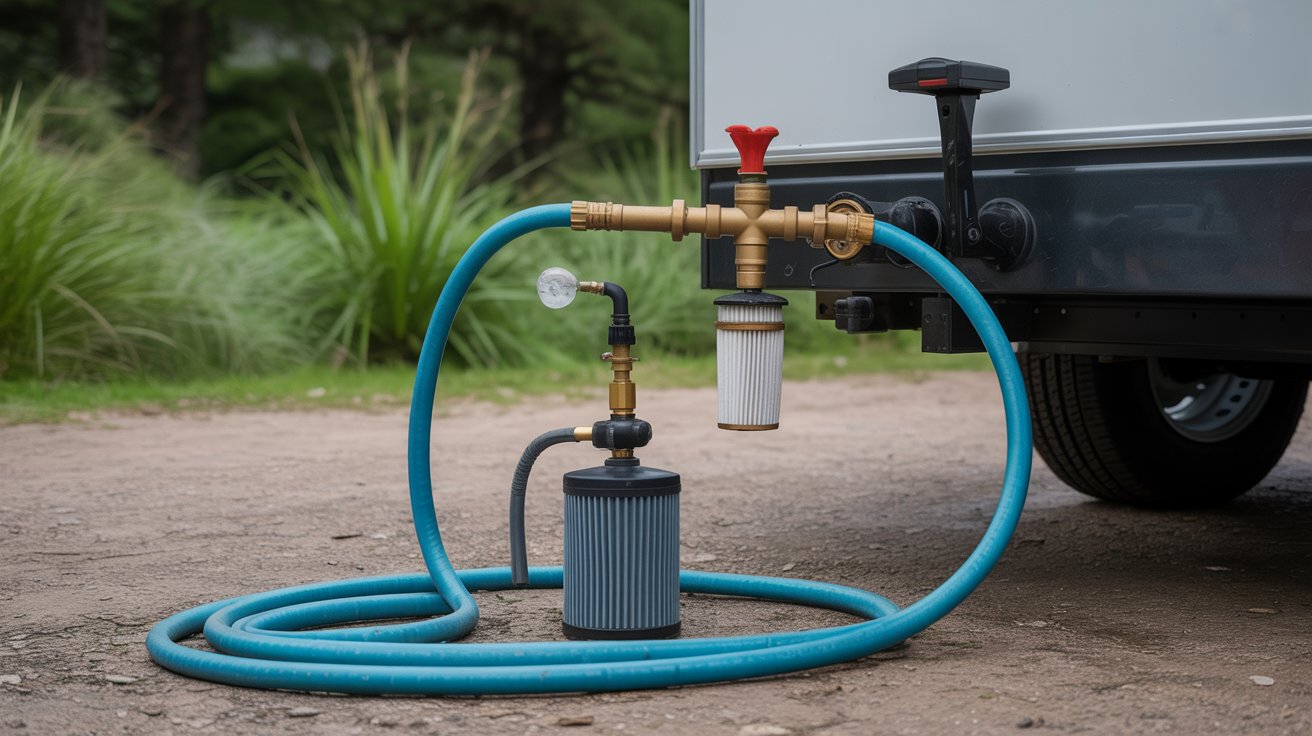
You need different hoses for different jobs when camping. Use one hose only for fresh drinking water and another for draining gray water from sinks and showers. Never mix these up, as it can create serious health problems.
A water pressure regulator protects your RV’s plumbing from damage caused by high pressure at campground hookups. Add a quality water filter to remove chemicals and sediments, giving you clean, safe drinking water throughout your trip.
3. Electrical Protection Equipment
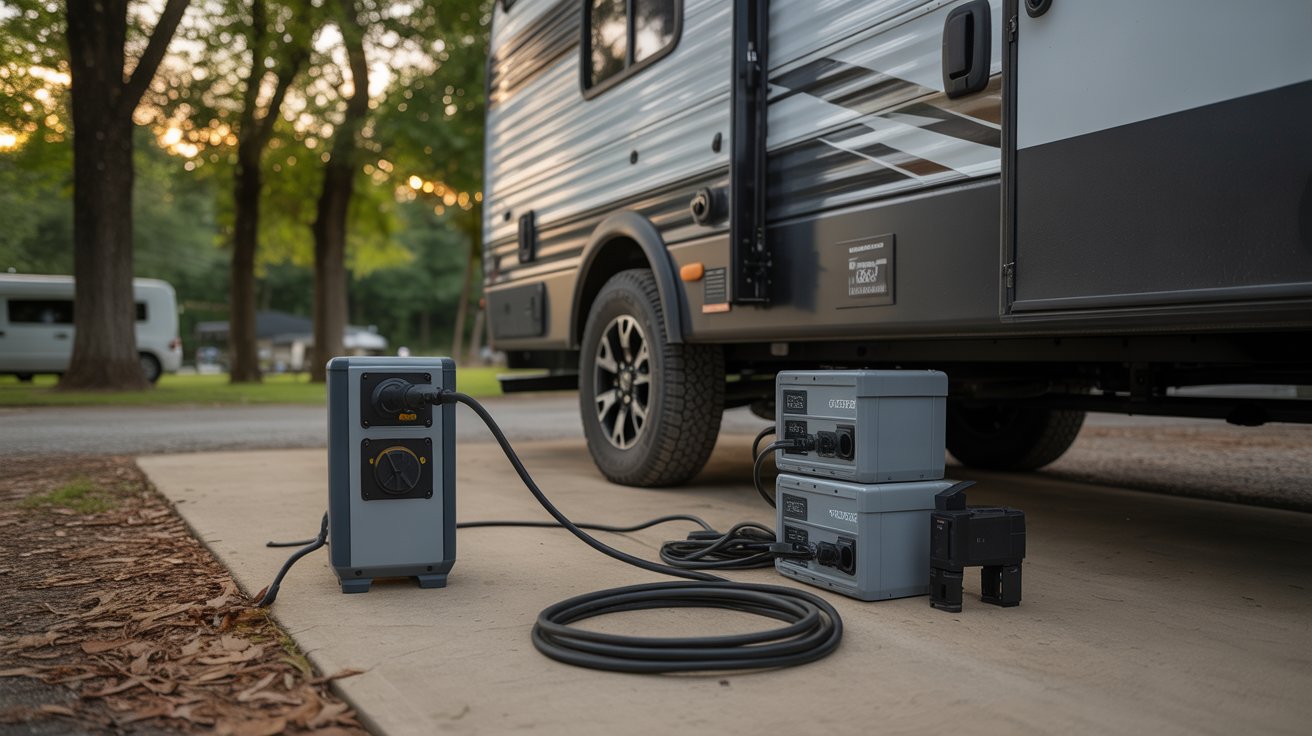
A surge protector is one of the most important RV camping must-haves for protecting your electrical system. Campground power can be unpredictable, and sudden surges can damage expensive appliances and electronics in your RV.
Bring adapters that convert between 30 and 50 amp connections, as campgrounds have different outlet types. Extension cords give you flexibility when the power pedestal is far from your RV door.
4. Emergency and Safety Kits
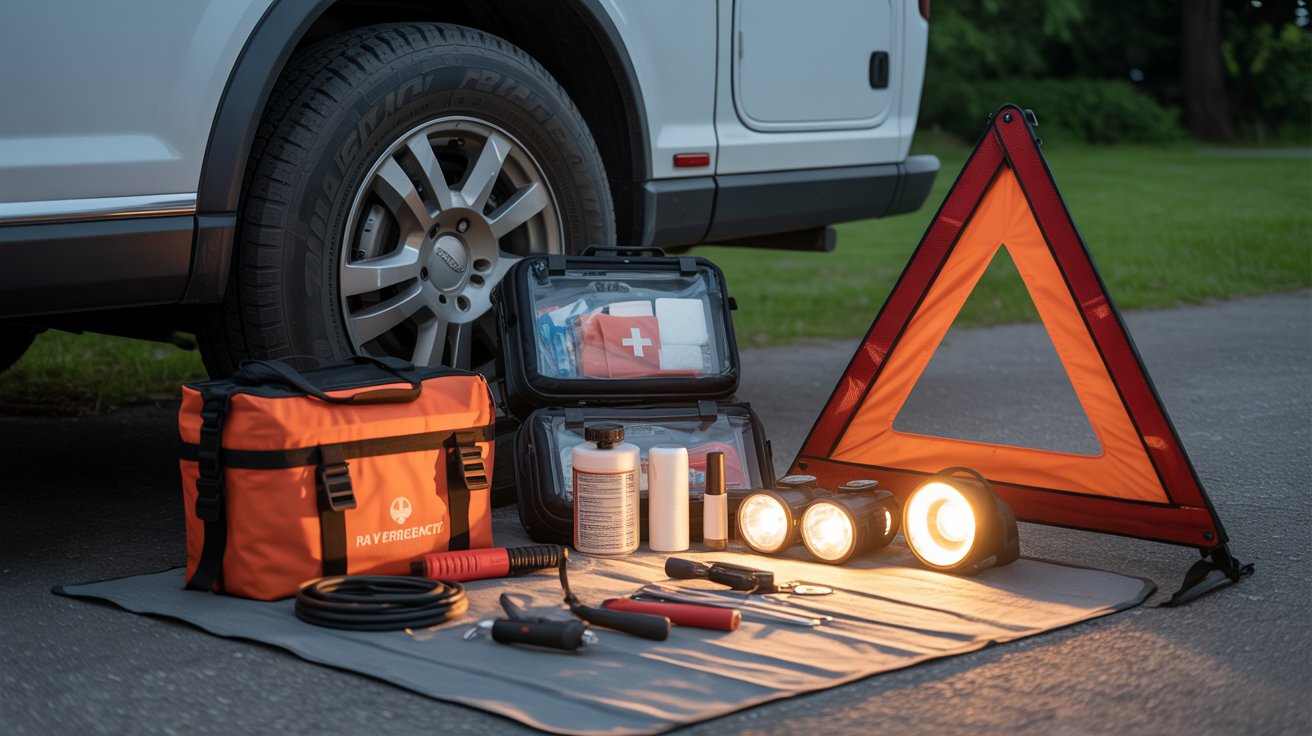
A road emergency kit should include jumper cables, tire repair tools, and reflective warning triangles. These items help you handle common problems like flat tires or dead batteries when you’re far from help.
Keep a well-stocked first aid kit with bandages, pain relievers, antiseptic wipes, and any prescription medications your family needs. Add several flashlights and headlamps with extra batteries for nighttime emergencies or when you need hands-free lighting.
5. RV Friendly Toilet Paper
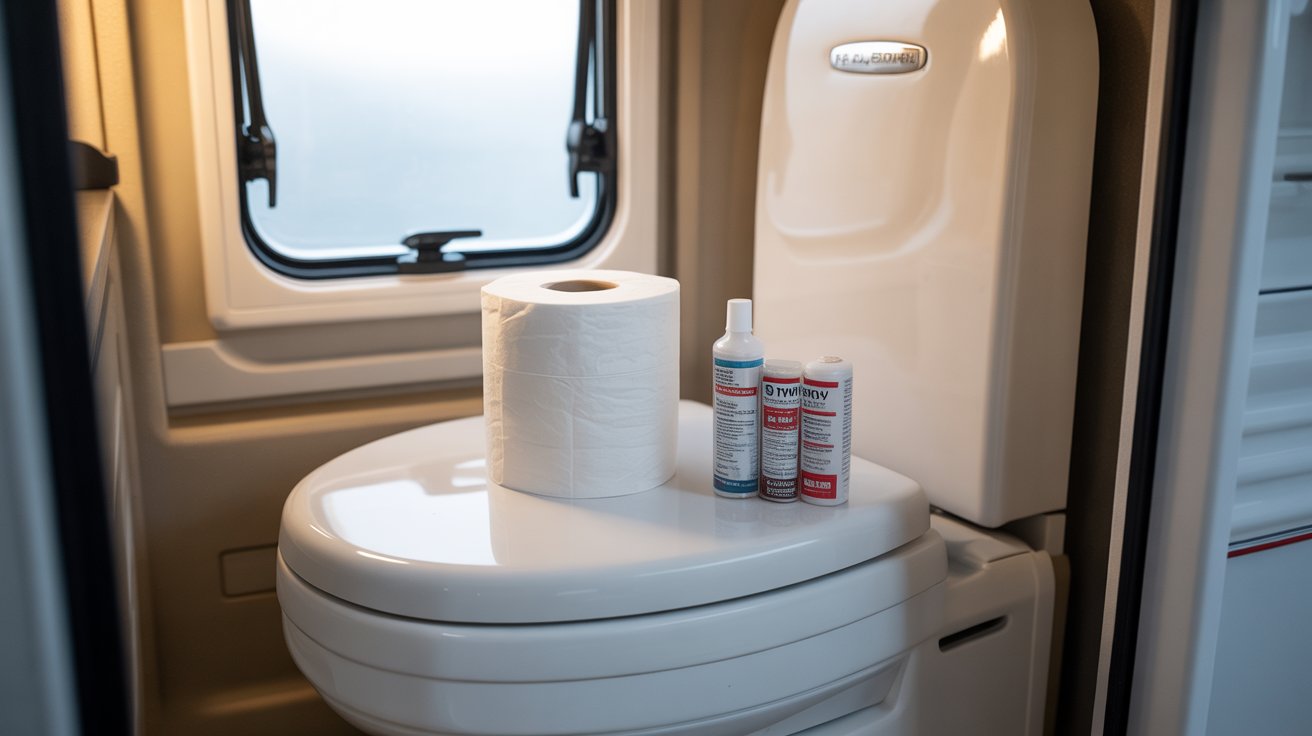
Regular toilet paper doesn’t break down quickly enough in RV holding tanks. It can clog your plumbing system and create expensive, messy problems that ruin your trip.
RV-specific toilet paper dissolves rapidly in water, protecting your black water tank and drainage system. This small change prevents major headaches and costly repairs down the road.
6. Ventilation and Temperature Control
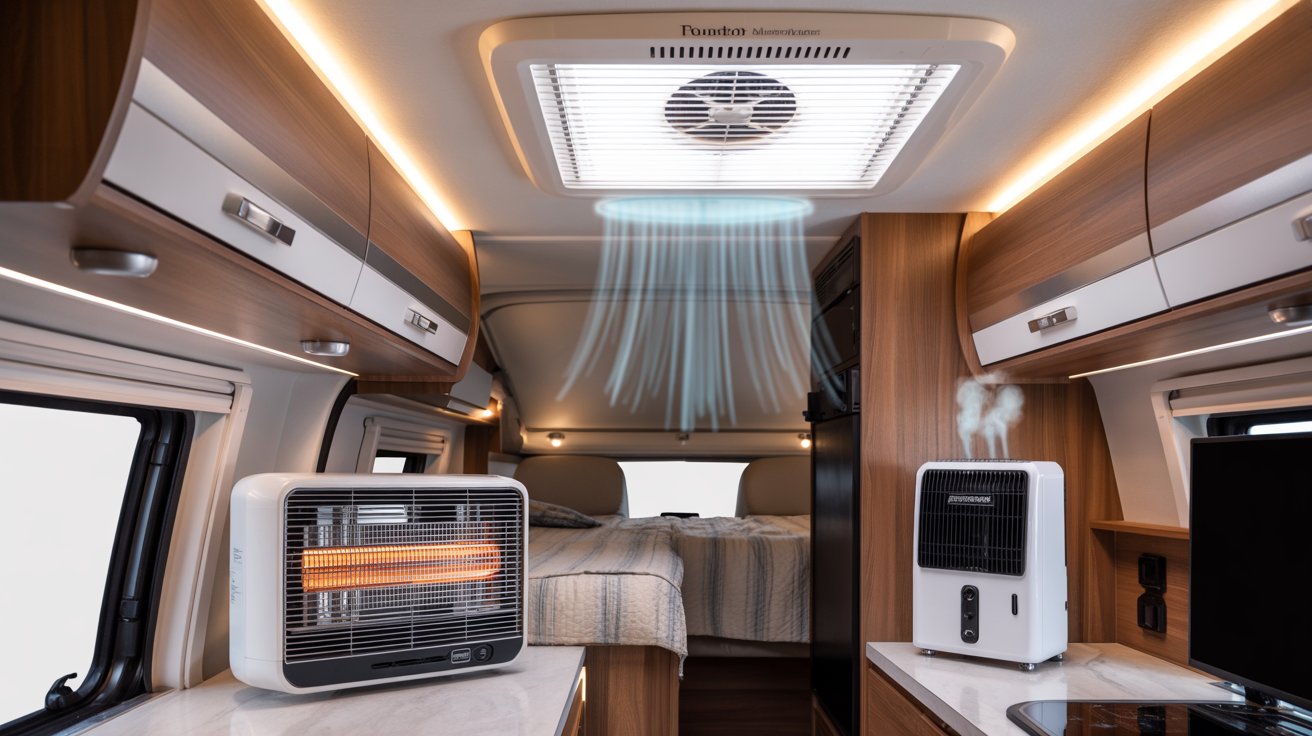
A roof vent fan with a rain shield keeps air moving through your RV even during storms. Good ventilation prevents moisture buildup, reduces cooking odors, and helps maintain comfortable temperatures.
Choose a space heater with safety features like automatic shut-off and cool-touch exteriors, especially if you have children. A dehumidifier removes excess moisture that can lead to mold and mildew in your living space.
7. Bedding Solutions
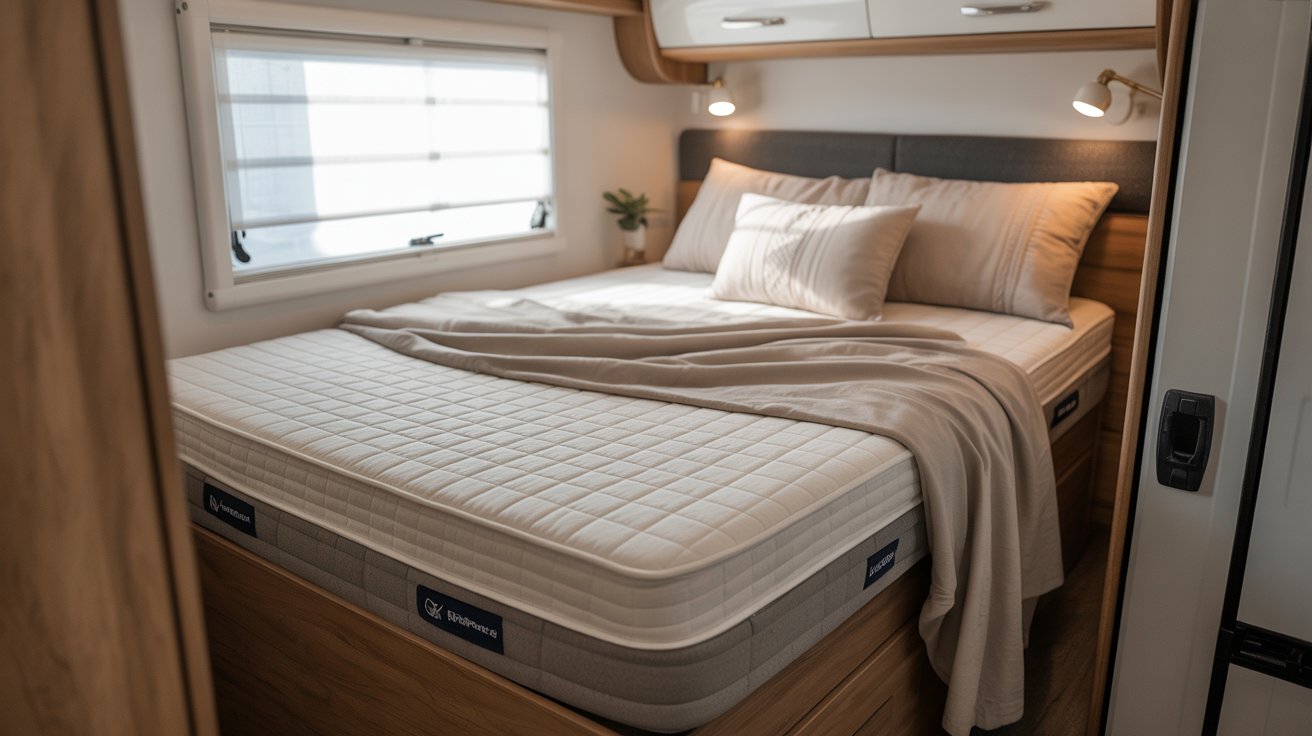
RV mattresses are often thin and uncomfortable. A foam mattress topper adds cushioning and support for better sleep after long days of activities and driving.
Place a mattress underlay beneath your mattress to allow air circulation and prevent mold growth. Pack washable bedding that you can clean easily at campground laundromats, which is especially helpful for families with kids.
8. Storage Solutions
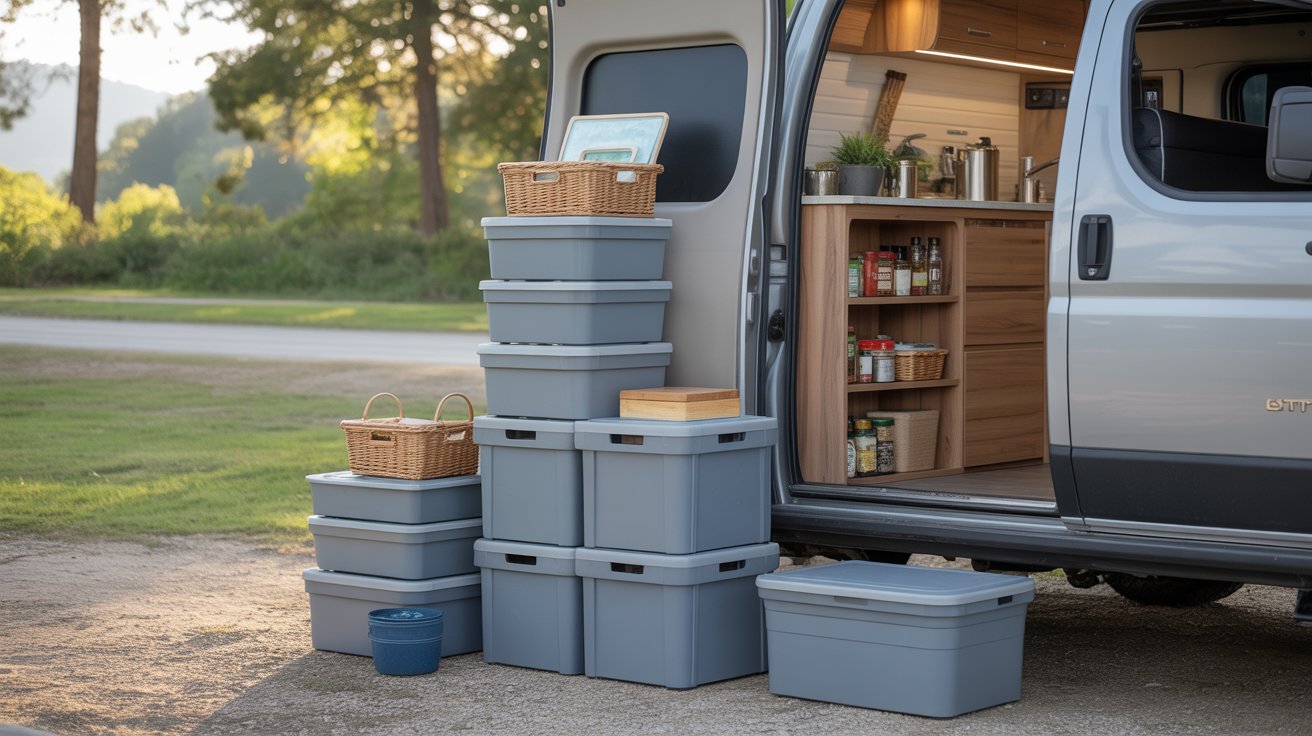
Waterproof external storage containers protect items you keep outside your RV from rain and morning dew. They’re perfect for camping chairs, outdoor games, and grilling supplies.
Collapsible items like bins, baskets, and bowls save precious space when not in use. Add organizational tools like spice racks and pantry shelving to keep your small kitchen area neat and functional.
9. Cooking Equipment
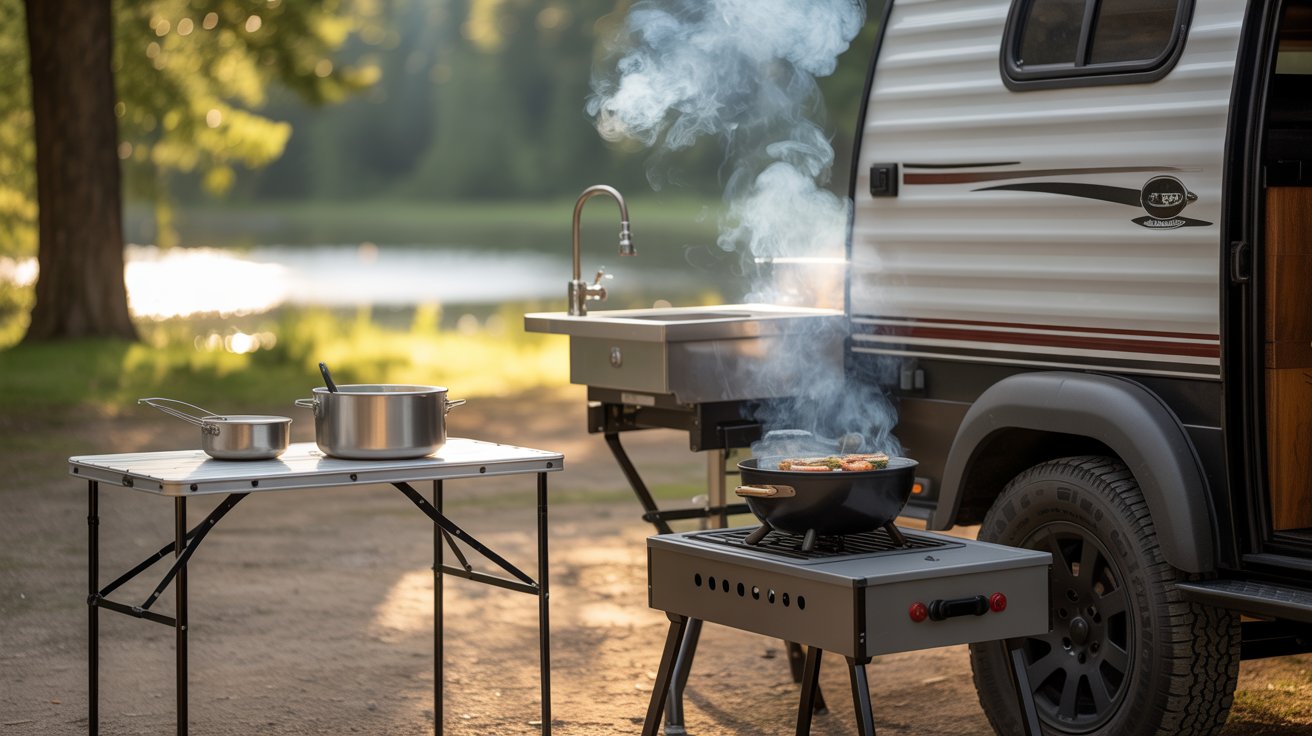
An outdoor camping grill keeps heat and cooking smells outside on hot summer days. Grilling also saves propane and reduces cleanup inside your RV.
A detachable faucet makes washing dishes and filling pots much easier in small RV sinks. Don’t forget pot holders and basic cookware like pots, pans, and cooking utensils sized for RV stovetops.
10. Food Storage and Cleanup
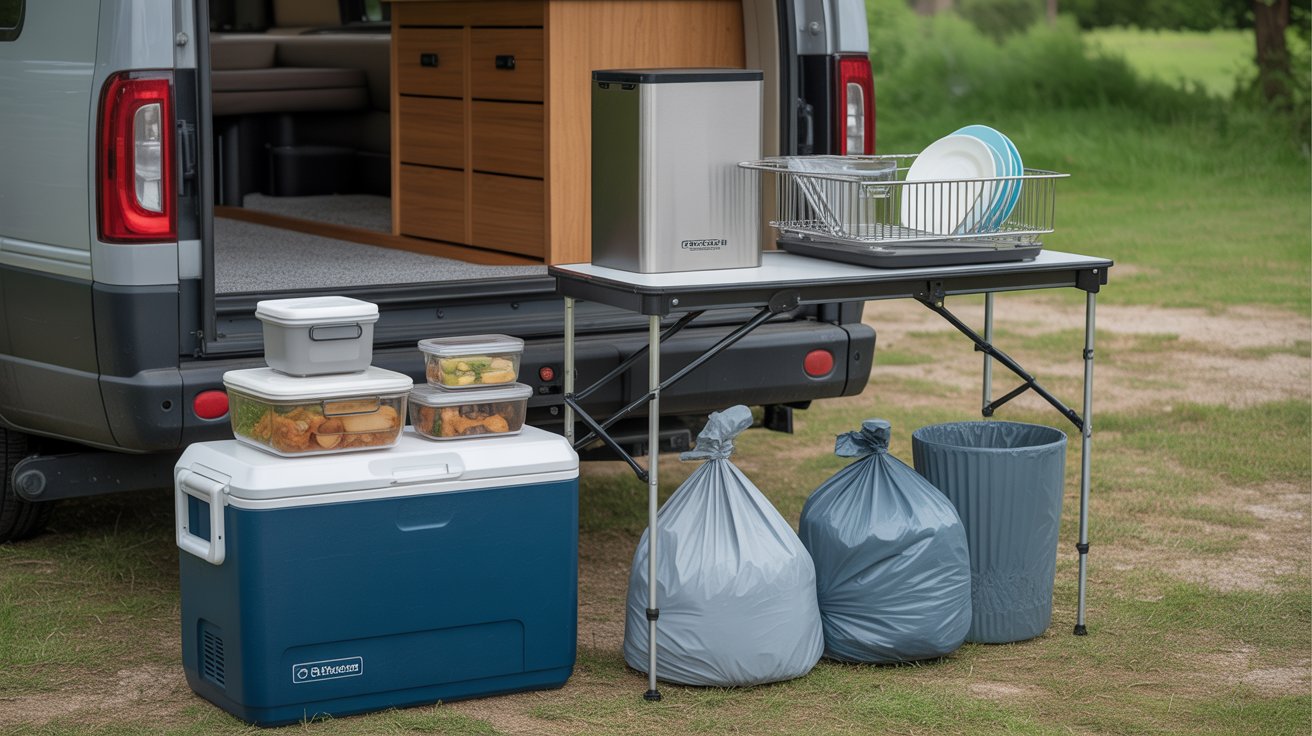
Reusable storage containers keep food fresh and prevent spills in your cabinets while driving. They’re better than disposable options and help reduce waste at campsites.
A portable cooler provides easy access to drinks and snacks without constantly opening the main refrigerator. Pack a collapsible drainboard for drying dishes and bring trash bags in various sizes for different types of waste.
11. Outdoor Living Accessories
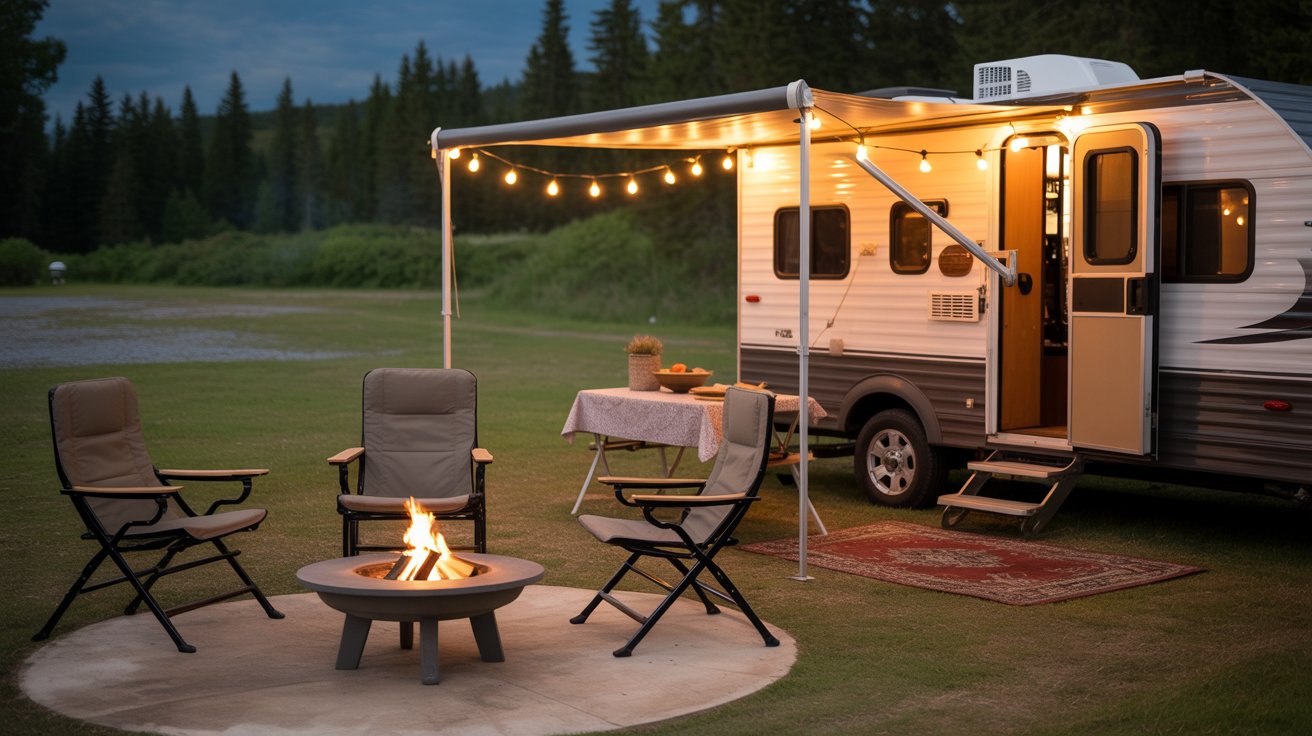
Bring at least one comfortable camp chair per person so everyone has a place to sit around the campfire. Quality chairs make outdoor time more enjoyable and encourage you to spend time outside your RV.
An outdoor rug creates a clean zone outside your door and reduces dirt tracked inside. Add a doormat, tablecloth for picnic tables, and outdoor lighting like string lights or lanterns to make your campsite feel like home.
Pro Tips for Organized RV Camping
Staying organized makes camping easier and more enjoyable. These simple tips help you keep track of your RV camping must-haves and use them effectively.
- Keep important documents like registration, insurance, and campground reservations in waterproof storage where you can find them quickly.
- Label all hoses clearly with tags or colored tape so you never confuse drinking water hoses with waste hoses.
- Bring several 5-gallon buckets, which are useful for washing dishes, carrying supplies, and even as emergency seating.
- Pack indoor entertainment like books, games, and cards for rainy days when outdoor activities aren’t possible.e
- Use command strips instead of nails or screws to hang items and avoid damaging your RV walls.
- Start with basic items and add to your collection after each trip based on what you actually need.
- Consider your specific climate and season when packing, as winter camping requires different gear than summer trips.
Creating a personalized system takes time, but these habits make every trip smoother than the last.
Conclusion
Proper preparation sets you up for successful RV camping. When you have the right gear, you can focus on making memories instead of worrying about what you forgot.
Start with safety essentials and basic comfort items, then add more as you learn what matters most. Your checklist will grow with each trip based on your family’s needs.
Save this list for your next camping trip and share it with fellow RVers. Drop a comment with your own must-have items we might have missed. Happy camping!
Frequently Asked Questions
What Should I Pack for My First Overnight RV Trip?
Focus on safety items first: wheel chocks, water hoses, electrical adapters, and a first aid kit. Then add bedding, basic kitchen supplies, toiletries, and clothing. Everything else can wait until future trips.
How Do I Prevent Mold and Moisture Issues in My RV?
Run a dehumidifier regularly to remove excess moisture from the air. Open roof vents to improve air circulation, and use a mattress underlay to prevent mold under your bed. Wipe down wet surfaces quickly after showers.
Can I Use Regular Household Items in My RV?
Some household items work fine, but others don’t. Use RV-specific toilet paper to protect your plumbing. Regular dishes and cookware are usually okay, but check weight limits. RV products are designed for mobile living conditions.
What Tools Should I Keep in My RV for Repairs?
Pack basic tools, including screwdrivers, pliers, wrenches, duct tape, and electrical tape. Add a tire pressure gauge, extra fuses, and zip ties. Keep a multi-tool handy for quick fixes around the campsite.
How Much Water Storage Do I Need for RV Camping?
Plan for about 10 to 15 gallons per person per day for drinking, cooking, and washing. A weekend trip for two people needs roughly 40 to 60 gallons total. Adjust based on whether you’ll have campground hookups.
