


I’ve driven the Grand Circle Road Trip twice, and I still think about those red rock sunsets. This route connects six major national parks across Utah and Arizona in one epic loop.
You’ll see slot canyons, towering arches, and views that don’t look real.
I’m writing this to help you plan your own trip without the mistakes I made my first time around.
In this guide, I’ll walk you through the best routes, share day-by-day itineraries for 7, 10, and 14-day trips,and give you practical tips on timing and where to stay.
I’ve learned these lessons by actually doing the drive, getting lost once near Capitol Reef, and figuring out what works.
Let’s get started.
What Is the Grand Circle Road Trip? (Explained Simply)
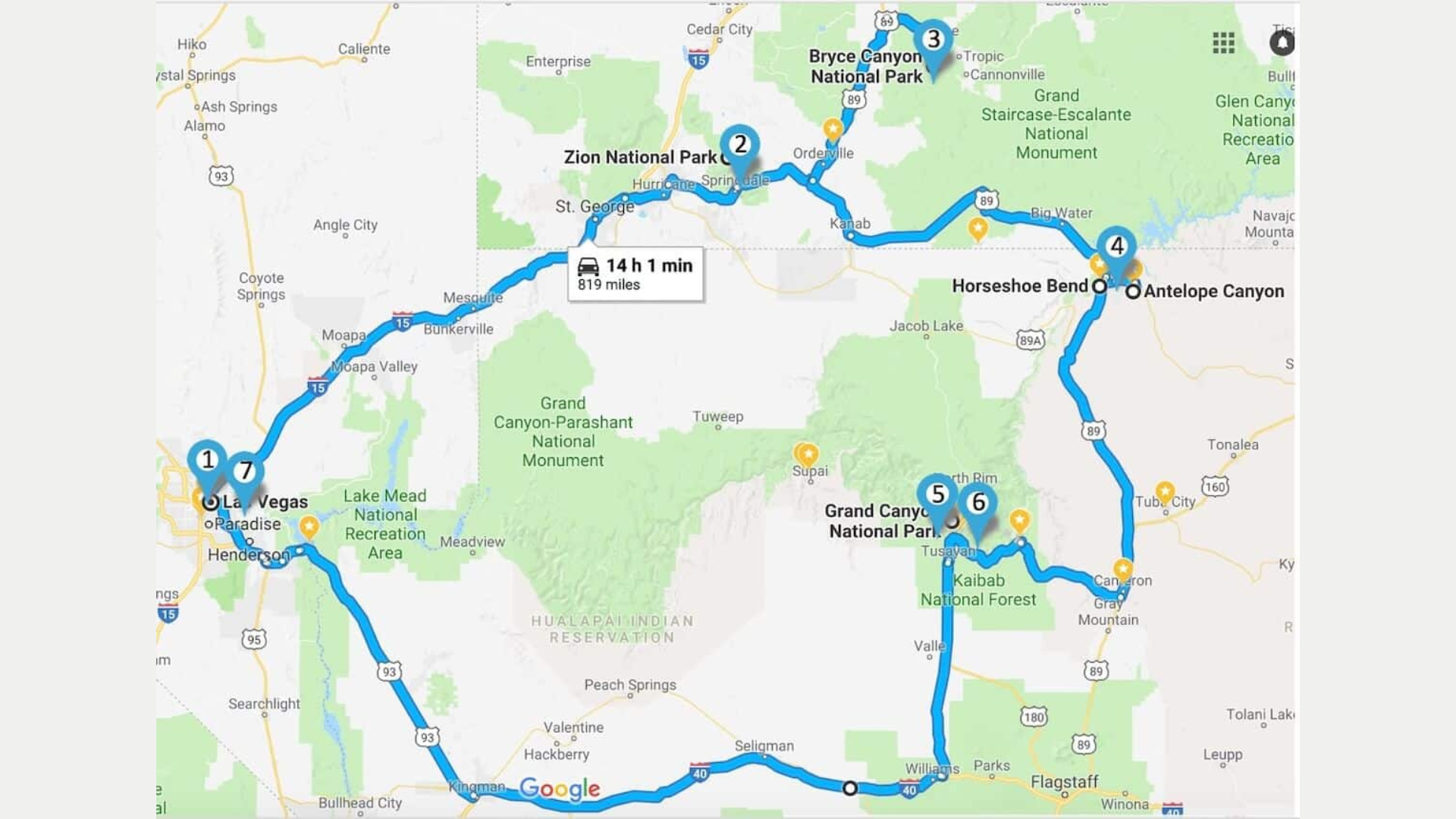
The Grand Circle Road Trip is a 800-mile loop through the American Southwest. It connects six national parks in Utah and Arizona, plus tons of state parks along the way.
Most people start in Las Vegas because flights are cheap. Others begin in Salt Lake City or Phoenix.
The route hits Grand Canyon, Zion, Bryce Canyon, Capitol Reef, Arches, and Canyonlands. Each park looks completely different.
You can drive it clockwise or counterclockwise. Both work fine. I went clockwise to save the Grand Canyon for last.
Complete Grand Circle Road Trip Map & Route Options
Here’s the driving route that connects all six parks in one loop.
- Las Vegas to Zion: 160 miles, 2.5 hours
- Zion to Bryce Canyon: 85 miles, 1.5 hours
- Bryce to Capitol Reef: 120 miles, 2 hours
- Capitol Reef to Arches: 145 miles, 2.5 hours
- Arches to Canyonlands: 30 miles, 45 minutes
- Canyonlands to Grand Canyon: 280 miles, 4.5 hours (via Monument Valley)
- Grand Canyon to Las Vegas: 130 miles, 2 hours
You can add Mesa Verde in Colorado (extra 100 miles) or Great Basin in Nevada. Both are worth it if you have time.
The roads are paved and well-marked. Cell service drops in sections, so download offline maps before you go.
Grand Circle Road Trip Itinerary Options (By Number of Days)

I’ve tested different timeframes and here’s what works best for each trip length.
Seven days is doable but rushed. Ten days gives you breathing room. Fourteen days lets you really soak it in.
7-Day Grand Circle Road Trip (Fast-Paced Highlights)
This version moves fast and hits only the main sights at each park.
- Day 1: Las Vegas to Zion, sunset view
- Day 2: Zion morning hike, drive to Bryce afternoon
- Day 3: Bryce sunrise, drive to Capitol Reef
- Day 4: Capitol Reef morning, drive to Arches, sunset there
- Day 5: Arches morning, quick Canyonlands stop, drive toward Grand Canyon
- Day 6: Grand Canyon all day
- Day 7: Grand Canyon sunrise, return to Las Vegas
You’ll see everything but won’t have downtime. Expect to be tired by the end.
10-Day Grand Circle Road Trip (Balanced & Relaxed)
This gives you full days at major parks without feeling rushed.
- Day 1: Las Vegas to Zion
- Day 2: Full day Zion
- Day 3: Zion morning, Bryce afternoon
- Day 4: Bryce full day
- Day 5: Capitol Reef
- Day 6: Arches full day
- Day 7: Canyonlands morning, drive to Monument Valley
- Day 8: Monument Valley, drive to Grand Canyon
- Day 9: Grand Canyon full day
- Day 10: Grand Canyon morning, return to Las Vegas
This is my recommended minimum. You get breathing room and can add extra hikes.
14-Day Grand Circle Road Trip (Best Experience)
Two weeks lets you slow down and include rest days and smaller parks.
- Days 1-2: Zion (two full days)
- Days 3-4: Bryce Canyon
- Days 5-6: Capitol Reef and scenic drives
- Days 7-8: Arches and Canyonlands (one day each)
- Day 9: Rest in Moab
- Day 10: Monument Valley
- Days 11-13: Grand Canyon (North and South Rims)
- Day 14: Return to Las Vegas
You can add Goblin Valley or Dead Horse Point with this schedule. This is how I’d do it again.
National Parks on the Grand Circle Road Trip (In Order)
I’m listing these parks in the order you’ll visit them going clockwise from Las Vegas. Each one offers something completely different from the others.
1. Zion National Park
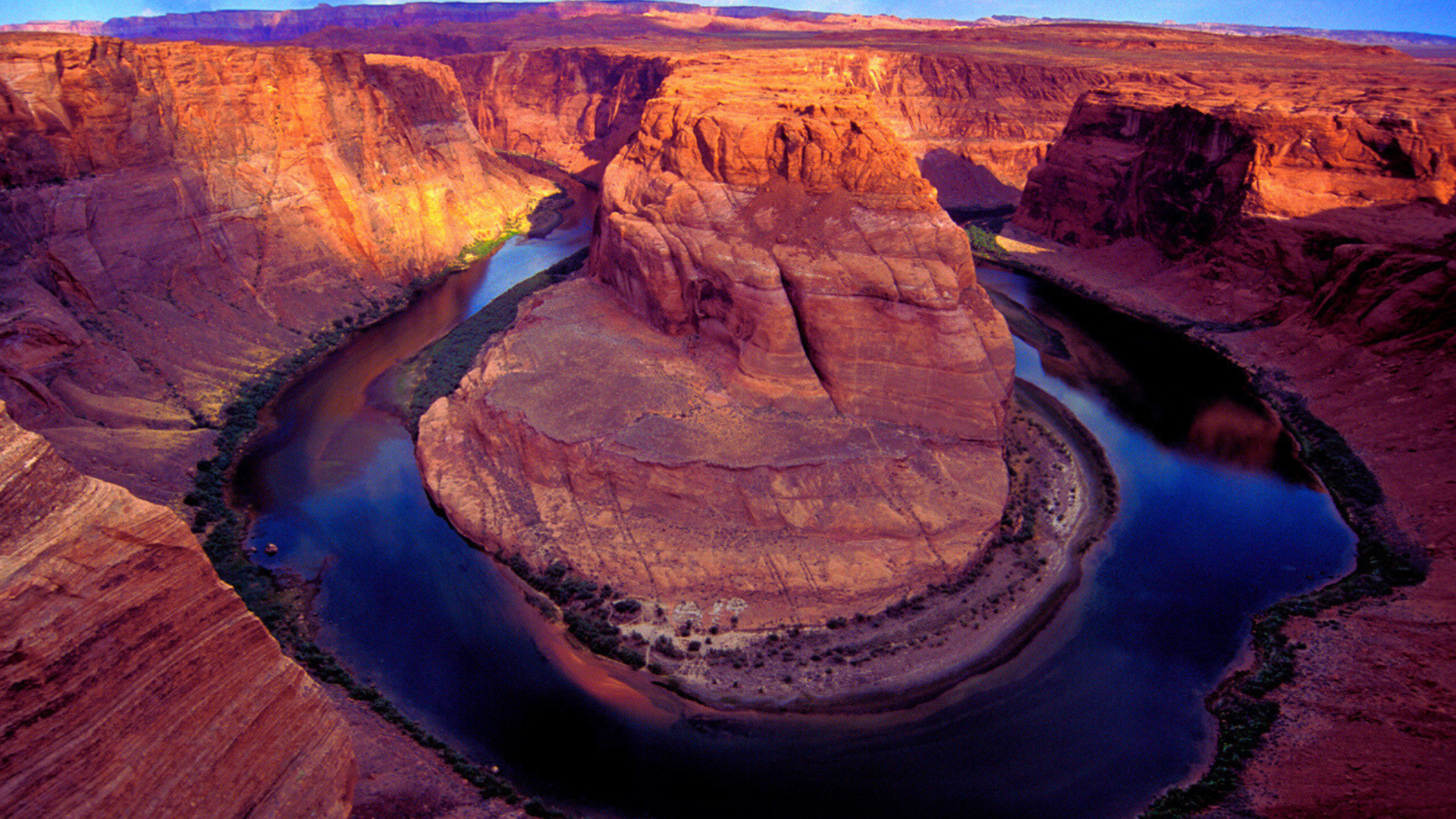
Zion is red rock cliffs rising straight up with the Virgin River cutting through the middle. You take a shuttle bus into the main canyon from April to October. No personal cars allowed.
Best experiences:
- Angels Landing (needs permit, chains on the last section)
- The Narrows (walk up the river, rent water shoes)
- Observation Point trail
The Narrows was my favorite. You’re walking in the river with canyon walls 1,000 feet high on both sides.
Go early in the morning or late afternoon. Over four million people visit yearly.
2. Bryce Canyon National Park
Bryce has amphitheaters filled with orange and red rock spires called hoodoos. It’s not actually a canyon. These formed from freeze-thaw erosion over millions of years.
Best experiences:
- Queens Garden and Navajo Loop (combined 3-mile hike)
- Sunrise Point and Sunset Point overlooks
- Hike down into the hoodoos
Sits at 8,000 to 9,000 feet elevation. Bring a jacket even in summer. You can see highlights in one day if needed.
3. Capitol Reef National Park
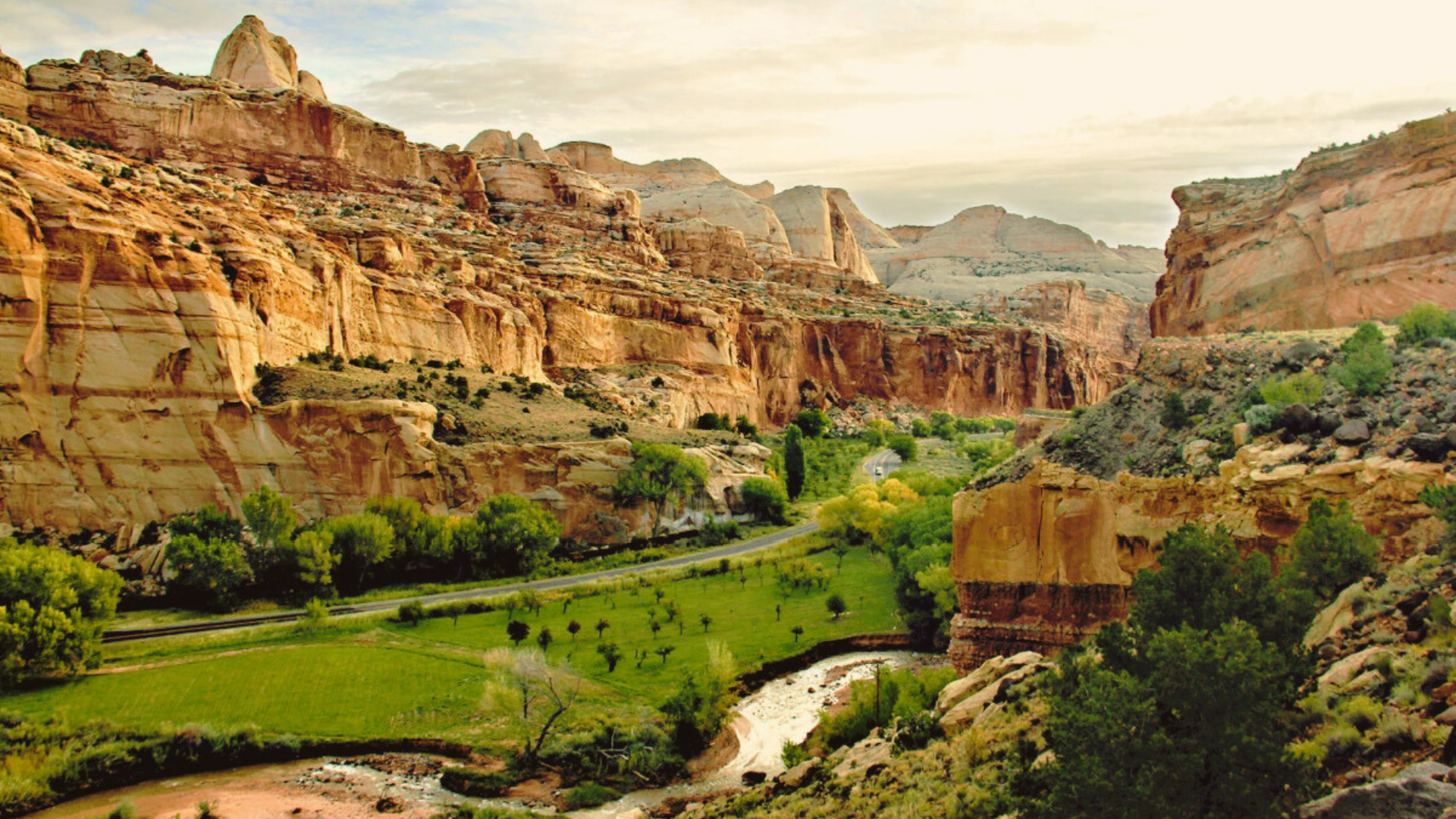
The least visited park on the route. I almost skipped it and that would have been a mistake. It follows the Waterpocket Fold, a 100-mile wrinkle in the Earth’s crust.
Best experiences:
- Hickman Bridge Trail
- Scenic drive (8 miles, partly unpaved)
- Historic Fruita orchards
The park feels empty compared to Zion or Arches. I saw maybe 20 people all morning. No entrance fee when driving through on Highway 24.
4. Arches National Park
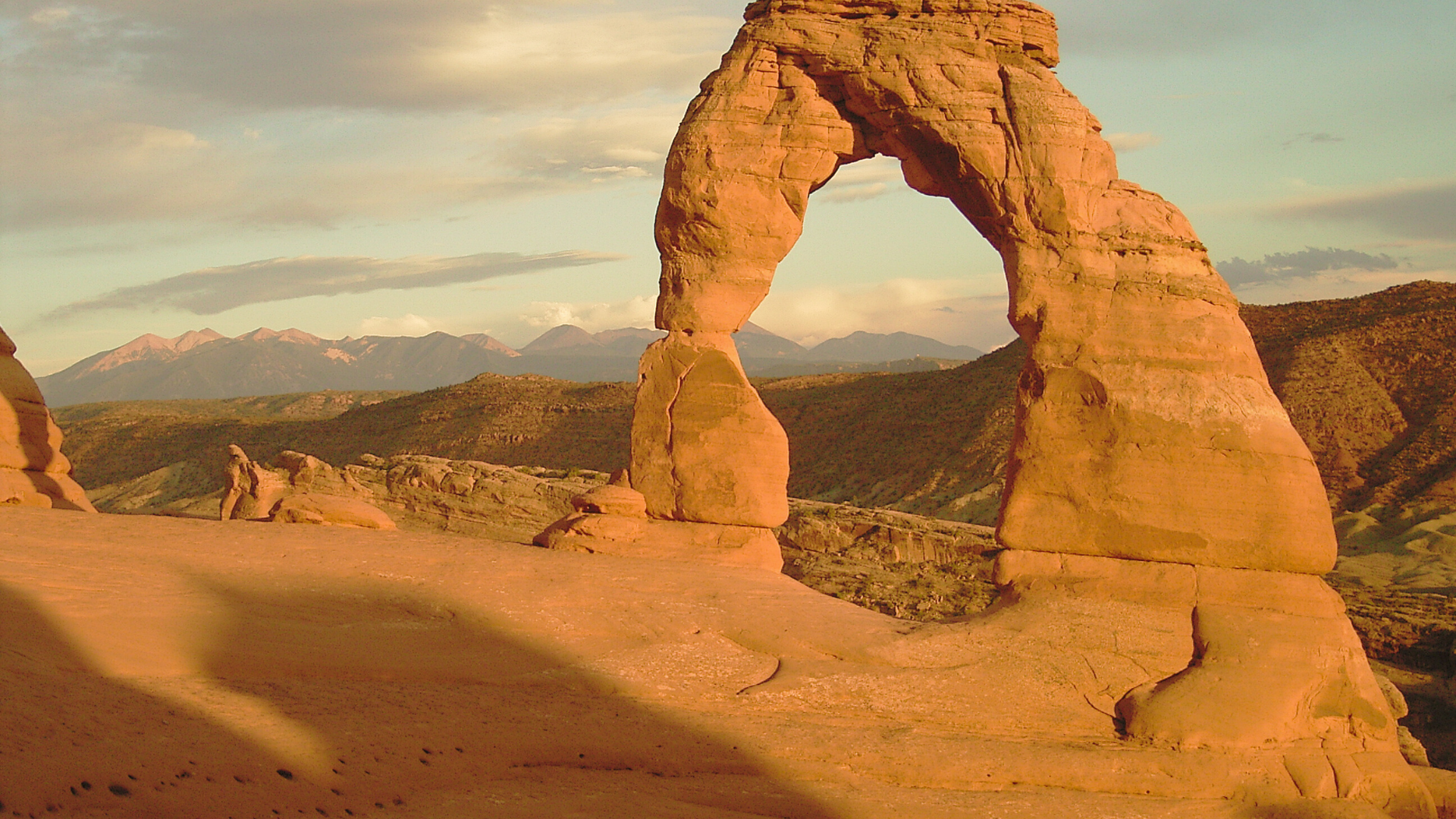
Over 2,000 natural stone arches. No other place has this many. Delicate Arch is on Utah license plates. You’ve seen photos of it.
Best experiences:
- Delicate Arch at sunset (3 miles, no shade)
- Devils Garden (7+ miles, multiple arches)
- Landscape Arch and Double Arch
Summer hits 100+ degrees. Bring way more water than you think you need. Get there before 8am or after 3pm to avoid entrance backup.
5. Canyonlands National Park
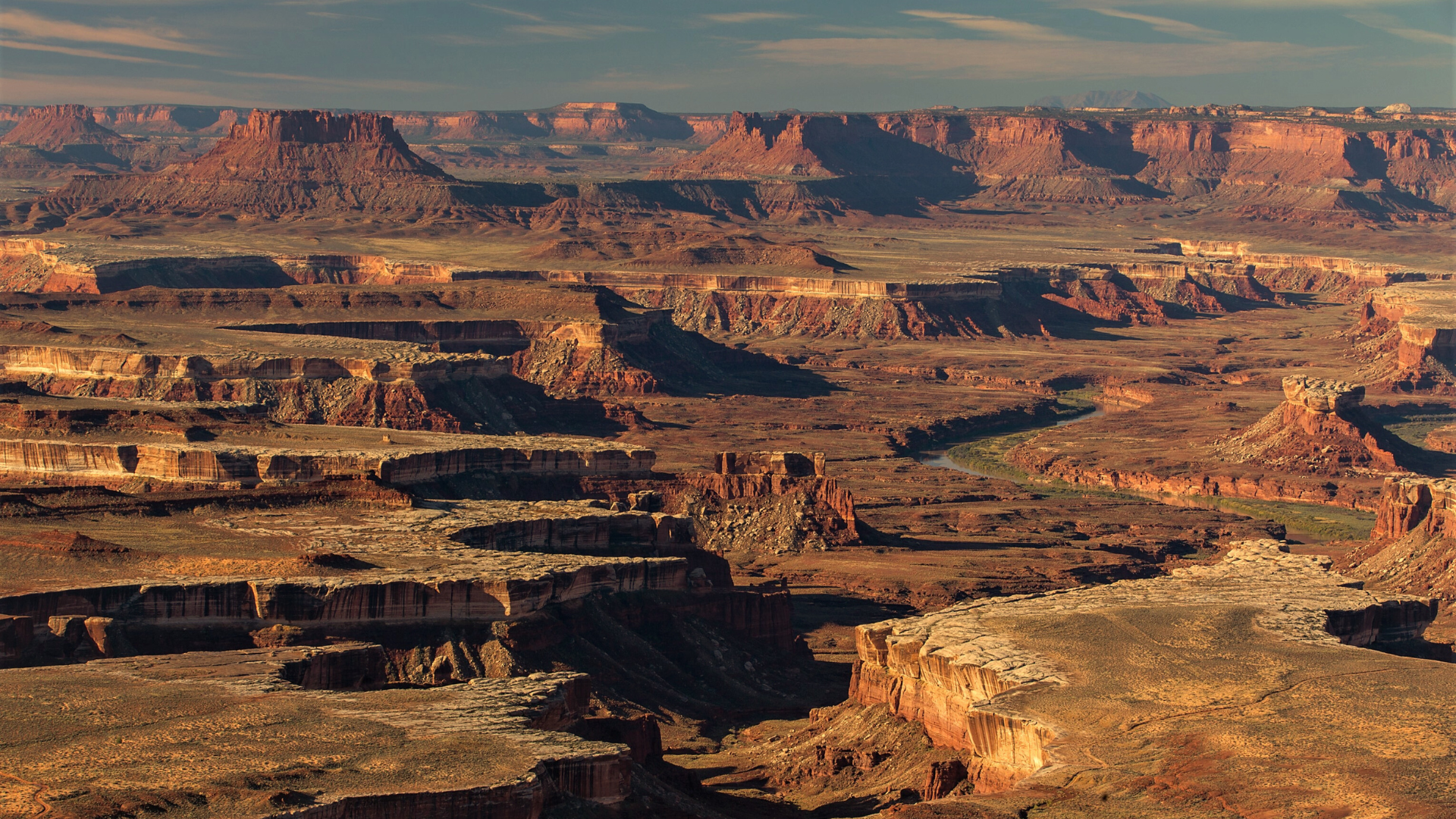
The biggest park on the route but gets fewer visitors than Arches.
Three districts: Island in the Sky, The Needles, and The Maze. Most see Island in the Sky only.
Best experiences:
- Mesa Arch at sunrise (glows orange)
- Grand View Point overlook
- Upheaval Dome
I only had a few hours here. I wish I’d spent a full day.
The Needles has better hiking but needs a separate drive.
6. Grand Canyon National Park

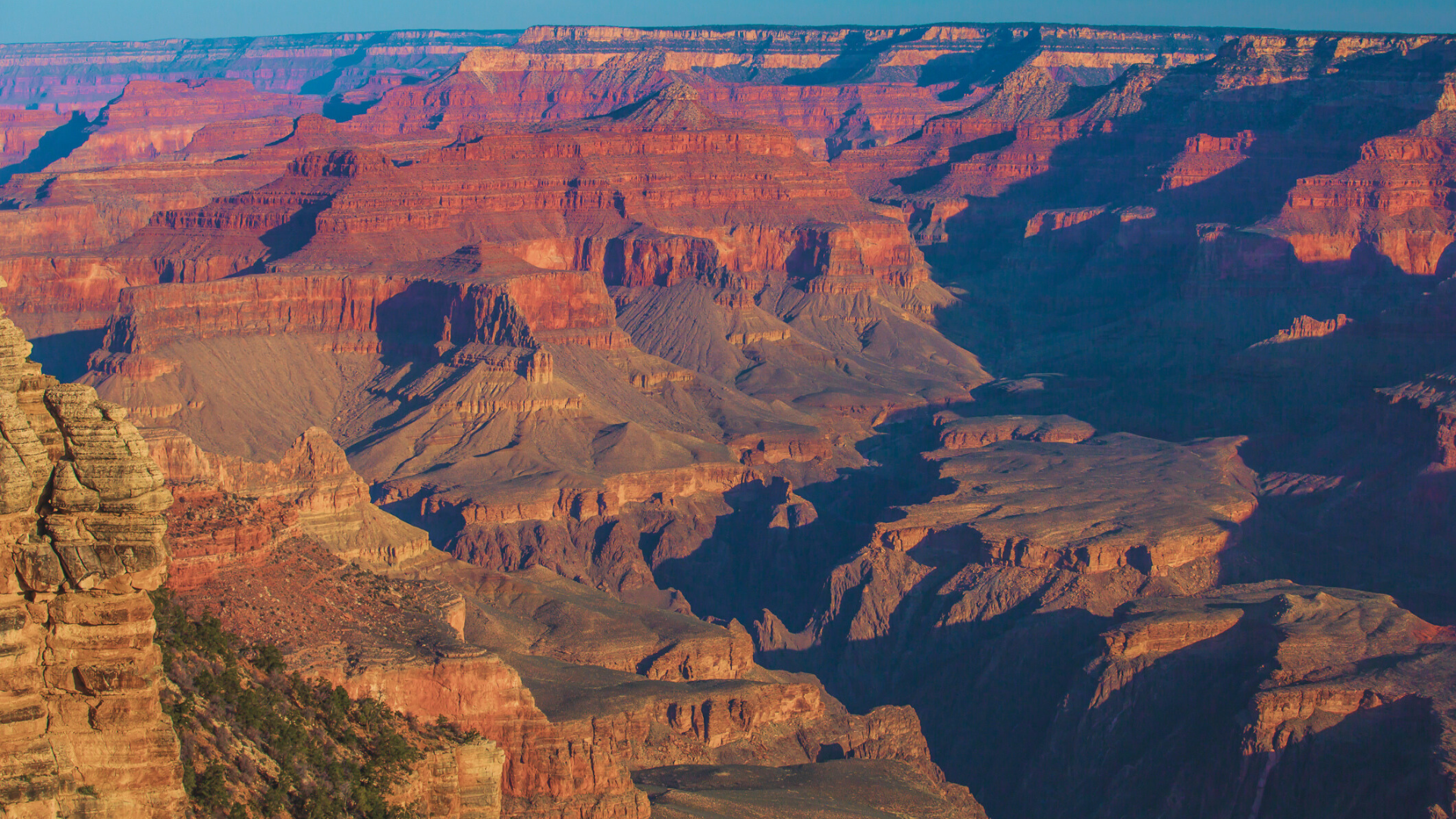
It’s 277 miles long and over a mile deep. No explanation needed. South Rim is open year-round with more viewpoints. North Rim is quieter but closes in winter.
Best experiences:
- Bright Angel Trail (don’t hike to bottom in one day)
- South Kaibab Trail
- Sunrise or sunset views (midday light flattens everything)
You need a reservation to enter during peak season. Book months ahead. I spent one day and wish I’d had two.
Best Time to Do the Grand Circle Road Trip
Here’s when to go based on weather, crowds, and park conditions.
| Season | Months | Pros | Cons | Best For |
|---|---|---|---|---|
| Spring | April-May | Mild temps (70s-80s), fewer crowds, wildflowers | Some higher elevations still cold | Best overall time |
| Summer | June-Aug | All parks open, long days | 100+ degrees, huge crowds | Families with school schedules |
| Fall | Sept-Oct | Mild weather, fall colors, smaller crowds | Some services closing | Best for photos |
| Winter | Nov-Mar | Lowest crowds, cheaper rates | Bryce snowy, North Rim closed, unpredictable weather | Budget travelers |
I went in late May and the weather was perfect for hiking. Spring and fall are your best bets. Avoid holiday weekends if you can.
Where to Stay on a Grand Circle Road Trip
I mixed camping and hotels for flexibility.
Near Zion: Springdale has tons of hotels. Rockville is cheaper and 10 minutes away.
Near Bryce: Bryce Canyon City or Tropic (15 minutes away, cheaper).
Capitol Reef: Torrey is 10 minutes from the park. I camped inside the park itself.
Moab: Biggest town on the route. Tons of hotels, restaurants, breweries. Stay two nights as a base for Arches and Canyonlands.
Grand Canyon: Inside the park books six months out. Tusayan or Williams have more options. Flagstaff is 90 minutes away.
I spent about $120 per night on average for mid-range hotels. Camping was $20-30 per night. Book ahead. Small towns fill up in peak season.
Grand Circle Road Trip Planning Tips (From Experience)
Here’s what made my trip smoother the second time around.
- Get America the Beautiful annual pass ($80, covers all parks, pays for itself after three)
- Download offline maps (cell service is spotty)
- Start hikes early (parking fills by 9am)
- Bring a cooler for food (saves money, limited restaurants)
- Reserve campsites when booking opens (popular sites go fast)
- Add buffer time (2-hour drives become 3 hours with photo stops)
- Don’t try to do too much in one day (you’ll burn out)
Common Grand Circle Road Trip Mistakes to Avoid
Learn from my mistakes so you don’t repeat them.
- Underestimating hiking time (add 50% more than you think)
- Skipping meals (I got dizzy on a trail once)
- Midday hiking in summer (sun is brutal 11am-4pm)
- Relying only on cell phones (bring paper maps)
- Seeing too many parks too fast (cut one if needed)
- Assuming small towns have what you need (check hours)
- Waiting to book Grand Canyon lodging (do it six months out)
- Not checking your spare tire (remote roads test your car)
- Hiking alone without telling anyone (always share your plan)
- Wearing cotton (holds sweat, makes you cold)
Conclusion
The Grand Circle Road Trip changed how I think about road trips.
You’ll see landscapes that don’t feel real, hike trails that challenge you, and probably eat too many gas station snacks.
I recommend at least 10 days if you can swing it. Yes, you can rush it in seven, but you’ll miss the quiet moments that make this trip special.
My biggest lesson? Slow down and take the extra hike. That random side canyon might be your favorite memory.
Book your lodging early, pack good shoes, and bring way more water than seems reasonable. This loop has been here for millions of years. It’ll still be here if you need to come back.
Frequently Asked Questions
How much does a Grand Circle Road Trip cost?
I spent about $2,000 for 10 days including gas, hotels, food, and park fees. Budget travelers can do it for $1,200 camping and cooking. Higher-end trips with nice hotels run $3,000 or more.
Can you do the Grand Circle Road Trip in winter?
You can visit most parks in winter except Bryce Canyon (gets snow) and North Rim Grand Canyon (closed completely). Roads can be icy and some trails close. I’d stick to March through November.
Which direction is better for the Grand Circle loop?
I went clockwise and liked saving the Grand Canyon for last. Others prefer counterclockwise to get the biggest park out of the way first. Either works fine.
Do I need a 4WD vehicle for this trip?
No, a regular car handles the main routes fine. I drove a standard sedan. You only need 4WD for backcountry roads in Canyonlands or Capitol Reef’s Cathedral Valley.
How far in advance should I book this trip?
Book lodging three to six months ahead for peak season (May through September). Campsite reservations open six months out and fill fast. Park entrance permits for Grand Canyon need booking early too.
