

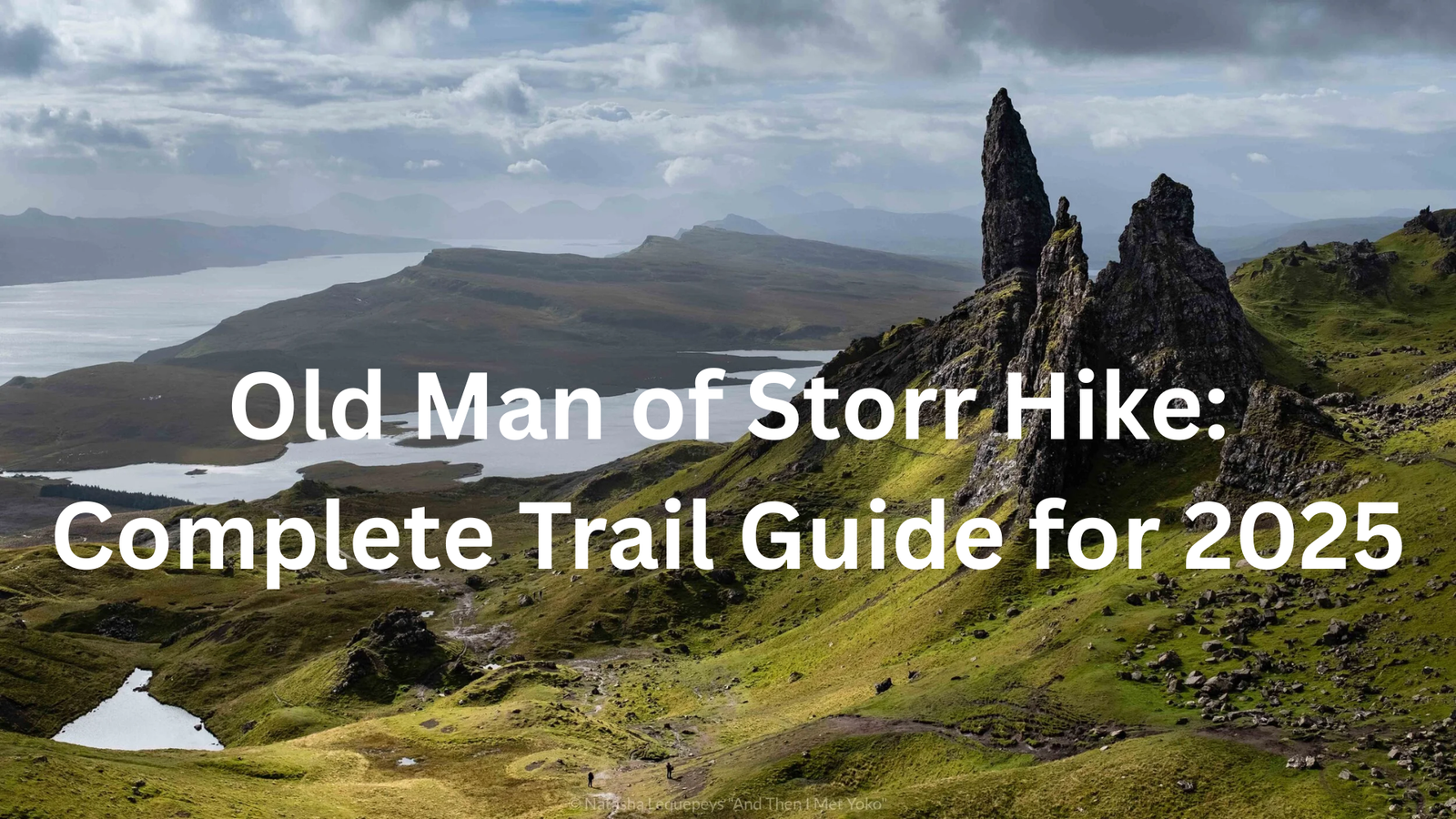
Each step up the Old Man of Storr gives you a new view. The angle changes, fresh shapes appear in the rock, and the land seems to change as you climb. This is not just another hike on the Isle of Skye. It is the one that shows why so many people travel far to see it.
The tall stone pillar rising from ancient ground feels larger than life. Add the quick shifts in Scottish weather, from sudden fog to strong sunlight, and the place feels full of life.
I have walked this trail many times, and it still surprises me.
This guide explains the difficulty, distance, parking fees, what to bring, and the best spots for photos. By the end, you will feel clear about the path and ready to start without worry or confusion.
What Is the Old Man of Storr?
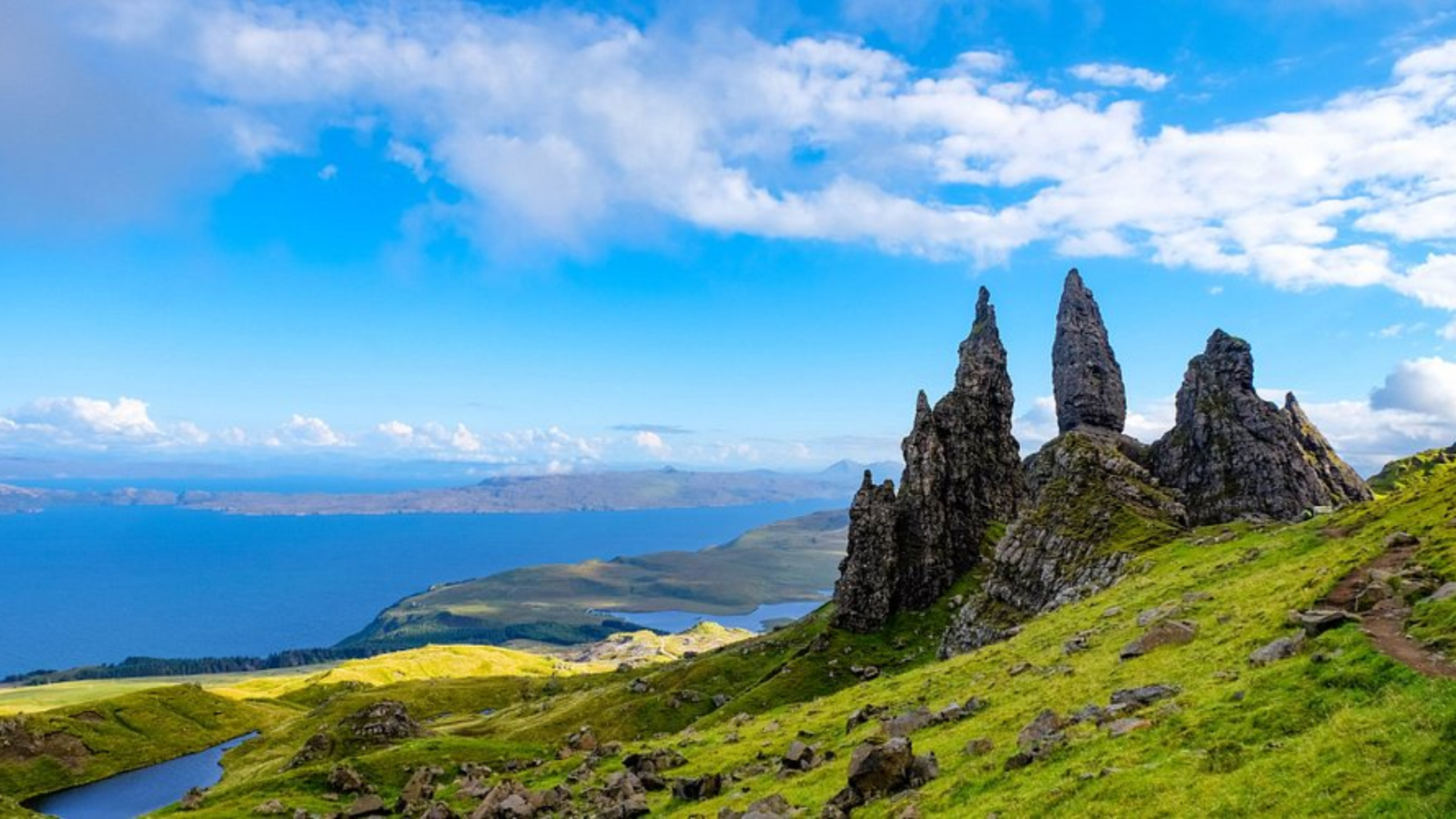
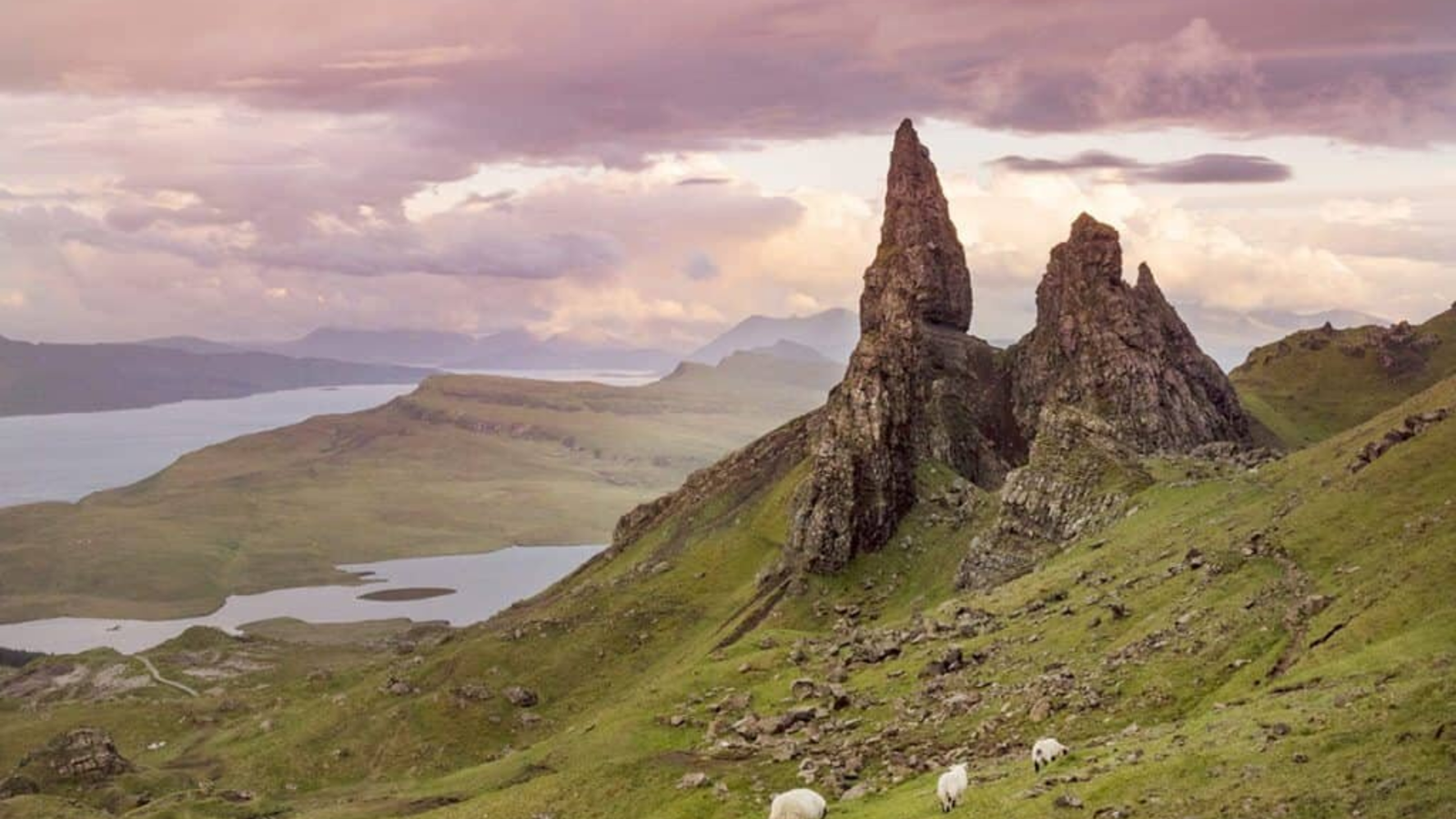
The Old Man of Storr is a 160-foot rock pinnacle sticking straight out of the ground on the Isle of Skye. It’s part of the Trotternish Ridge, created 60 million years ago when hot volcanic lava caused a massive landslip.
The collapse left behind this giant thumb-shaped rock and dozens of other stunning basalt formations that dominate Scotland’s northeastern landscape.
Location and How to Get There?
The Old Man sits just off the A855 Portree to Uig road. You can reach it from Portree in 14 minutes by car, covering 6.8 miles north. From Uig, the drive takes 58 minutes over 27 miles.
Staying in Portree and starting your hike early is your best strategy. Public transport exists through the 57A and 57C Stagecoach buses, but they’re infrequent and unreliable. If you don’t have a car, check the bus schedule carefully before making plans.
Old Man of Storr Trail Overview
The trail is an out-and-back route covering 3.8 to 4.5 kilometres, depending on which path you take. You’ll gain 276 meters of elevation, and the whole experience takes between 1 hour 15 minutes and 2.5 hours. Most people rate it as medium difficulty, which means it’s doable but not easy.
Trail Statistics and Difficulty
The first 30 minutes hit you with continuous uphill climbing on a gravel path. This section challenges beginners and out-of-shape hikers the most. The trail isn’t technical, but it includes steep sections and rough stone steps throughout.
Families with older kids can handle this hike. Young children will struggle with the steep parts. Dogs are welcome but must stay on leads at all times. More experienced hikers can extend this to a 4-hour loop trail, but that’s only for confident walkers in good weather.
Planning Your Old Man of Storr Hike
Getting the logistics right makes everything easier. I’ve learned this through multiple visits where small mistakes caused big headaches.
Best Time to Visit
Peak season runs from May to September when the weather is most reliable. But Scotland’s weather changes every few minutes, regardless of season. If it’s raining when you arrive, wait a bit, and conditions might improve. If fog covers the Old Man, patience often gets rewarded with clearing skies.
Peak visitor times hit between 10 am and 3 pm. Avoid these hours if you want smaller crowds and easier parking. Early morning or late afternoon gives you better light for photos and more space on the trail. Summer mornings and evenings bring midges, those tiny biting insects that make you miserable.
Parking Information and Costs
The car park holds 140 vehicles and sits just north of Loch Leathan by the main road. You’ll pay £6 for up to 6 hours or £7 for up to 12 hours. Payment happens at ticket machines that accept coins or contactless cards.
The parking lot offers these facilities:
- Toilets near the trailhead
- Motorhome waste disposal
- Bike parking racks
- Space for larger vehicles over 2 meters tall
- Storr View Coffee across the road for treats
Arrive before 10 am, or you’ll struggle to find a spot. During peak season, the lot fills, and people start parking along the roadside. Don’t park on grass verges or passing places. This blocks traffic and emergency vehicles.
Weather Considerations
The hike works in most weather conditions, but conditions dramatically affect difficulty. The path is good, hard gravel most of the way. But the top section turns muddy on wet days, and rockfall danger exists at higher levels.
The Scottish Highlands are famous for sudden descending mist. Heavy rainfall makes the upper sections significantly harder. Wind becomes powerful at higher elevations, so forget about wearing a hat up there. Bring suitable clothing for rapid weather changes, and always check the forecast on your visit day.
The Old Man of Storr Hiking Experience
Walking this trail is like watching a movie where every scene surprises you. The landscape never stops changing.
Stage 1: The Forest Section and Initial Climb
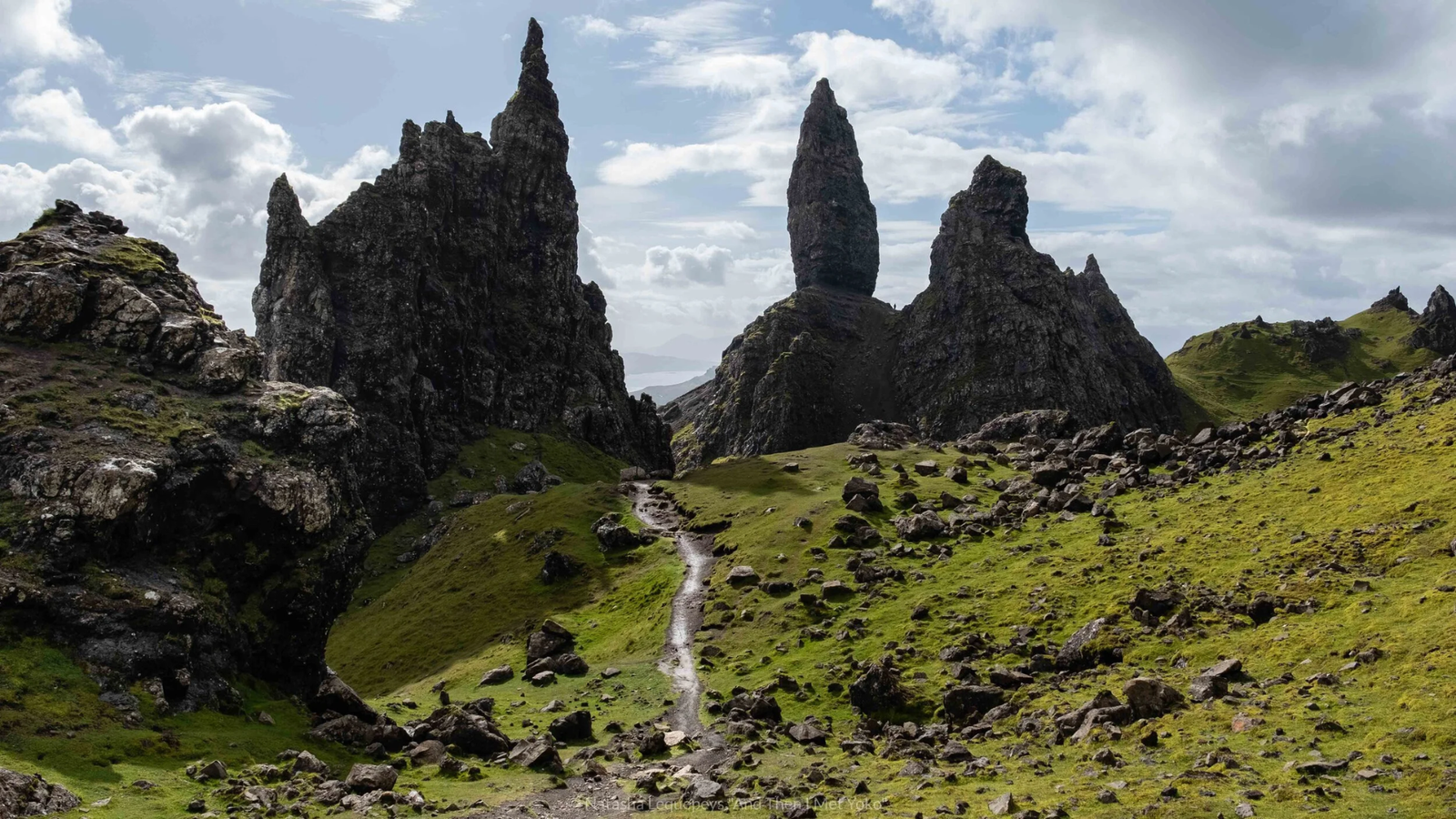
The walk begins through a metal gate flanked by deer fences. An information sign marks the entrance. The path used to run through pine woodland, but it’s been harvested and only stumps remain now.
A gravel path snakes up the hillside ahead of you. The path splits into two options that rejoin higher up. Take the right-hand route because it’s slightly shorter. You’ll pass through multiple double-height gates designed to keep deer out. Close every gate behind you.
Stage 2: Open Hillside and Changing Views
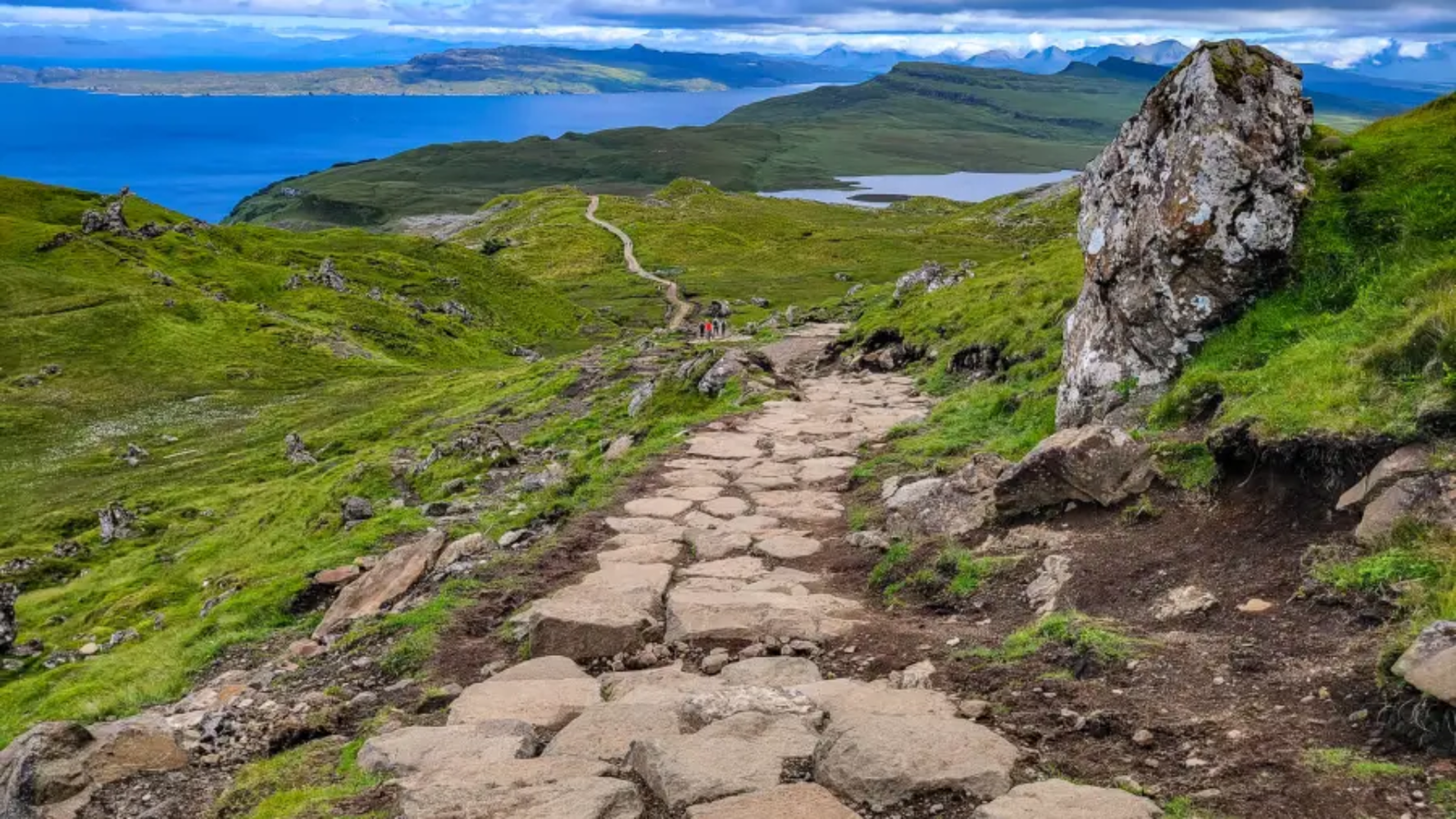
Once you clear the old forest area, the path continues on a grassy slope. You’ll see a small pond created as an emergency water source for forest fires. The path becomes rockier as you gain elevation.
Views of the incredible cliff face and rock structures start emerging. Take frequent breaks to catch your breath and admire how the landscape transforms with every step. Don’t forget to turn around. The views of Loch Leathan behind you are stunning, and the Islands of Raasay and Rona become visible across the water.
Stage 3: Approaching the Old Man
Steep, uneven rock steps require careful traversing in this section. The path gets slippery and muddy after rain. Good hiking boots become essential here, not optional.
The Old Man appears on your right as you climb higher. Other iconic pinnacles shape the unique landscape around you. The scale of these rock formations becomes obvious when you spot hikers in red jackets standing near them. Look for fascinating landslide traces where rocks change size as they get closer to the bottom during the ancient collapse.
Stage 4: The Sanctuary and Needle Rock

The path leading upward gets very steep here. Not everyone makes it this far. You’ll eventually pass between the pinnacles of the Old Man and Needle Rock.
Get up close to view the Old Man and the area called the Sanctuary. Needle Rock is also called The Cathedral because of its window-like openings.
Some visitors actually climb and scramble up the Old Man, though I don’t recommend it. A sign cautions against going behind the rock formations, but this is Scotland, so people ignore it.
Stage 5: The Money-Maker View
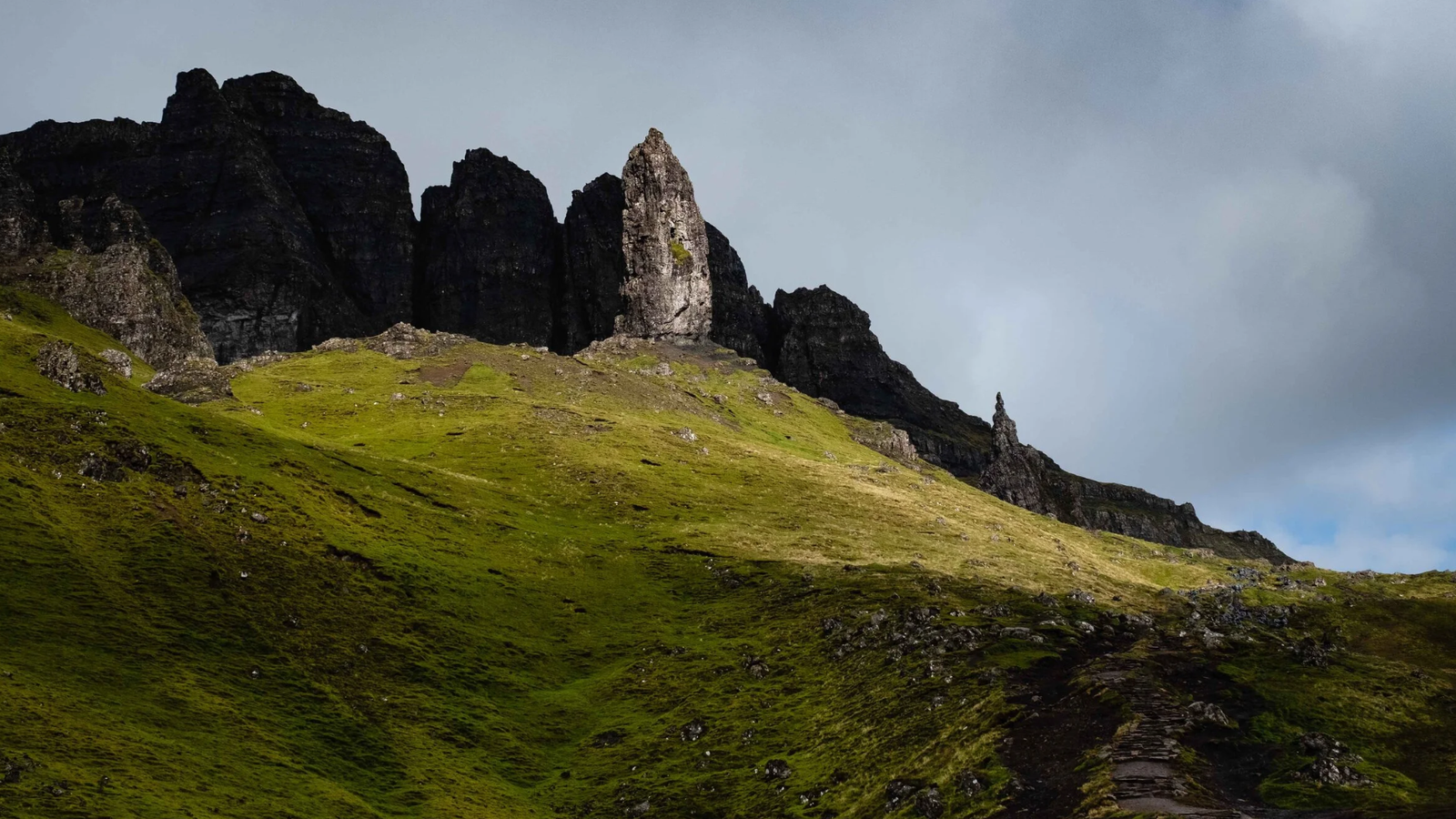
This is my personal favourite spot and the most photographed location on the entire trail. Rocks jut out past the Storr, offering epic views in every direction. The wind can be powerful here, so move slowly and carefully on exposed rocks.
The trig point marks the summit viewpoint. The path gets narrower, and hikers need to give way to each other as they pass. Breathtaking panoramic views spread out in all directions.
This is where you understand why people travel across the world for this hike.
What You’ll See from the Top
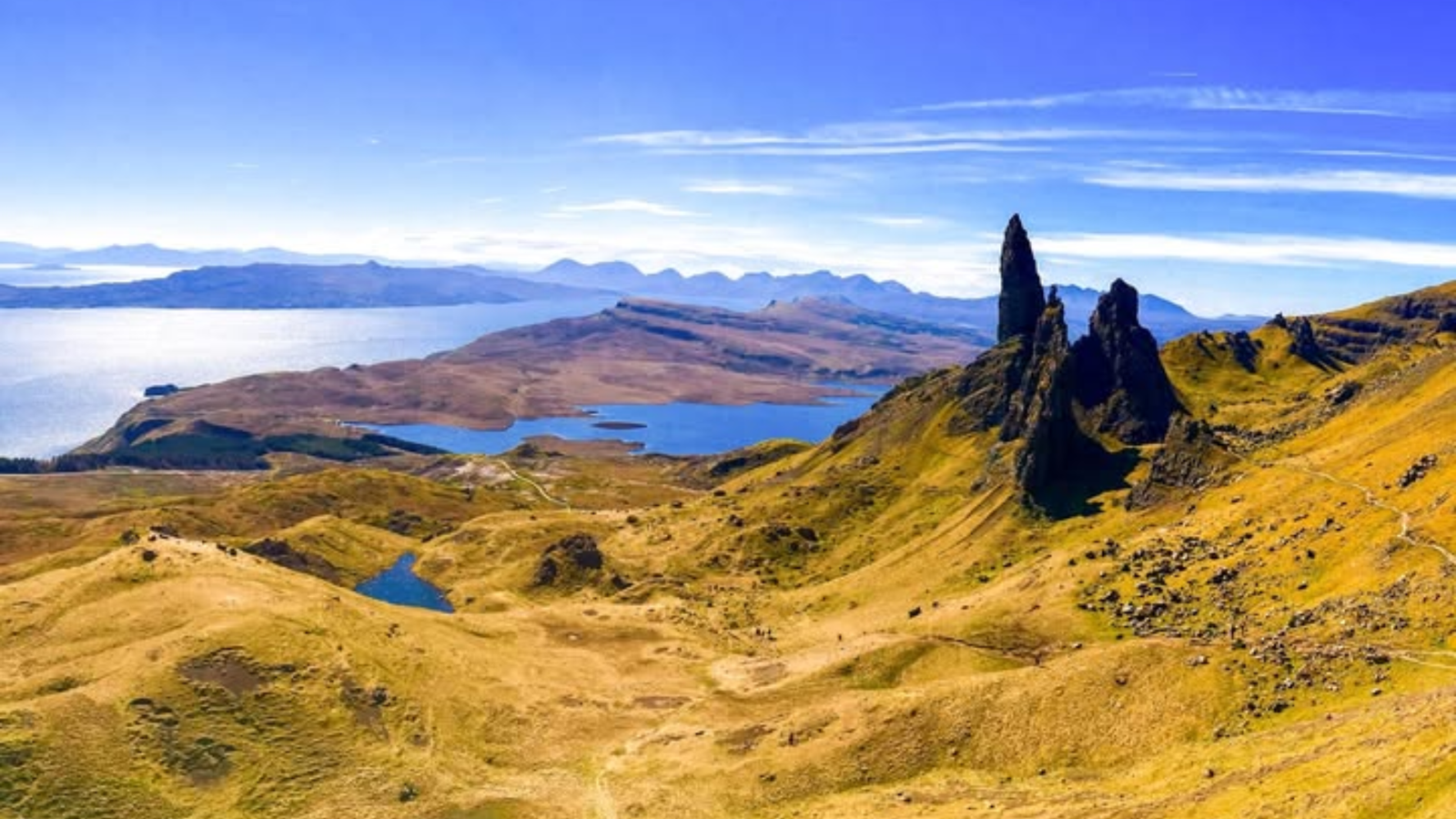
The views stretch over the Islands of Raasay and Rona to the sea beyond. You’ll see the dramatic mainland of Scotland’s northwestern shores and mountains.
Look north towards the Trotternish Ridge and the Quiraing. Look south towards Storr Lochs, Portree, and the Cuillins.
Below you, lakes and islands become crystal clear. Surrounding rocks take shape from this perfect vantage point. This is the ideal spot to sit down and eat lunch while soaking in the view.
Photography Tips for Old Man of Storr
The changing light and weather create photography opportunities you won’t find anywhere else. I’ve shot this location multiple times, and every visit delivers different conditions.
- Shoot from the Money-Maker View for the classic composition: Walk behind the Old Man and look right for otherworldly views everyone wants.
- Turn around frequently to capture Loch Leathan and island views: Pop off the main path for different angles since you can’t get lost here.
- Shoot during golden hour to enhance red and orange rock tones: Changing weather provides diverse lighting with sun, dark clouds, and fog appearing within an hour.
- Embrace mist and fog for dramatic, moody shots: If conditions aren’t ideal when you arrive, wait a bit for the weather to shift.
- Include people in your frame to show massive scale: Without human figures, it’s hard to convey how enormous these rocks actually are.
- Frame the pinnacles against the sky for clean compositions: Use surrounding landscape like lakes and islands for context, and look for interesting rock formations.
- Try multiple viewpoints around the rim area: Capture changing landscape angles as you hike closer, and don’t settle for just one angle.
Trail Difficulty and What to Pack
Understanding what this hike demands helps you prepare properly. I’ve seen too many people struggle because they showed up unprepared.
Physical Difficulty Assessment
Medium difficulty overall, average for experienced hikers. The first 30 minutes of continuous uphill climbing challenge beginners significantly. Out-of-shape hikers will need frequent rest breaks to manage the ascent.
Steep sections with uneven terrain continue throughout the hike. Upper sections turn slippery and muddy when wet. This isn’t technical climbing, but it requires sure footing and reasonable fitness. Wind at higher elevations can affect your balance, especially on exposed rocks.
Essential Gear and Clothing
Sturdy hiking boots are essential, not optional. I can’t stress this enough. Waterproof jacket and rain gear belong in your pack regardless of the forecast.
Scotland’s weather changes too fast to trust any prediction.
Pack these items for a safe, comfortable hike:
- Layers for changing temperatures
- Hat and gloves for the wind and cold
- Sun protection: sunscreen, sunglasses, hat
- Sufficient water (hydration matters despite a short distance)
- Snacks or a packed lunch for the summit
- Camera and extra batteries for photography
- Trekking poles are helpful for steep descents
Skip the hat on windy days because it will blow away. Avoid wearing inappropriate footwear like sneakers or sandals. Don’t plan on flying drones without a proper UK flyer and operator ID from the Civil Aviation Authority.
Safety Considerations
People underestimate this hike because it’s short. Don’t make that mistake. Safety matters here.
- Stay on the marked path to avoid erosion and rockfall: Use caution on steep, uneven rock steps, especially when wet.
- Be extra careful on windy days and don’t venture close to cliff edges: Powerful wind can cause you to lose your footing on rocks jutting past the Storr.
- Check the weather forecast and inform someone of your plans: Sudden mist can descend quickly, and the mobile phone signal may be unreliable.
- Know your physical limits and turn back if needed: An emergency water source exists, but don’t count on it.
- Heed all barriers and avoid netted areas completely: Biodegradable netting prevents erosion and encourages vegetation recolonisation.
- Stick to marked trails and keep dogs on leads: Be mindful of free-roaming livestock to protect restoration work.
- Take all litter and waste home, never start open fires: Help preserve this site for future visitors.
Route Options and Extensions
The classic route works for most people, but options exist for different experience levels and time availability.
Classic Route (Standard Hike)
The out-and-back route covers 3.8 to 4.5 kilometres on the same path there and back. Time ranges from 1 hour 15 minutes to 2.5 hours, depending on your pace and photo stops. This gets you to the Old Man and back down again.
This route suits most fitness levels. It’s the best choice for first-time visitors and casual hikers who want to experience the highlights without extreme difficulty.
Extended Loop Trail
A longer loop trail exists for experienced hikers looking for more challenge. This route takes approximately 4 hours to complete, with more challenging terrain and elevation gain. Check weather conditions carefully before attempting this extension. Fog and high winds make it genuinely difficult and potentially dangerous.
Route information is available on the All Trails app. Only attempt this if you’re a confident, experienced hiker with proper gear and good weather conditions.
Alternative Route from Path Split
A fork appears in the path about halfway through your return journey. Stay right for a longer path back to the car park. This provides variety on your return instead of retracing your exact steps.
Check a trail guide for specific directions at this junction. The alternative route adds a bit of time but offers different views and keeps the descent more interesting.
After Your Hike
The return journey and what you do afterwards can enhance or diminish your entire experience. Plan this part too.
Return Journey
You’ll take the same route back down, and it’s all downhill, making it much easier than the ascent. Allow 30 to 40 minutes to return to the car park. Watch for that fork offering the alternative longer return path if you want variety.
Take time to enjoy the views you may have missed on the ascent when you were focused on climbing. You’ll notice different details and angles on the way down. Still be cautious on steep sections despite the easier descent.
Nearby Attractions to Combine
Portree, the largest town on the Isle of Skye, sits just 15 minutes away. The Quiraing offers another dramatic Trotternish Ridge formation worth visiting. The Fairy Pools provide crystal clear pools and waterfalls for a completely different landscape.
Neist Point features a dramatic lighthouse and coastal scenery. Dunvegan Castle offers historic clan castle tours. Multiple other fantastic hikes exist on the Isle of Skye if you have extra days to explore.
Post-Hike Refreshments
Storr View Coffee sits right across from the parking lot. Cakes, home bakes, and ice cream are available along with teas and coffees to warm you up. Portree offers a full range of restaurants and pubs for more substantial meals.
The traditional Scottish pub experience with local whisky completes the day perfectly. A warm meal and a drink after a long hike feel earned and satisfying.
Common Mistakes to Avoid
I’ve made most of these mistakes myself or watched others make them. Learn from these errors instead of repeating them.
- Arriving between 10 am and 3 pm when parking is impossible: Check the weather forecast to avoid miserable experiences in dangerous conditions.
- Underestimating the time needed and not allowing enough time before sunset: Getting caught in darkness is genuinely dangerous in Scotland’s unpredictable conditions.
- Wearing inappropriate footwear instead of hiking boots: Bring sufficient water and rain gear for sudden weather changes at elevation.
- Forgetting camera batteries, memory cards, or not dressing in layers: Temperature changes make you either too hot or too cold throughout the hike.
- Only stopping at the first viewpoint and never turning around: You’ll miss the best views, Loch Leathan, and the islands behind you.
- Spending your entire time taking photos without experiencing the view: This defeats the purpose of being there.
- Parking on grass verges, not closing gates, or venturing off marked trails: This blocks emergency access, lets livestock escape, and damages protected restoration areas.
Tips to Maximise Your Old Man of Storr Experience
These strategies come from multiple visits and learning what actually works versus what sounds good in theory.
- Book accommodation in Portree and download the All Trails app: Check parking costs and bring the right payment method to avoid hassles at the trailhead.
- Study photos online for composition ideas and check sunrise/sunset times: Prepare all clothing and gear the night before so you’re not rushing in the morning.
- Arrive before 10 am for guaranteed parking and fewer crowds: Start hiking with full energy for that steep initial climb and take frequent breaks to enjoy changing views.
- Turn around regularly for backward views and pop off the main path: Keep going when you think you’ve reached the end because better views await.
- Be patient if fog covers the Old Man because it often clears within minutes: Balance photography with experiencing the moment so you actually remember being there.
- Allow 2 to 2.5 hours minimum for the full experience: Bring lunch to enjoy at the summit and visit during the shoulder season for fewer crowds.
- Combine your visit with other Isle of Skye attractions: Stop at Storr View Coffee after your hike and respect the environment by following Leave No Trace principles.
Conclusion
The Old Man of Storr walk offers dramatic views, unusual rock shapes, and a real sense of progress as you climb. You now know it can take a little over an hour to two and a half hours, parking costs six to seven pounds, and sturdy boots plus rain gear are important in Scotland’s quick-changing weather.
Arrive before ten in the morning for easier parking, keep going even when you think the trail is done, and turn around often for the views behind you. The tall stone pillar and wide landscape make this one of the most memorable walks in the area.
If you feel ready to try it, check the weather, charge your camera, and set an early alarm. Share your Isle of Skye walks or your Old Man of Storr photos in the comments when you return.
Frequently Asked Questions
How difficult is the Old Man of Storr hike?
The Old Man of Storr hike is rated medium difficulty. The first 30 minutes involve continuous uphill climbing on gravel paths, challenging for beginners. The trail includes steep sections and rough stone steps throughout. It’s suitable for most fitness levels but requires reasonable stamina and proper hiking boots, especially when conditions are wet.
How long does the Old Man of Storr hike take?
The hike takes 1 hour 15 minutes to 2.5 hours, depending on your pace and photo stops. The trail covers 3.8 to 4.5 kilometres with 276 meters of elevation gain. Allow 30 to 40 minutes for the easier downhill return journey. Budget at least 2 hours for the full experience.
How much does it cost to hike the Old Man of Storr?
Parking costs £6 for up to 6 hours or £7 for up to 12 hours, paid at ticket machines accepting coins or contactless cards. The hike itself is free. The parking lot has 140 spaces and fills quickly, so arrive before 10 am during peak season to secure a spot.
What should I wear for the Old Man of Storr hike?
Wear sturdy hiking boots as the trail becomes slippery and muddy when wet. Bring a waterproof jacket and rain gear for Scotland’s unpredictable weather. Dress in layers for changing temperatures, and pack a hat, gloves, sunscreen, and sunglasses. Avoid regular sneakers or sandals as the terrain includes steep, uneven sections.
What is the best time to visit the Old Man of Storr?
Visit between May and September for the most reliable weather. Arrive before 10 am or after 3 pm to avoid peak crowds and secure parking. Early morning or late afternoon offers better lighting for photography. Summer brings midges during dawn and dusk. Scotland’s weather changes rapidly, so be prepared for rain, sun, and fog.
