


Giant City State Park sits in Southern Illinois, just outside the small town of Makanda. The park gets its name from the huge sandstone blocks that line the trails, creating what looks like streets built for giants. These ancient rock formations tower over hikers, making you feel small as you walk through stone corridors millions of years old.
The park offers trails for everyone, from easy walks perfect for families to challenging routes for experienced hikers. Rock shelters dot the landscape, once used by Native Americans centuries ago. Steep bluffs provide amazing views of the Shawnee National Forest below.
This guide covers everything you need to know about the giant city state park trails. You’ll learn which paths match your skill level, what to bring, and the best times to visit throughout the year.
Top Trails at Giant City State Park
Giant City State Park has over 12 miles of marked trails that wind through sandstone bluffs, forests, and creek beds. Each trail shows off different parts of the park’s natural beauty and history.
Giant City Nature Trail
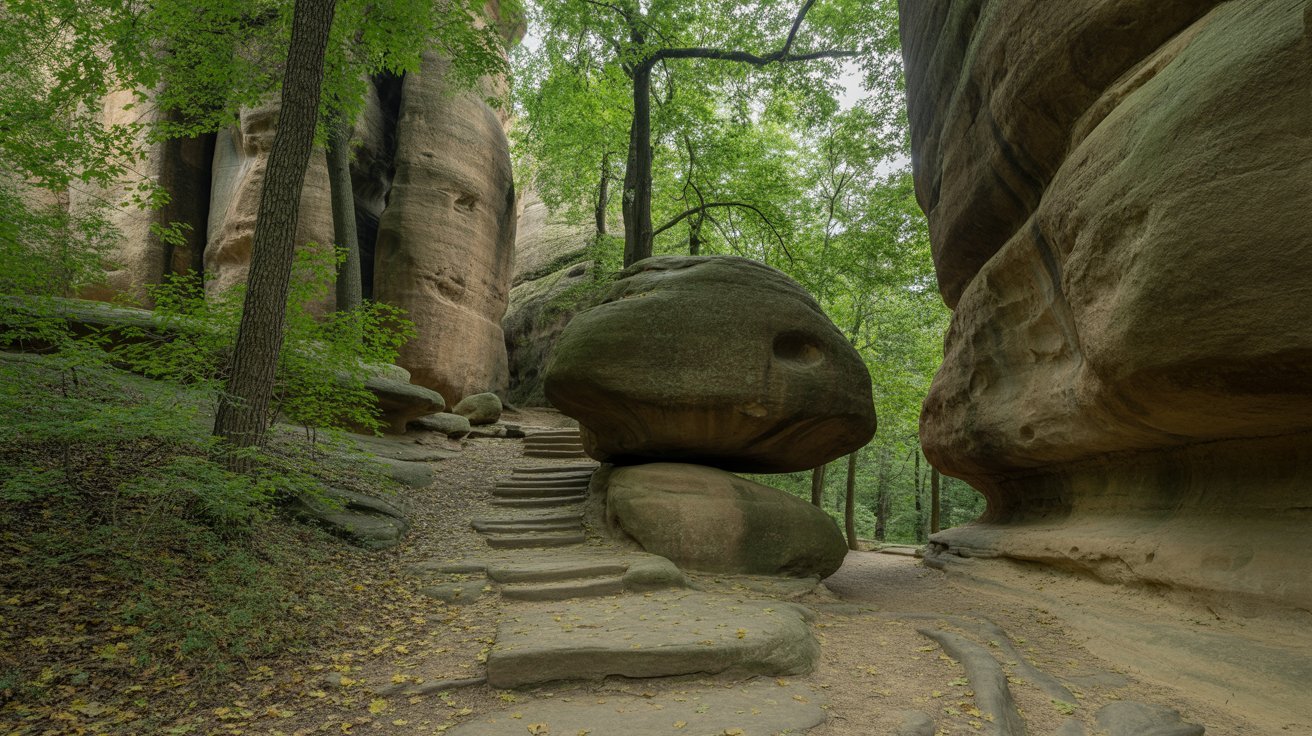
This 1-mile loop is the park’s most popular path and shows you why the area earned its name. The trail takes you through narrow passages between massive sandstone walls that rise 50 feet high on both sides. These “streets” were formed over millions of years as water and ice carved through the soft rock.
Stone steps built by the Civilian Conservation Corps in the 1930s help you climb up and down the rocky terrain. You’ll pass Balanced Rock, a huge boulder that looks like it might tip over but has stood in place for thousands of years. Look closely at the rocks and you’ll see carvings from visitors dating back to the 1800s. Rock shelters along the path once protected Native Americans from rain and cold.
Devil’s Standtable Trail
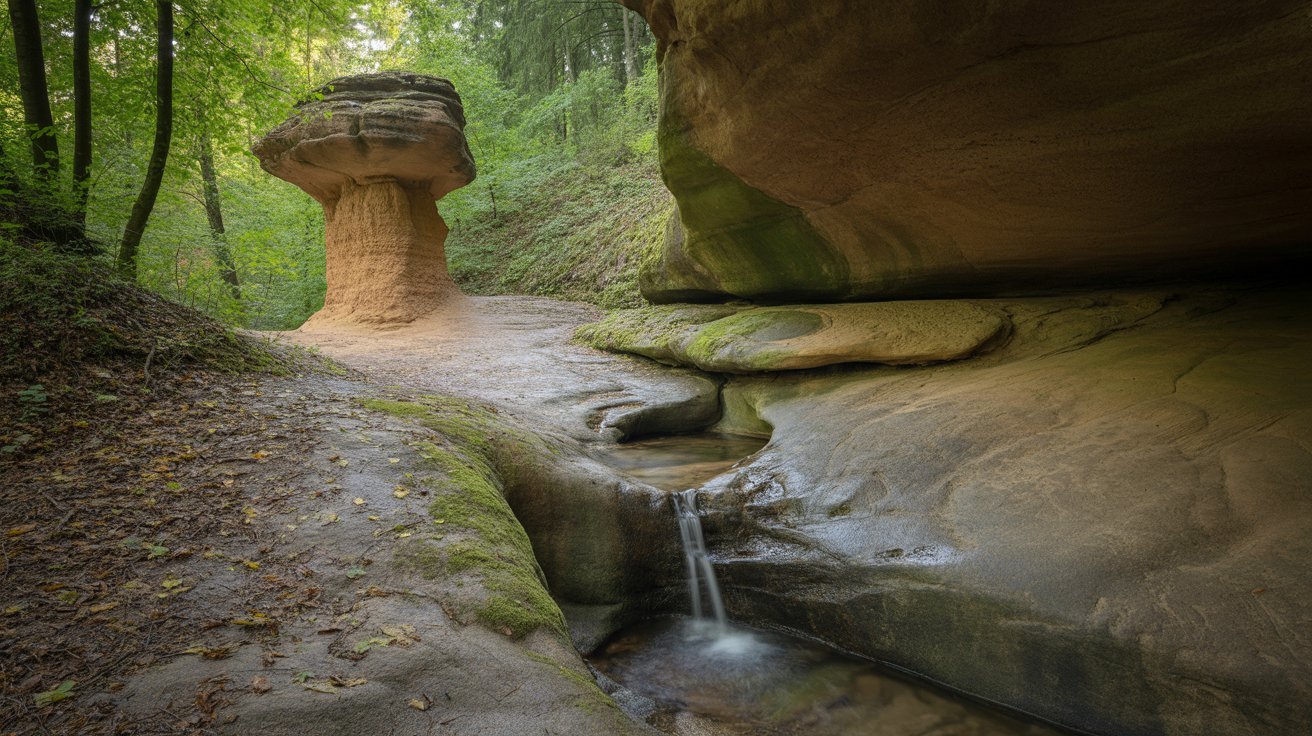
This short 0.3-mile path is perfect if you only have a little time or are hiking with young kids. The trail leads to a mushroom-shaped sandstone pillar that stands alone in a clearing. Erosion ate away the softer rock at the bottom while the harder cap rock stayed in place, creating this odd formation.
A small waterfall trickles down rocks near a shallow cave at the trail’s end. The water flow depends on recent rainfall, so it might be dry in summer. This trail is mostly flat and takes about 15 to 20 minutes to walk. Many people stop here for photos before continuing to nearby trails.
Indian Creek Shelter Nature Trail
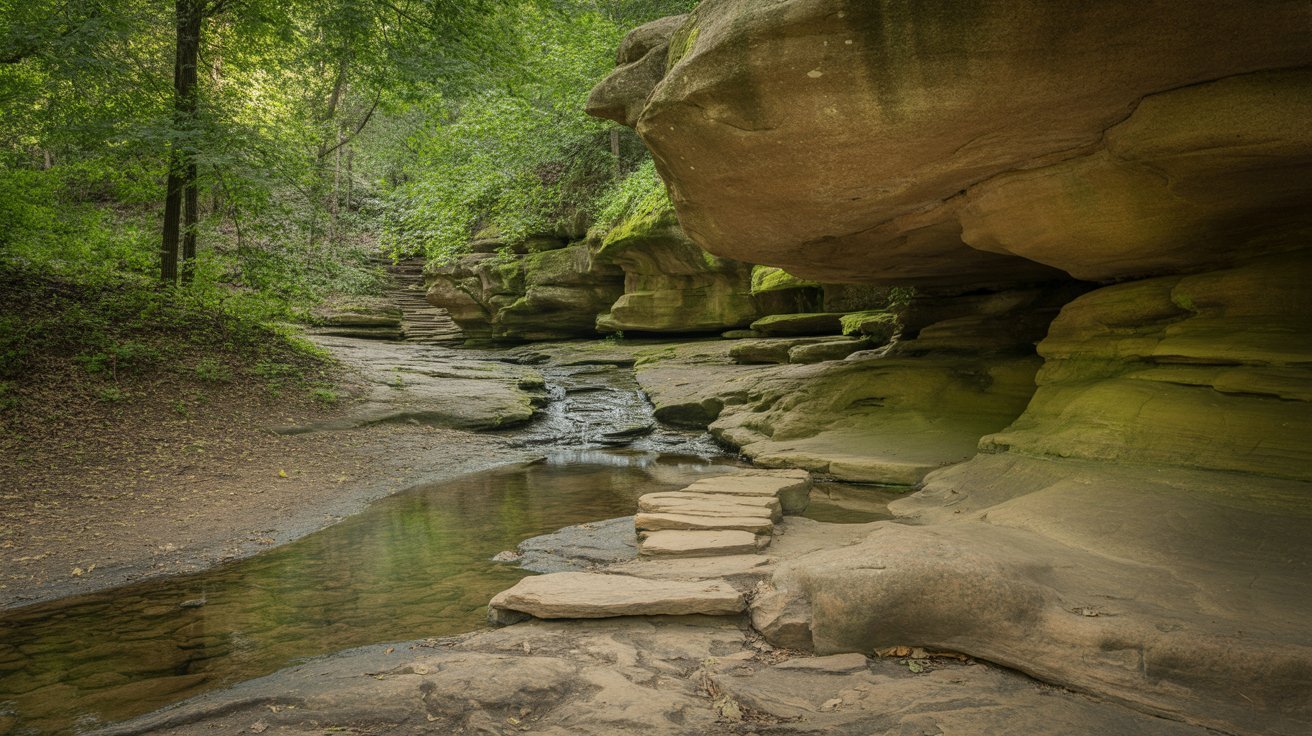
This 0.75-mile path combines natural beauty with Native American history. The trail follows a creek that flows year-round, though it runs stronger after storms. You’ll cross the water several times on stepping stones, so waterproof boots help in the spring.
The main feature is a large rock shelter where Native Americans lived between 400 and 900 A.D. The overhang is deep enough to protect a small group from the weather. Archaeologists found pottery pieces and tools here, showing people used this spot for hundreds of years. In spring, small waterfalls appear on the bluff walls after heavy rain.
Trillium Trail
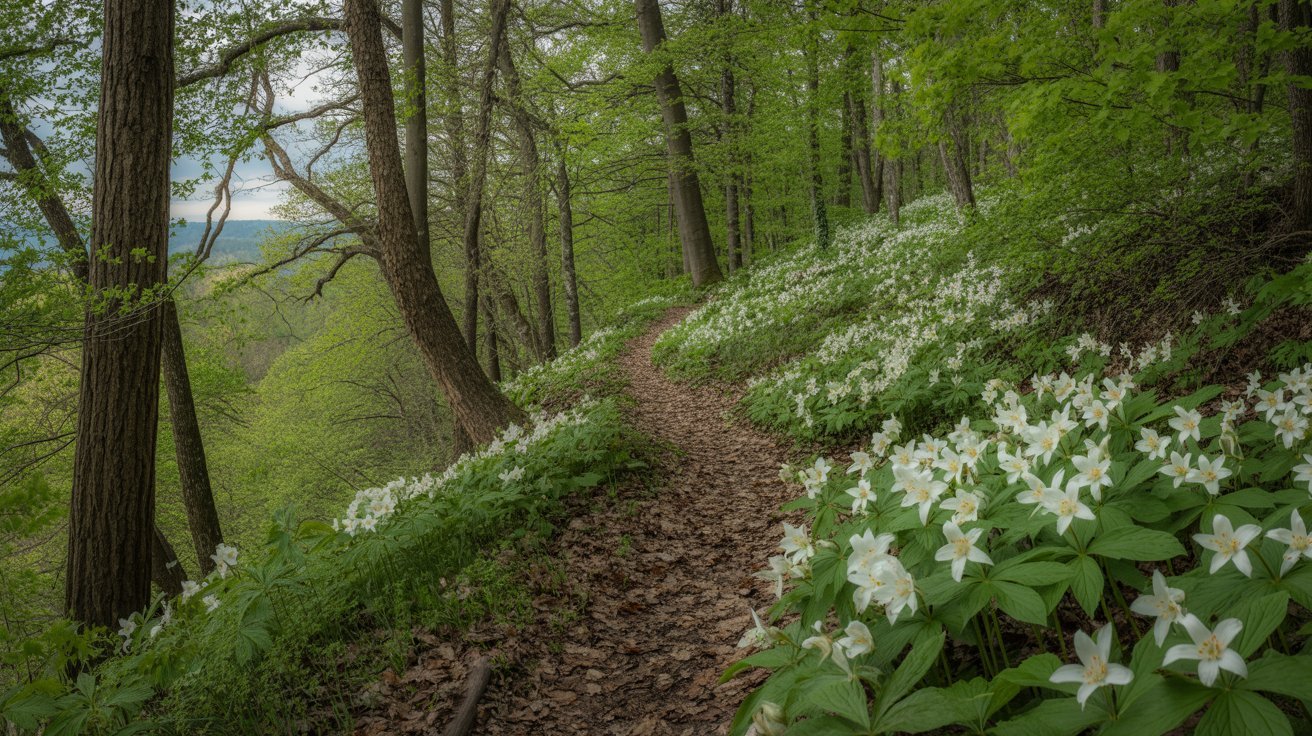
The Trillium Trail runs 1.2 miles through forest and along ridge tops. Spring is the best time to hike this moderate path because wildflowers cover the ground, including the white trilliums that give the trail its name. The flowers usually bloom in April and early May.
The trail climbs gradually to high points where you can see out over the forest canopy. Tall hardwood trees provide shade most of the way, making this a good choice on hot summer days. Bird watchers like this trail because the mix of habitats attracts many species. The path can be slippery after rain, so watch your footing on the leaf-covered sections.
Red Cedar Trail
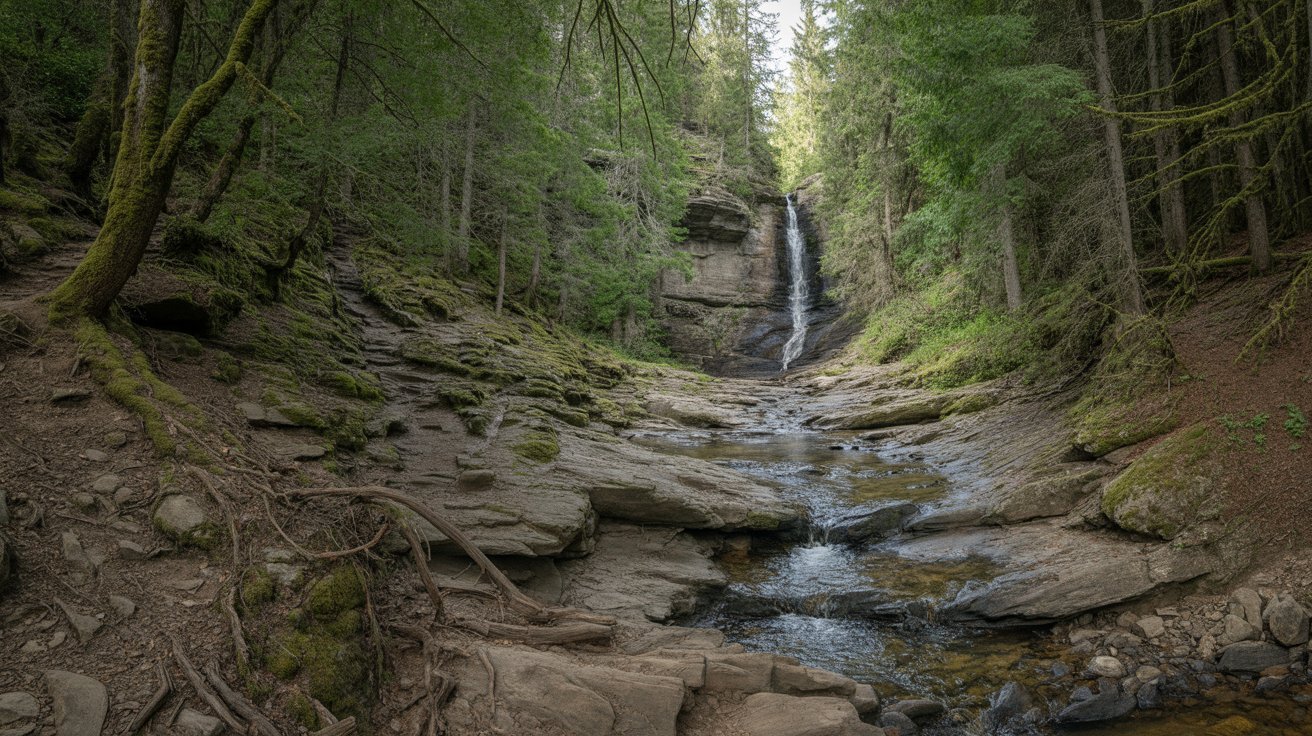
At 12 miles, the Red Cedar Trail is the longest and toughest hike in the park. This challenging route takes most hikers 6 to 8 hours to complete. The path crosses streams without bridges, requires climbing over rocks, and has steep sections that will test your endurance.
Red Cedar Waterfall is the trail’s highlight, though it only flows well after recent rain. Some hikers split this trail into two days and camp overnight at designated sites. Make sure to download trail maps to your phone before you start because cell service is spotty in remote areas. Bring plenty of water and snacks because this trail demands good physical fitness.
Stone Fort Trail
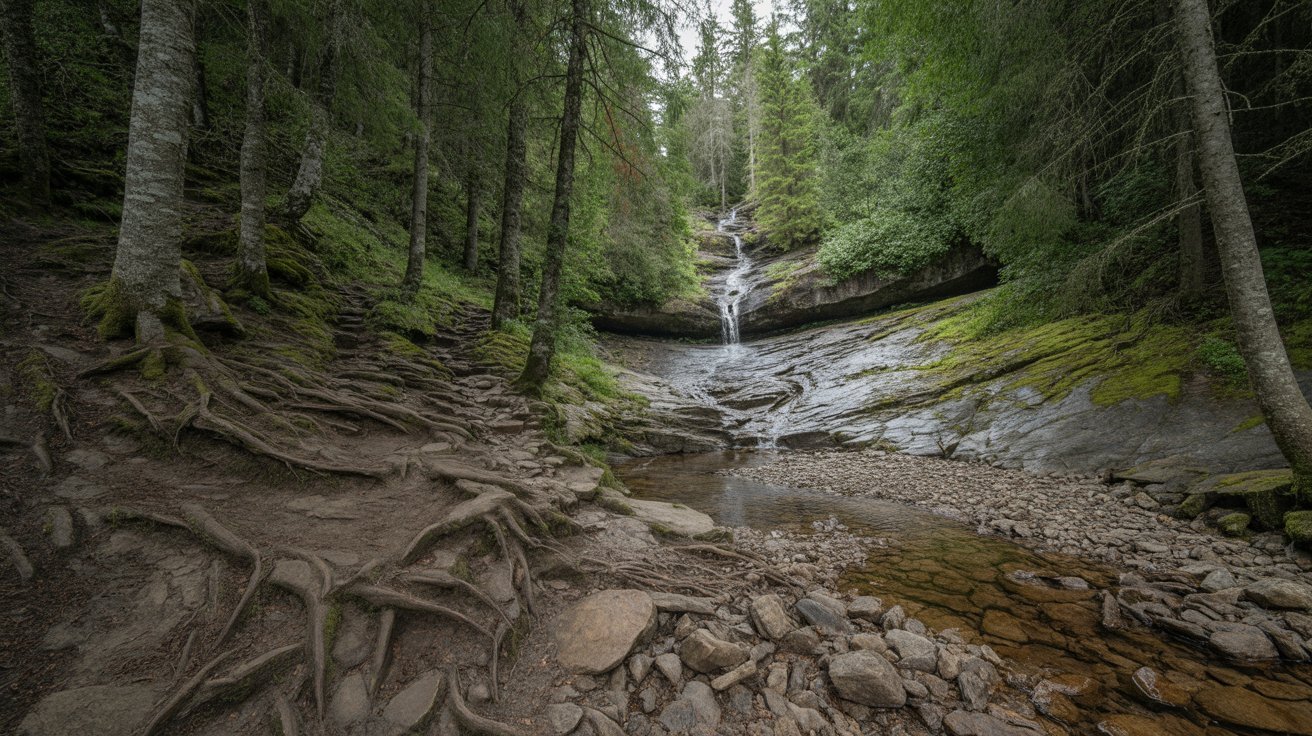
This 0.3-mile trail may be short, but it climbs steeply up a bluff to reach a reconstructed Native American stone wall. Scientists believe people built this wall between 1000 and 1400 A.D., though its exact purpose remains unclear. Some think it was used for defense, while others believe it had religious meaning.
The trail goes straight up in places, so take your time and use the tree roots as natural steps. Watch for poison oak growing along the path edges and keep an eye out for copperhead snakes that sometimes sun themselves on the rocks. The views from the top make the climb worthwhile, showing miles of forested hills in all directions.
Post Oak Trail
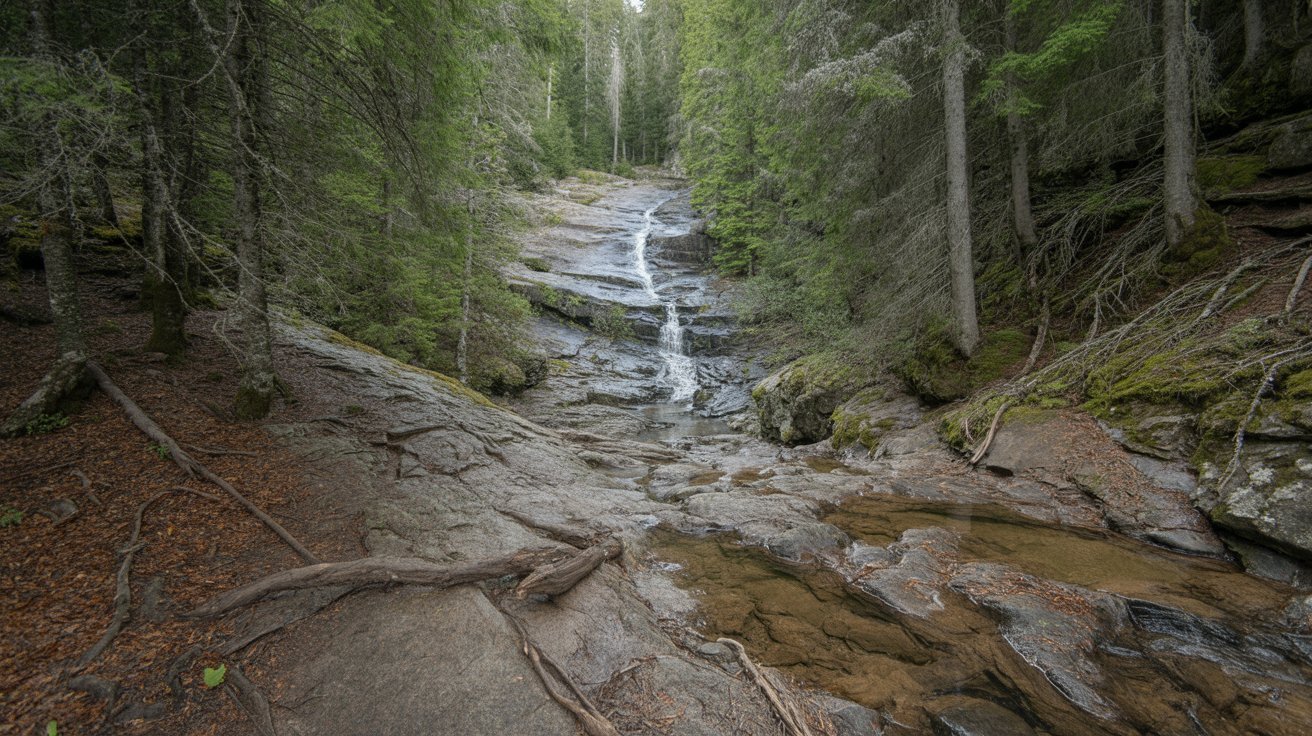
The Post Oak Trail offers the easiest walking at Giant City State Park. Parts of the path are paved, making it accessible for wheelchairs and strollers. The trail connects with Devil’s Standtable Trail, so you can combine both for a longer but still gentle walk.
This trail runs along the top of a bluff, giving you great views without having to climb steep hills. Benches placed along the way let you stop and enjoy the scenery. The paved sections make this trail usable even after rain, when other paths turn muddy.
What to Know Before You Hike?
The best time to visit depends on what you want to see. Spring brings wildflowers that cover the forest floor in color, while fall turns the trees brilliant shades of red, orange, and yellow. Winter offers a quieter experience with possible snow coating the rock formations in white.
Trail surfaces vary throughout the park. Natural dirt paths make up most routes, but you’ll also walk on gravel, flagstone steps, and some paved sections. Creeks flow year-round in some areas but dry up completely in others during summer droughts. Check recent conditions before planning creek crossings on your hike.
The park has multiple parking areas with restrooms and picnic tables. Dogs can join you on the giant city state park trails, but must stay on a leash at all times. Wear sturdy shoes with good tread because rocks become very slippery when wet. Tennis shoes don’t provide enough grip on steep or rocky sections.
Trail Features and Geological Highlights
The rock formations at Giant City State Park formed over 300 million years ago when this area was covered by an ancient sea. Sand and sediment built up in layers, then pressure turned them into sandstone.
Key features you’ll see include:
- Massive sandstone bluffs carved by water and ice over millions of years
- Rock shelters with overhangs deep enough to live under
- Historic stonework built by the Civilian Conservation Corps during the 1930s
- Giant City Creek flows through valleys and creates seasonal waterfalls
- Unique formations like Devil’s Standtable and Balanced Rock
- Wildlife, including deer, wild turkeys, and various bird species
The sandstone here erodes in interesting ways. Softer layers wear away faster than hard layers, creating the mushroom shapes and deep shelters you see throughout the park. Walking the giant city-state park trails gives you a close look at geology in action.
Planning Your Visit
The park opens at 6 a.m. and closes at 10 p.m. every day of the year. You’ll find it at 235 Giant City Rd, Makanda, IL 62958. Free parking is available at trailheads throughout the park.
Things to know:
- Giant City Lodge offers meals and overnight stays inside the park
- Campgrounds have spots for tents and RVs
- Rental cabins sleep up to six people
- The archery range is open to visitors with proper equipment
- A visitor center sells maps, snacks, and souvenirs
You can easily hike several trails in one day. Try the Giant City Nature Trail and Devil’s Standtable Trail together for a 2-hour outing. If you have a full day, add Trillium Trail and Indian Creek Shelter Nature Trail to see more of the park. The Red Cedar Trail requires a full day on its own.
Conclusion
Giant City State Park trails offer something for every type of hiker. Easy paths like Devil’s Standtable Trail work great for young families or anyone wanting a short walk. Moderate routes such as the Giant City Nature Trail show off the park’s main features without too much climbing. The Red Cedar Trail challenges experienced hikers ready for a full day of hard work.
The park’s ancient sandstone formations make it different from other Illinois hiking spots. Rock shelters, towering bluffs, and narrow stone corridors transport you back millions of years. Plan to spend at least a few hours here, though a full day lets you see much more.
Visit in different seasons to see how the park changes. Spring wildflowers, summer shade, fall colors, and winter ice each create a unique experience on these trails.
Frequently Asked Questions
Can You Camp at Giant City State Park?
Yes, the park has a full campground with 85 sites for tents and RVs. Electric hookups are available at some sites. You can also rent cabins that sleep 4 to 6 people with heat, air conditioning, and full bathrooms.
Is Giant City State Park Good for Kids?
The park is excellent for families. Devil’s Standtable and Post Oak trails are short and mostly flat, perfect for small children. A playground sits near the lodge, and picnic areas have grills and tables. Just watch kids closely near bluff edges and teach them to avoid poison oak.
What Should You Wear When Hiking at Giant City?
Wear hiking boots or sturdy sneakers with deep treads. The rocky terrain can twist ankles if you’re wearing flat shoes. Bring layers in spring and fall because temperatures change throughout the day. Pack a rain jacket even if the skies look clear, since weather shifts quickly.
Are There Waterfalls at Giant City State Park?
Several trails have seasonal waterfalls that flow best in spring after heavy rain or snow melt. Red Cedar Waterfall on the Red Cedar Trail and the small falls near Indian Creek Shelter are the most reliable. By late summer, many dry to a trickle or stop flowing completely.
How Far Is Giant City State Park from Major Cities?
The park sits about 105 miles southeast of St. Louis, Missouri, roughly a 2-hour drive. From Chicago, it’s 340 miles south, taking about 5.5 hours. Carbondale, Illinois, is just 12 miles north, making it an easy day trip from that city. Most visitors from distant cities plan overnight stays.
