


Sunlight cuts through a narrow slot canyon and forms clear beams that draw people from all over the world. The warm colours on the sandstone shift through the day, making every visit feel alive in its own way.
These beams only form when the sun lines up just right overhead. Miss the right moment or season, and the scene looks completely different.
I’ve looked into the months, hours, and conditions that give you the best chance to see them. This guide shares when to go, which section to choose, and how to book a tour so you catch the light at its peak.
Upper vs. Lower Antelope Canyon: Which One Has Light Beams?
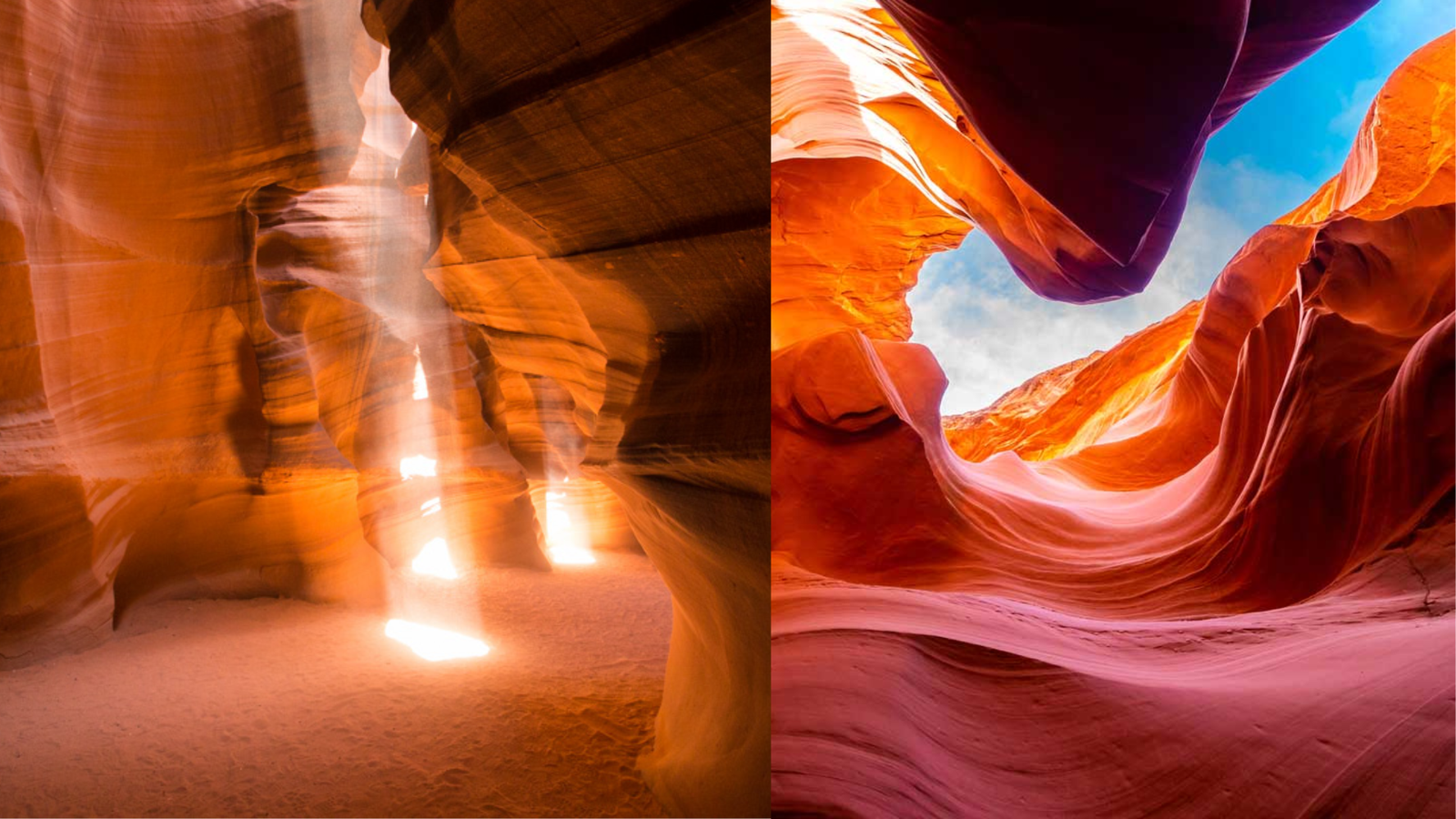
Here’s what most people don’t realise: only one of the two canyons actually shows the light beams. Pick the wrong one, and you’ll have a great hike but no beams. Let me break down the difference so you book the right tour.
Upper Antelope Canyon (The Crack)
This is where the magic happens. Upper Antelope Canyon is the only location where you’ll see light beams, period. The Navajo call this area home, and herds of pronghorn antelope used to roam here, which is how it got its name.
The canyon stretches about 0.25 miles, and here’s the best part: it’s an easy walk. No crazy climbs or steep stairs. You walk in, see the beams (if timing and weather cooperate), and walk out. Simple as that.
Lower Antelope Canyon (The Corkscrew)
Now, Lower Antelope has its own beauty. The Navajo name is Hasdeztwazi, meaning “Spiral Rock Arches.” But let me be clear: you will NOT see light beams here. Not in summer. Not in winter. The geography just doesn’t allow it.
Lower Canyon requires more effort, too. You’ll climb multiple staircases, some as tall as 25 feet. There’s a 10-minute walk just to reach the entrance. The sandstone walls are vivid and the colours shift throughout the day, but if you came specifically for those iconic light shafts? This isn’t your spot.
Making Your Choice
Choose Upper Canyon if light beams are your goal. That’s it. That’s the rule.
Lower Canyon works if you want:
- Fewer crowds during off off-season
- A more adventurous hike
- Beautiful rock formations without the beam hype
- Different photo opportunities
But for the classic Antelope Canyon light beam experience? Upper Canyon every time.
Best Time of Year to See Antelope Canyon Light Beams
The light beams only appear between May and September. Miss this window, and you miss the beams entirely. I know that sounds limiting, but nature doesn’t negotiate.
Peak Season: May Through September
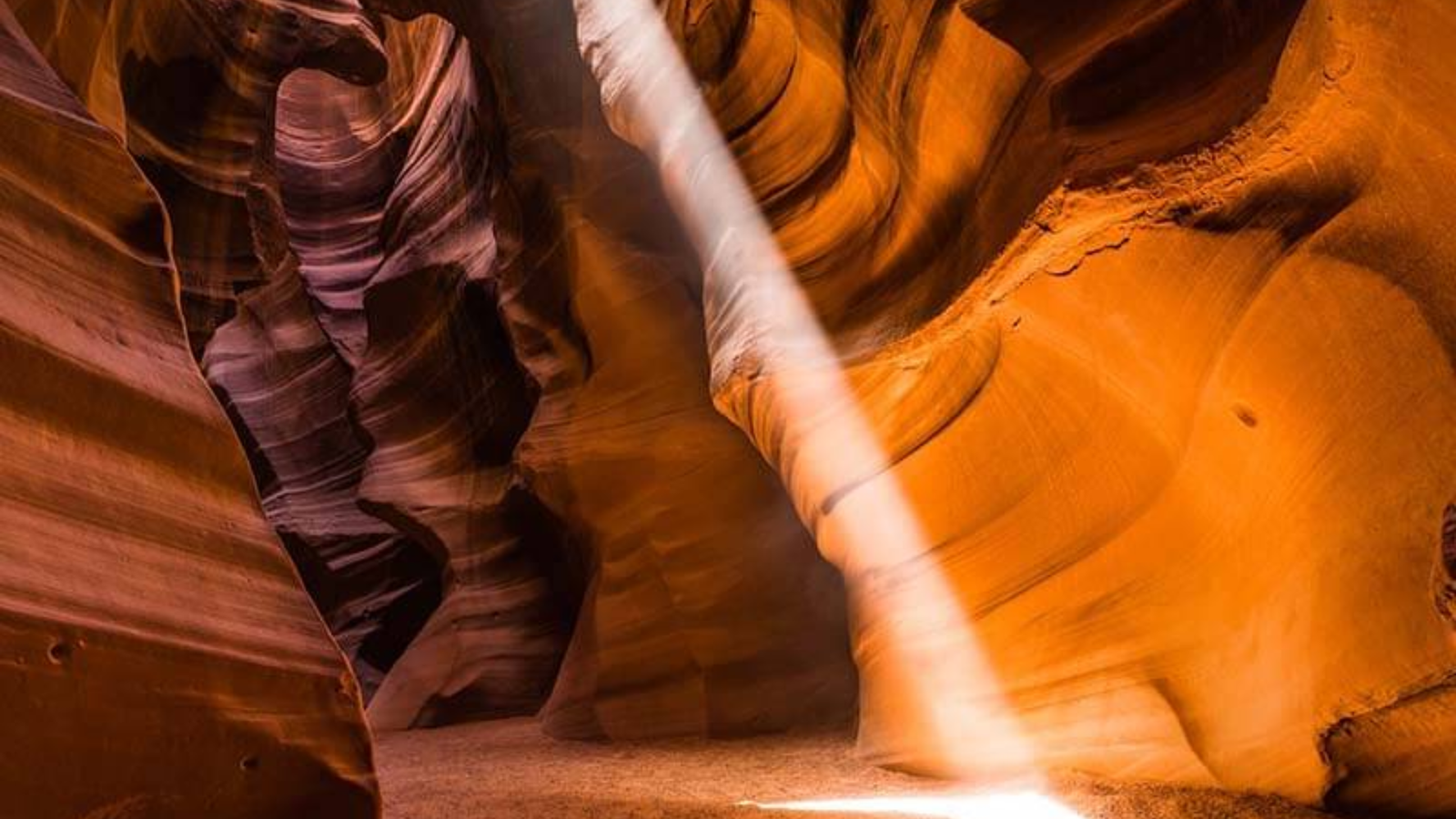
These five months are when the sun sits high enough in the sky to create those dramatic light shafts. If seeing the beams is why you’re booking this trip, you must visit during this timeframe. No exceptions.
Expect crowds, though. Peak season means peak people. You’ll share the canyon with tour groups ahead of you and behind you. But honestly? The beams are worth it.
Off-Season Considerations (October to April)
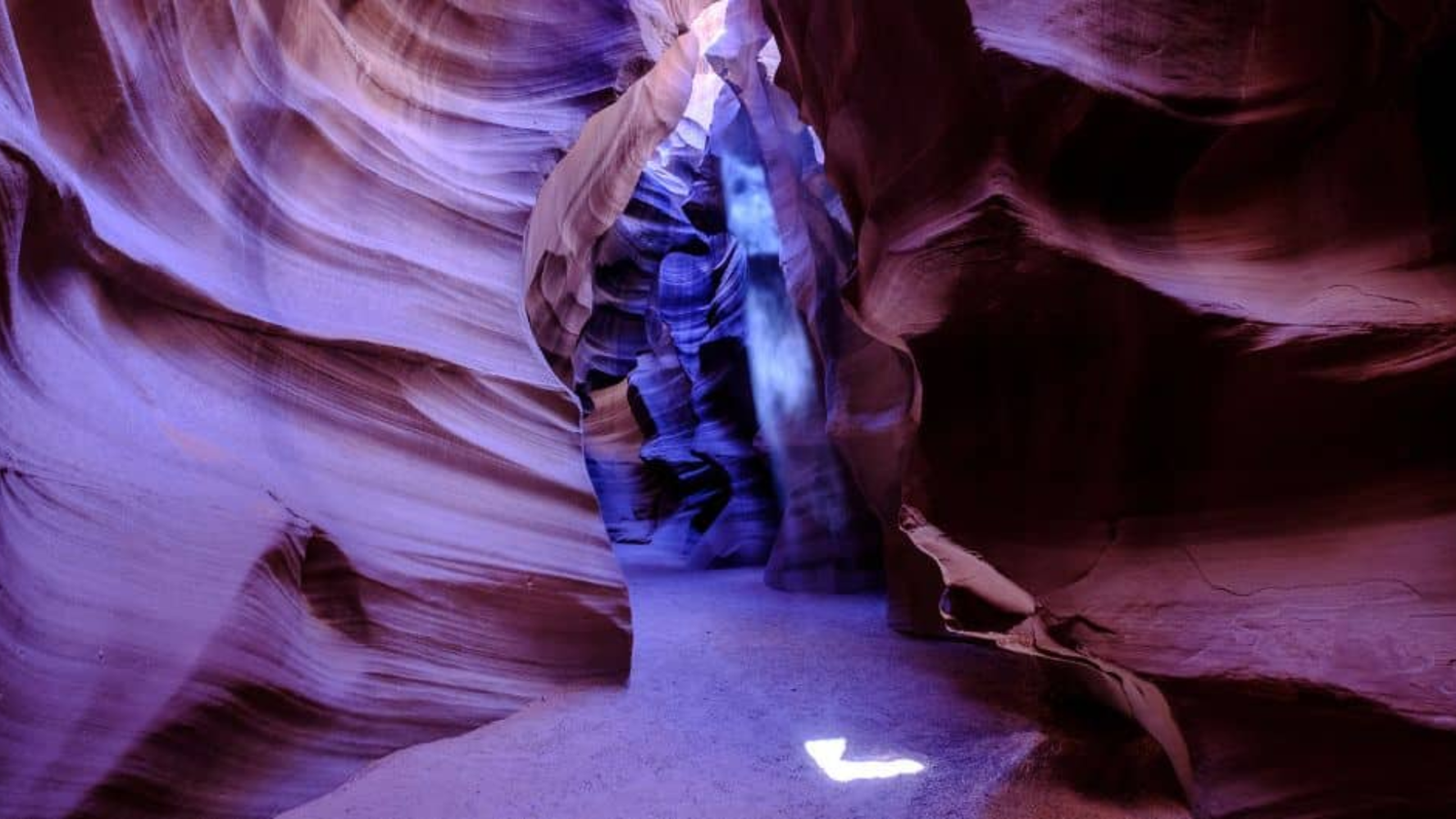
Visit between October and April, and you won’t see any light beams. Zero. The sun angle just doesn’t work during these months.
But here’s the upside: the canyon walls create gorgeous colour shifts that summer visitors completely miss. Plus, way fewer people. If you hate crowds and don’t care about the beams, off-season might actually be better for you. You’ll still get incredible photos, just different ones.
Optimal Time of Day to See the Light Beams
Time of day matters just as much as time of year. Show up at 9 AM or 3 PM, and you’ll see a beautiful canyon but no beams. The window is narrow.
Peak Viewing Window: 11 AM to 1:30 PM
The light beams appear between 10:45 AM and 12:45 PM. That’s your golden window. The sun needs to be directly overhead, positioned at its peak. Book a midday tour, and you’re set.
Outside this timeframe, the canyon is still worth visiting. But those dramatic shafts of light piercing through the darkness? They only happen when the sun is at its highest point.
Why This Timing Matters
The sun angle creates the entire effect. When it’s directly overhead, light filters down through the narrow canyon openings and bounces off the sandstone walls. That’s what creates the beams.
Earlier or later in the day, the sun hits at the wrong angle. You’ll see beautiful indirect light and amazing colours. Just no beams. If you booked this trip specifically for those Instagram-worthy light shafts, stick to the 11 AM to 1:30 PM window.
Weather Conditions That Affect Light Beam Visibility
Even if you visit during the right season and book the perfect time slot, the weather can ruin everything. Clouds are your enemy here.
Ideal Weather Requirements
You need a very sunny day. Not partly cloudy. Not mostly sunny. Crystal clear skies give you the best chance of seeing dramatic beams.
Spring and summer typically deliver better weather conditions, which is partly why May through September works so well. Check the forecast obsessively before your tour date.
Conditions That Limit or Prevent Light Beams
Rain eliminates light beam visibility. Heavy cloud cover does too. Even scattered clouds can block enough sunlight to dim or hide the beams entirely.
Always check the weather forecast before booking, and check it again the morning of your tour. Some tour operators will let you reschedule if conditions look terrible, but policies vary.
Safety Closures
Bad weather can shut down tours completely. Flash flood risks are real in slot canyons, and rain upstream can send water rushing through even if it’s dry where you’re standing.
Tour operators close the canyon when conditions become unsafe. It’s frustrating if you’ve travelled far, but it’s necessary. The canyon isn’t worth risking your life over.
Booking Your Antelope Canyon Light Beam Tour
You can’t just show up at Antelope Canyon. Tours are required, and they fill up fast. Here’s how to lock in your spot.
Advanced Booking Requirements
Book at least one month in advance for weekend midday tours. During peak season (May through September), book even earlier if possible. These tours sell out.
Some operators don’t require prepayment, which is nice. But you still need a confirmed reservation. No reservation? No canyon access.
Tour Pricing
Standard tours run around $50 per person. Photography tours that allow tripods cost roughly $100, double the standard price.
Young children often get discounts depending on the operator. If you cancel, expect processing fees even with operators that offer refunds.
Tour Duration and Logistics
Plan for about 2 hours total. This includes a 15-minute shuttle ride from downtown Page, Arizona, to the canyon entrance, your time in the canyon, and the ride back.
The road out is sandy and bumpy. Cover your camera gear, or it’ll get coated in dust. Tours typically max out at 14 people per group, and you’ll check in at a designated meeting point. Bring your voucher and a valid photo ID. Show up late, and you might lose your spot.
Photography Tour vs. Non-Photography Tour
Both tours go to the same place at the same time. The difference is what you can bring and how much you pay.
Non Photography Tour (Standard Tour)
This costs half the price of the photography tour, around $50. No tripods allowed, but you can absolutely take photos with your phone or handheld camera.
You photograph while moving through the canyon. On the return walk, you can’t stop for shots. But here’s the thing: you can still get excellent photos. The guides help with camera settings and angles. Many guides will even take photos for you using your camera.
Photography Tour
The photography tour costs double, roughly $100. You get to bring a tripod, and you’ll be with 8 to 10 other serious photographers who also have tripods.
Sounds great, right? But picture this: 10 people with tripods in a narrow slot canyon, all trying to set up for the same shot. It gets chaotic. If you’re not a professional photographer, the standard tour might actually be less stressful.
What to Expect at Both Tours
Both tours deal with crowds. You’ll always have a group ahead of you and another behind you. The guides do their best to space everyone out for clean shots.
It’s slow-moving. You wait for the group ahead to clear before you can photograph certain spots. But you can still capture great photos even with people around. The guides know every angle and help position you for the best shots.
What You’ll See and Photograph in the Canyon?
The canyon isn’t just about light beams. Over thousands of years, water and wind carved the sandstone into incredible shapes. Some formations even have names.
Named Formations and Features
As you walk through, guides point out specific features:
- The Heart (a heart-shaped opening)
- The Candle (looks like a melting candle)
- The Light Rays (the main attraction, weather permitting)
- The Sand Falls (looks like frozen waterfalls)
- Abraham Lincoln (rock formation resembling his profile)
- The Branch Water Brought In (a branch wedged in the rocks)
- The Waves (undulating sandstone walls)
Some of these are easier to spot than others. Your guide will show you exactly where to look and position your camera.
Photography Opportunities
The colours change as you move through the canyon. Reds, oranges, purples, and pinks shift across the sandstone depending on the light.
The textures alone are worth photographing. Water carved smooth curves and sharp edges into the rock. The narrow walls create dramatic perspective shots. Even without the beams, you’ll leave with vivid photos.
Weekday vs. Weekend Visits
When you visit affects how crowded your experience will be. Choose wisely.
| Factor | Weekdays | Weekends |
| Crowd Level | Less crowded with fewer tour groups | Packed with crowds and multiple tour groups |
| Photo Quality | Better opportunities for cleaner shots | More people in your shots, more waiting |
| Group Sizes | More manageable and smaller groups | Busier canyon experience overall |
| Booking Timeline | Book at least one month in advance | Book at least one month in advance (fills up first) |
| Overall Experience | Less chaotic, more relaxed atmosphere | More hectic with constant waiting |
| Light Beam Window | Still need the 11 AM to 1:30 PM slot | Still need the 11 AM to 1:30 PM slot |
| Best For | Photographers want cleaner compositions | Those with weekend-only schedules |
Bottom line: If your schedule allows flexibility, choose a weekday. You still need to hit that midday window for light beams, but everything else becomes easier with fewer people around.
Contact and Booking Information
Ready to book? Here’s how to make it happen.
Tour Operator Options
Multiple authorised Navajo tour companies run trips to Antelope Canyon. All tours depart from downtown Page, Arizona.
For questions, you can call operators like Navajo Tours at 928 310 9458 or 928 691 0244. Different companies have slightly different policies, so ask about specifics when you call.
Meeting Points
Most operators use designated meeting points like Ken’s Tours ticketing counter at Indian Rte 222, Page, AZ 86040. Your check-in time is your reservation time, so don’t be late.
You need to arrange your own transportation to the meeting point. No Uber? Rent a car. Missing your tour because you couldn’t get there isn’t refundable.
Cancellation Policies
Some operators offer 100% refunds if you cancel 96 hours before your tour. Others have stricter policies.
Weather-related cancellations might get you a partial refund minus processing fees. If the tour still happens but you just don’t like the weather, you typically don’t get a refund. Check specific operator policies when booking.
Essential Preparation Tips
A little prep goes a long way. Don’t show up unprepared and regret it halfway through.
Pack these essentials:
- Camera gear (phone works fine too)
- Dust covers for all equipment
- Patience for the crowds
- Valid photo ID
- Booking voucher (digital or printed)
- Water
One heads up: some facilities in the Navajo area don’t have running water in the bathrooms. Plan accordingly.
Conclusion
Visit Upper Antelope Canyon from May to September and choose a midday tour between 11 and 1:30. Clear skies help the beams form, so checking the forecast gives you a better chance at seeing them. The light moves quickly, and being in the right spot at the right hour matters.
Crowds are normal during this time, yet most visitors still feel the moment is worth it. When the sun lines up above the narrow opening, the beams fall into the canyon in a calm, steady way that feels memorable even with others nearby.
Book at least a month ahead since weekends fill fast. Leave any questions in the comments, and share this guide with anyone planning a trip so they can catch the best viewing window, too.
Frequently Asked Questions
What time of year can you see Antelope Canyon light beams?
Light beams are only visible between May and September. Outside these months, the sun angle is too low to create the beam effect. For the best chance of seeing them, visit during peak season when the sun sits high enough in the sky to filter through the narrow canyon openings.
What time of day are the light beams visible?
The light beams appear between 10:45 AM and 12:45 PM when the sun is directly overhead. Book a midday tour during the 11 AM to 1:30 PM window. Outside these hours, the canyon remains beautiful, but you won’t see the dramatic light shafts.
Which Antelope Canyon shows the light beams?
Only Upper Antelope Canyon displays light beams. Lower Antelope Canyon does not show light beams at any time of year due to its natural geography. If seeing the beams is your primary goal, you must book a tour specifically for Upper Canyon.
Do I need a photography tour to see the light beams?
No. Standard tours, priced around $50, let you see and photograph the beams with your phone or handheld camera. Photography tours cost double and allow tripods, but aren’t necessary for great photos. Guides help with the settings on both tours.
What if it’s cloudy on my tour day?
Clouds block the sunlight needed to create light beams. Heavy cloud cover or rain can eliminate beam visibility. Always check the weather forecast before your tour. Some operators allow rescheduling for bad weather, but policies vary by company.
